God of War: Sons of Sparta Review
, by Enzo
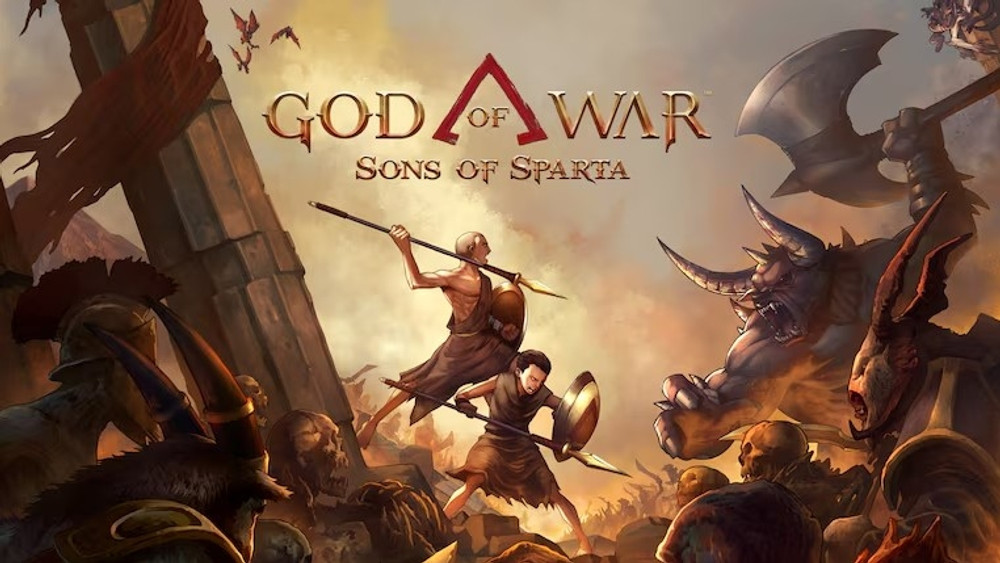
God of War: Sons of Sparta—Two brothers who could have done better
After making its mark on video game history for more than twenty years, the God of War franchise continues to explore the different facets of its iconic character. But while Kratos’s latest adventures have profoundly revitalized the series’ formula, God of War: Sons of Sparta takes a direction that’s unexpected, to say the least: that of a 2D action-adventure game with a retro pixel-art aesthetic. This new installment aims to bring the franchise’s DNA to a radically different genre, while remaining fully integrated into its universe.
Released on February 12, 2026, exclusively on PlayStation 5, God of War: Sons of Sparta was shadowdropped during a State of Play as the franchise celebrated its 20th anniversary. Sony and Santa Monica Studio also took advantage of this anniversary to confirm the highly anticipated development of a remake of the original Greek trilogy. While this title was intended to be a little surprise for fans to tide them over during the 20th-anniversary celebrations, it might actually end up being seen as a bitter consolation prize, a side project that feels far from complete.
Art Direction & World-Building
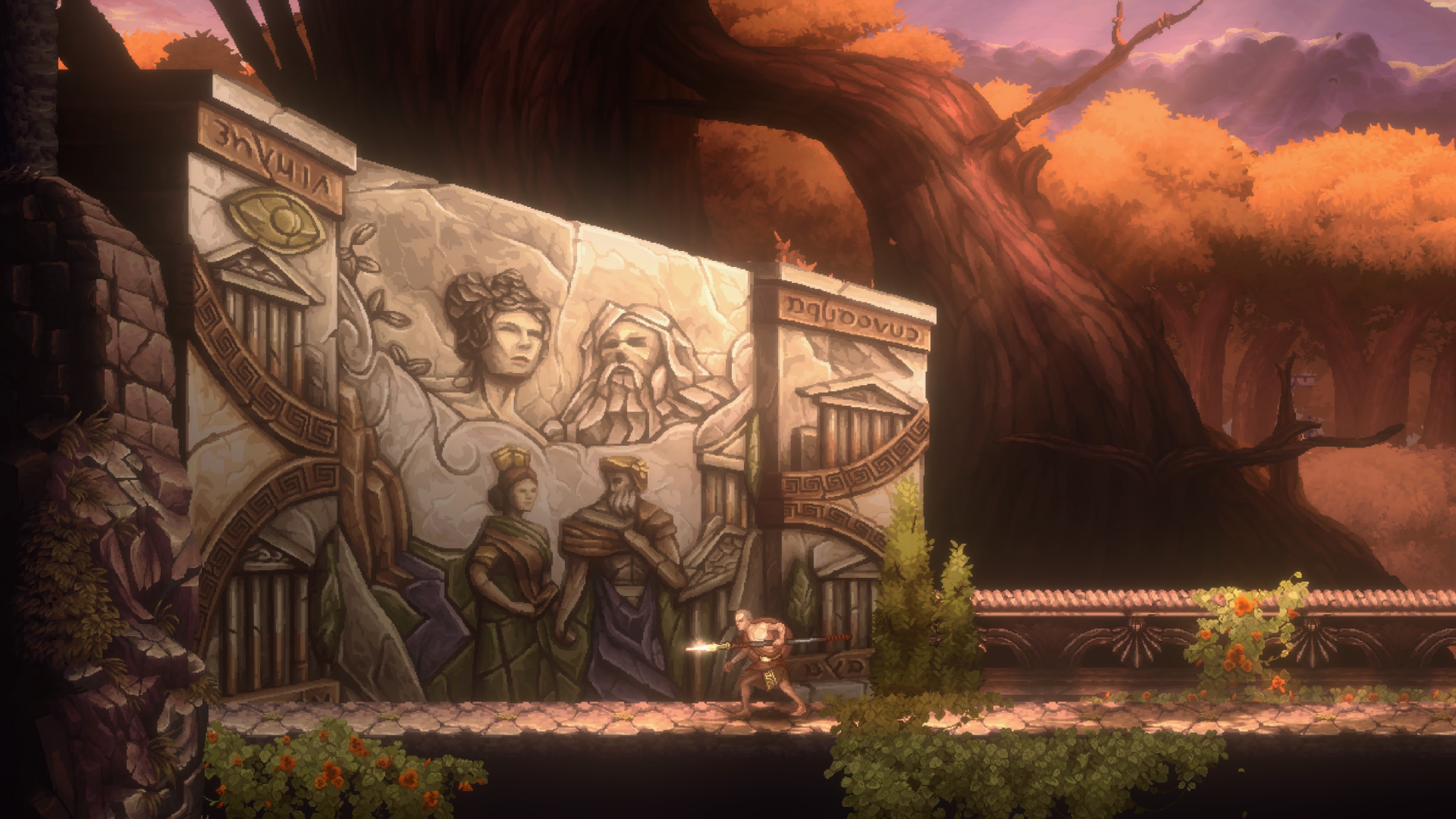
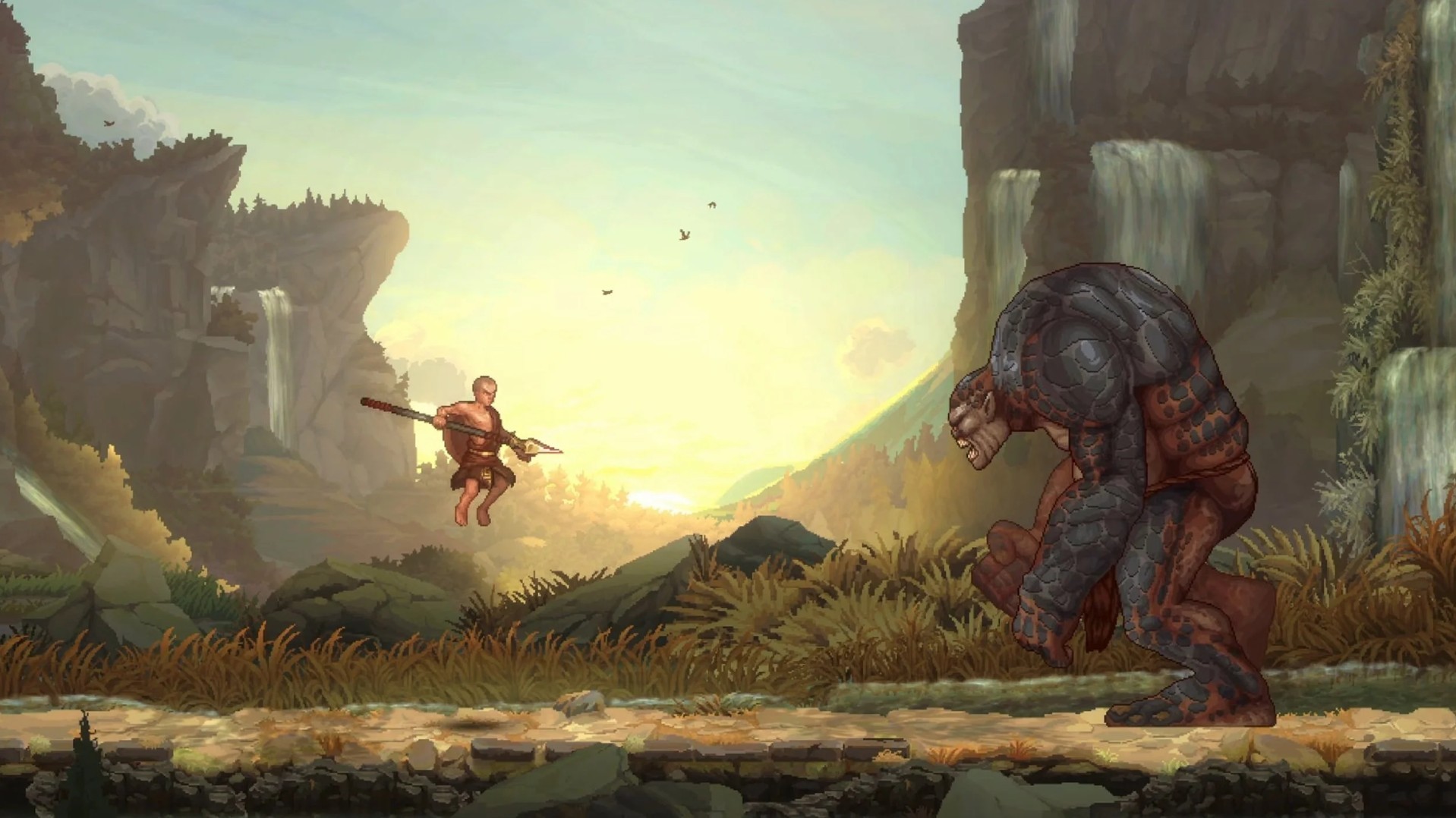
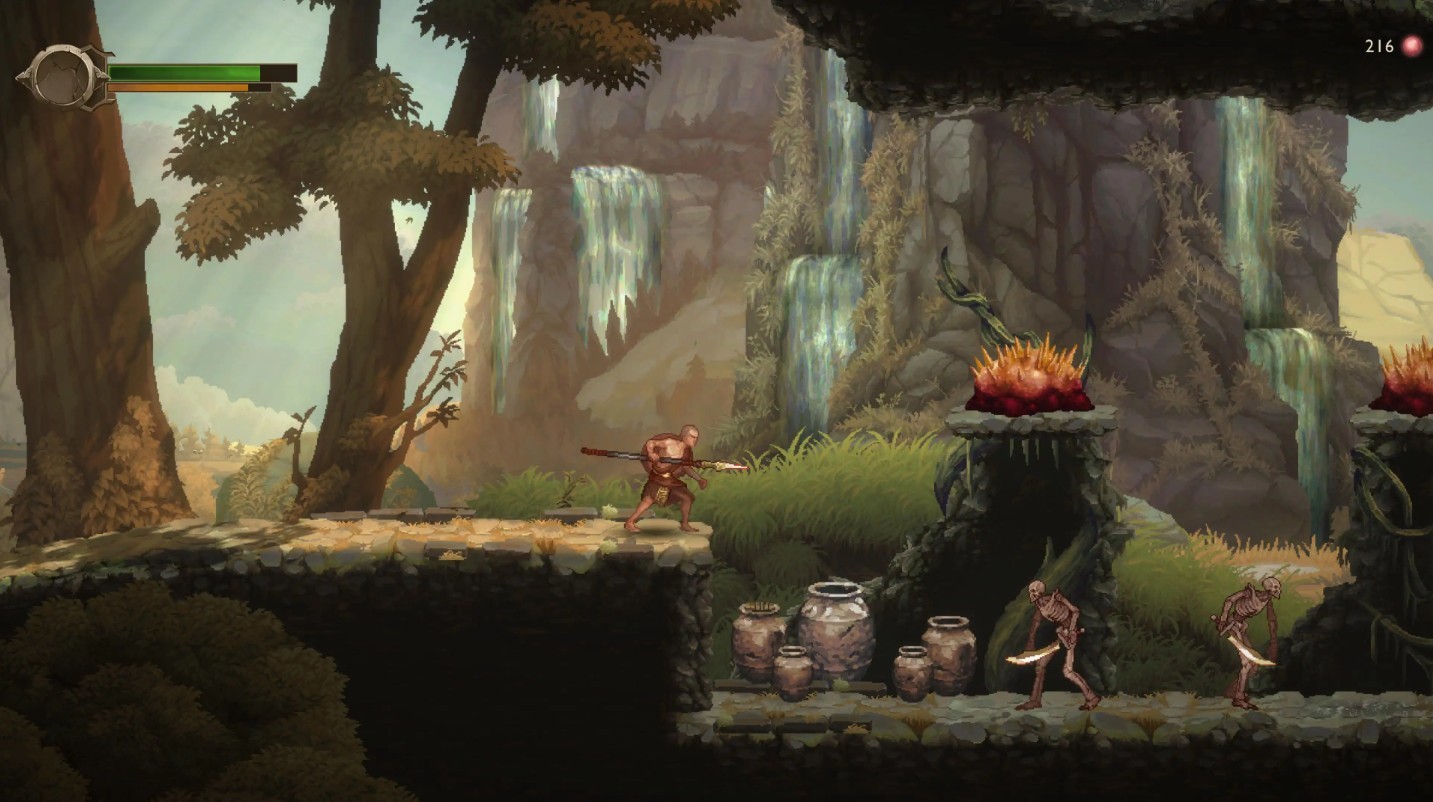
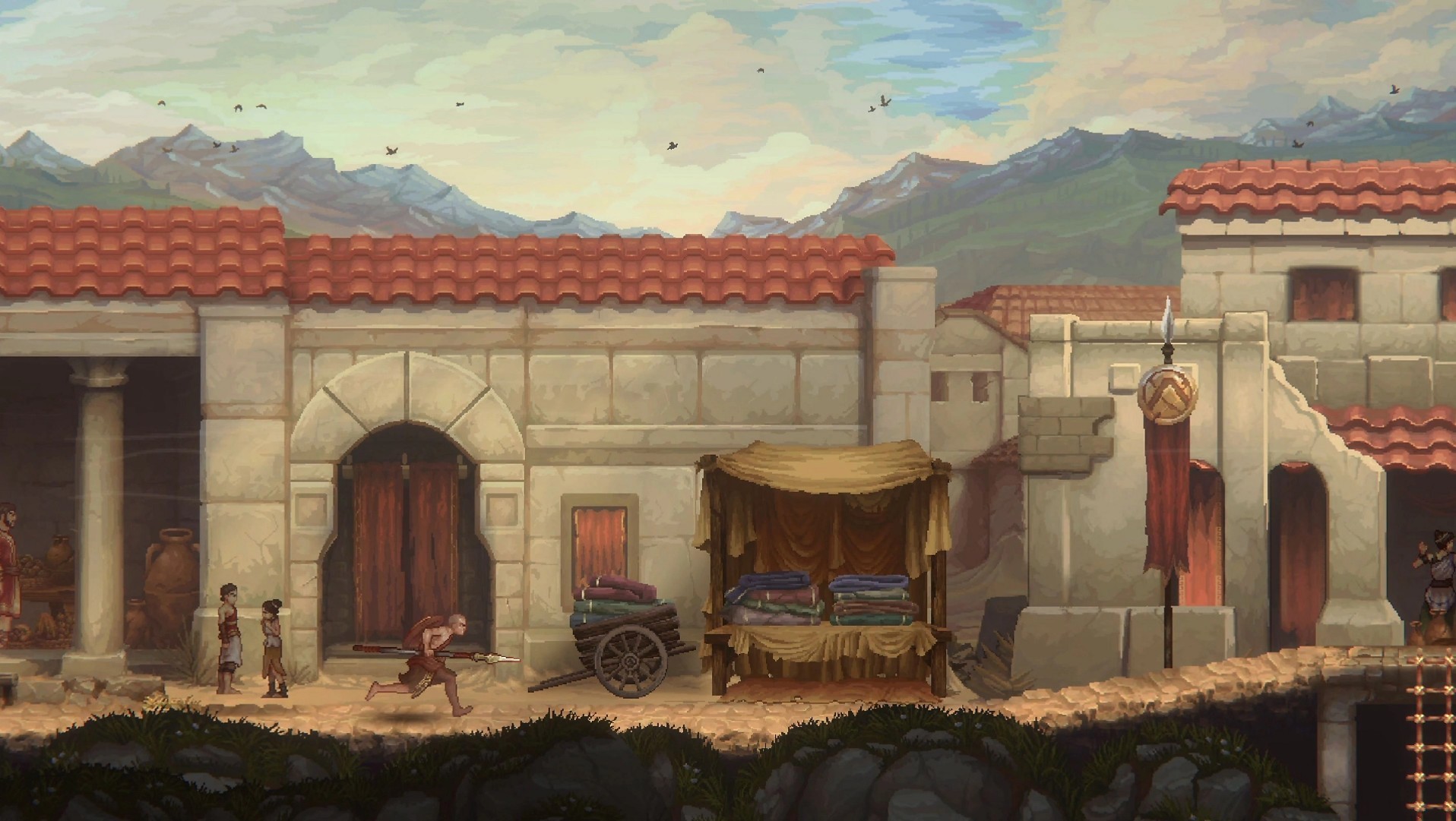
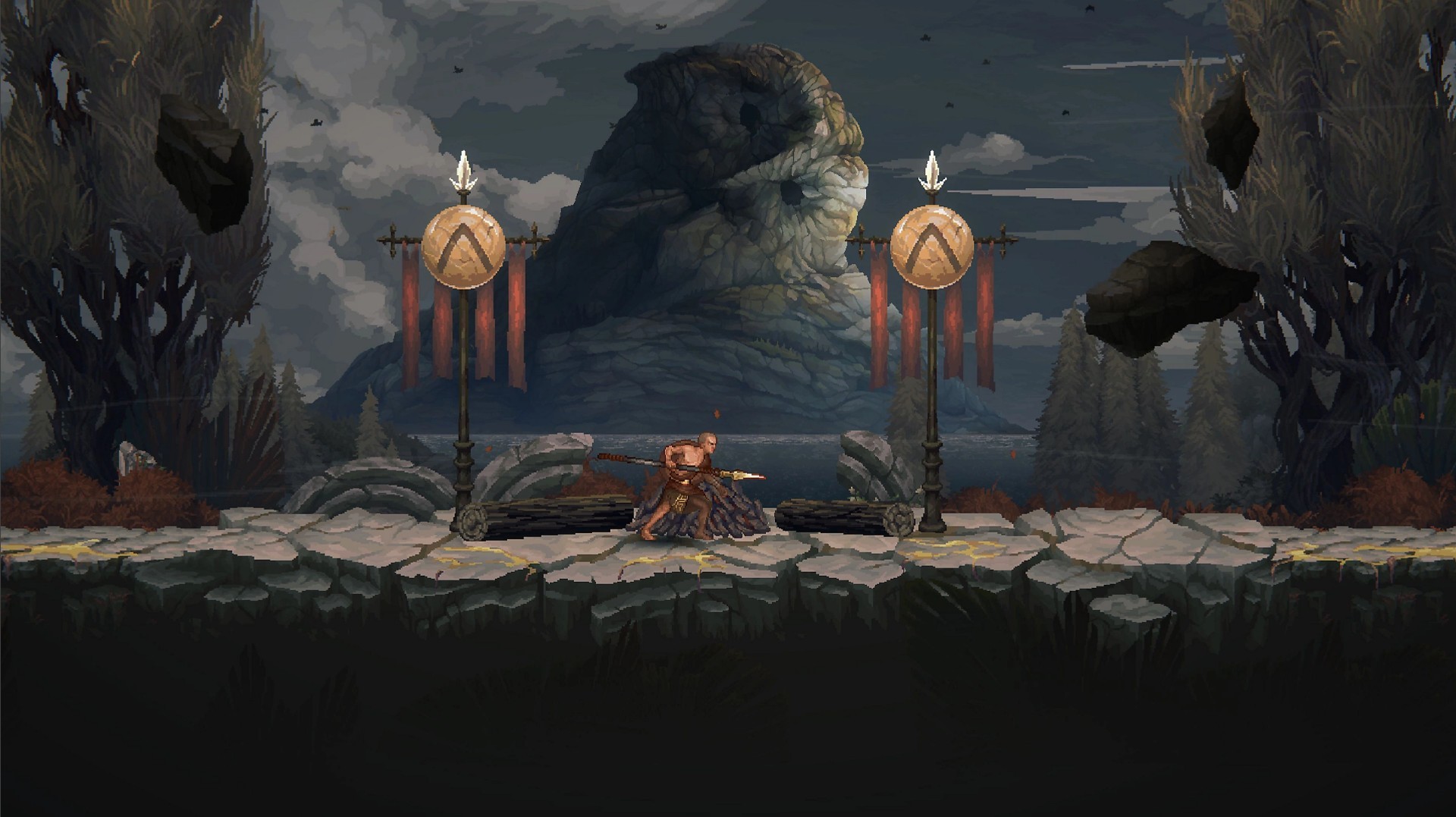
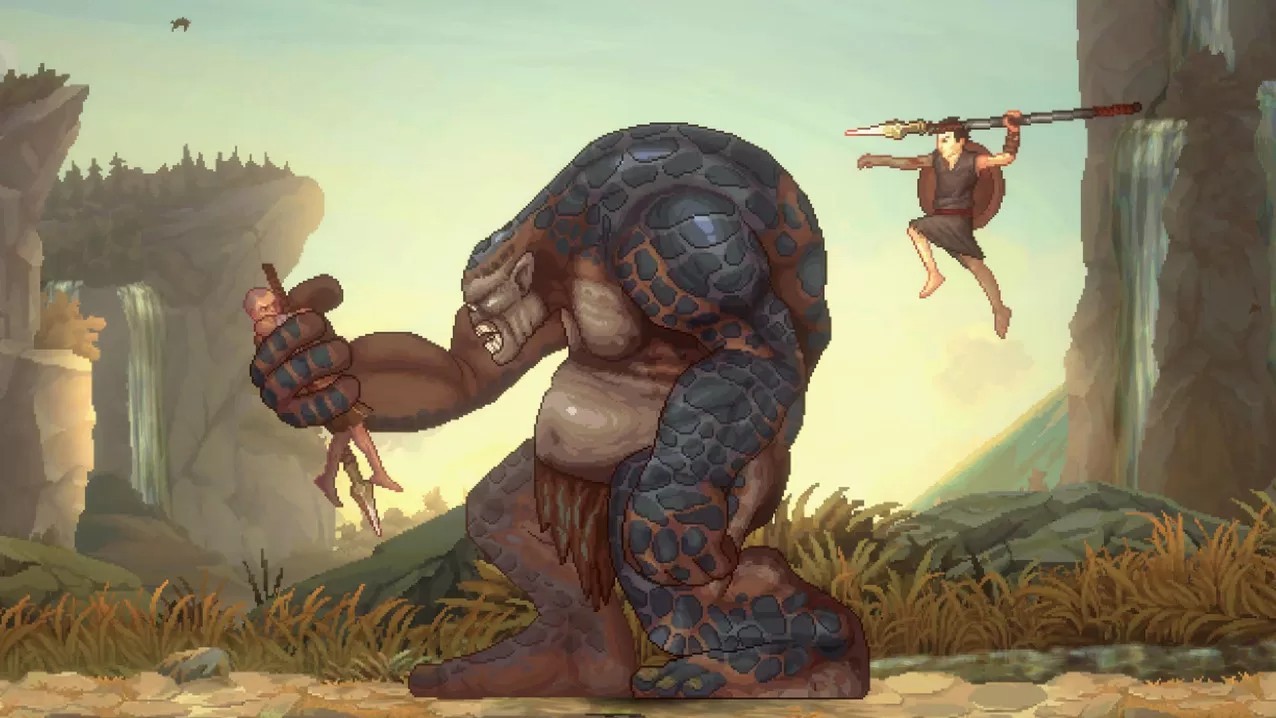
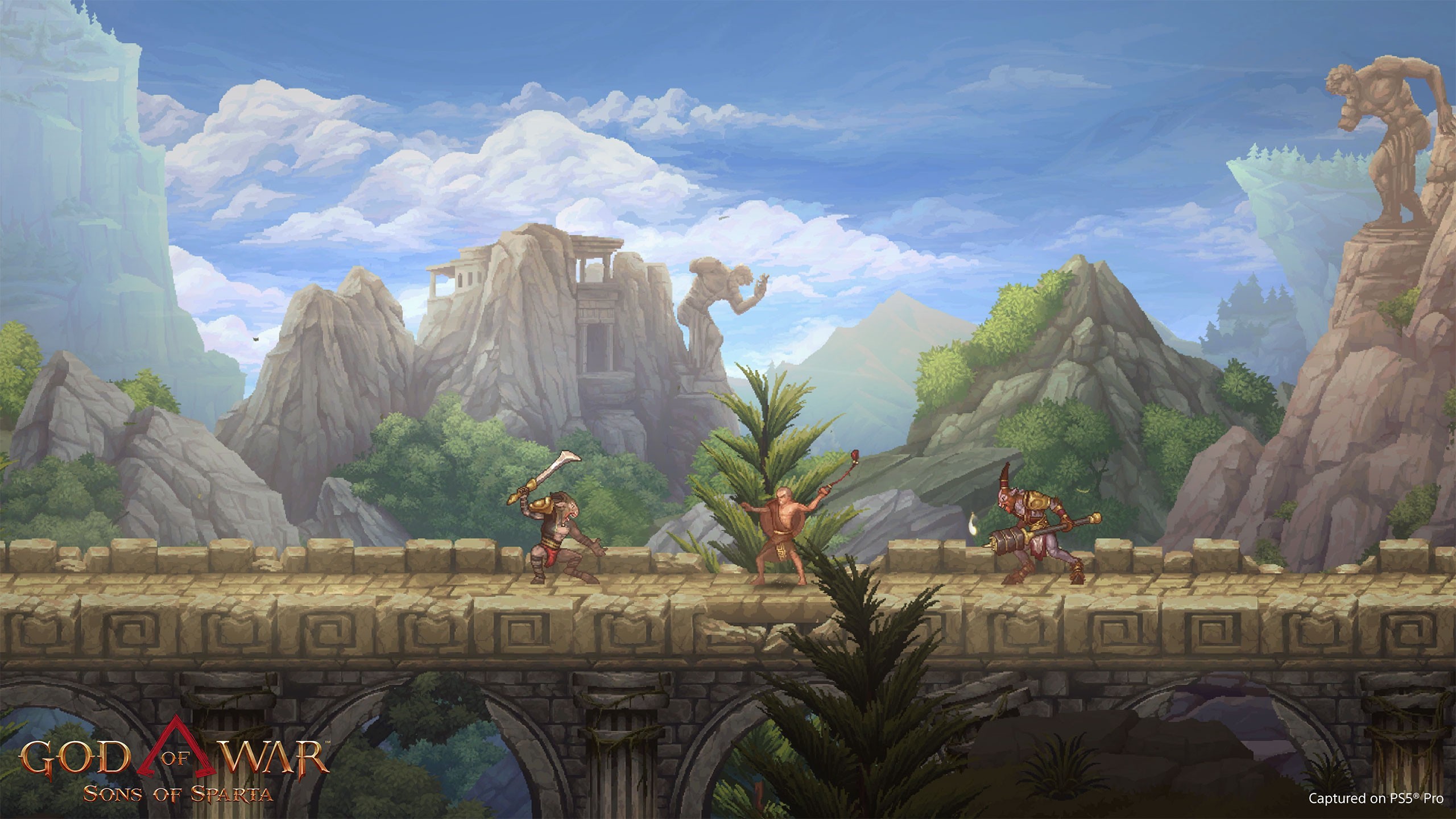
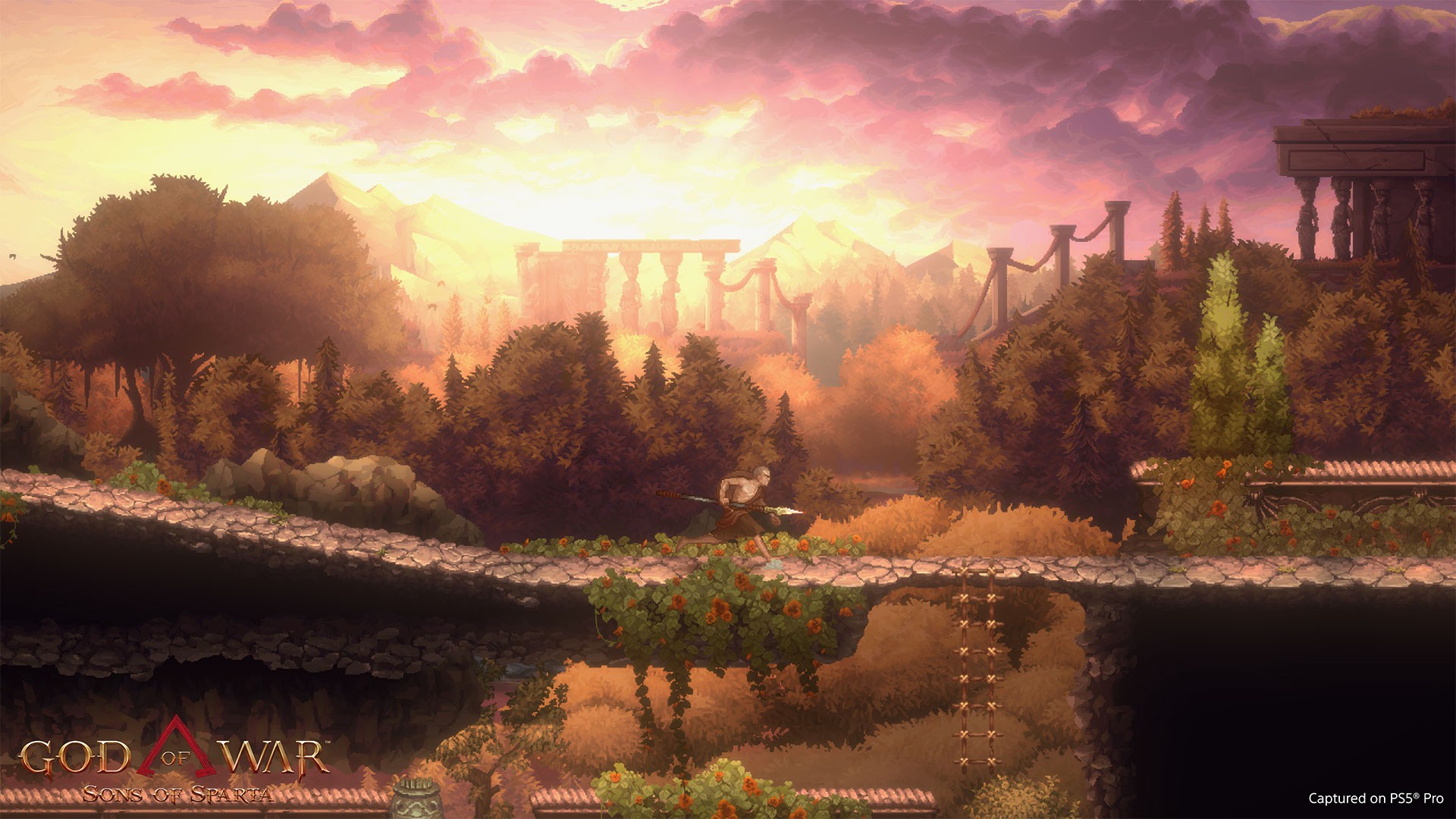
It’s hard to criticize the world of the God of War games, given how widely appreciated mythology is in the gaming world, and even more so when it’s brought to life so brilliantly by this franchise. As usual, a multitude of divine figures make an appearance, accompanied by a number of legendary beasts, as well as a host of fascinating landscapes. The various settings in Laconia offer a wonderful variety, ranging from Spartan architecture and temples to forests and more mystical environments.
Like the other installments in the franchise, Sons of Sparta features a particularly well-crafted soundtrack, evoking a sense of grandeur, power, and heroic adventure. This task was once again entrusted to Bear McCreary, who adapts his approach to the game’s ambitions by blending sounds inspired by retro gaming with the orchestral and choral flourishes characteristic of God of War.
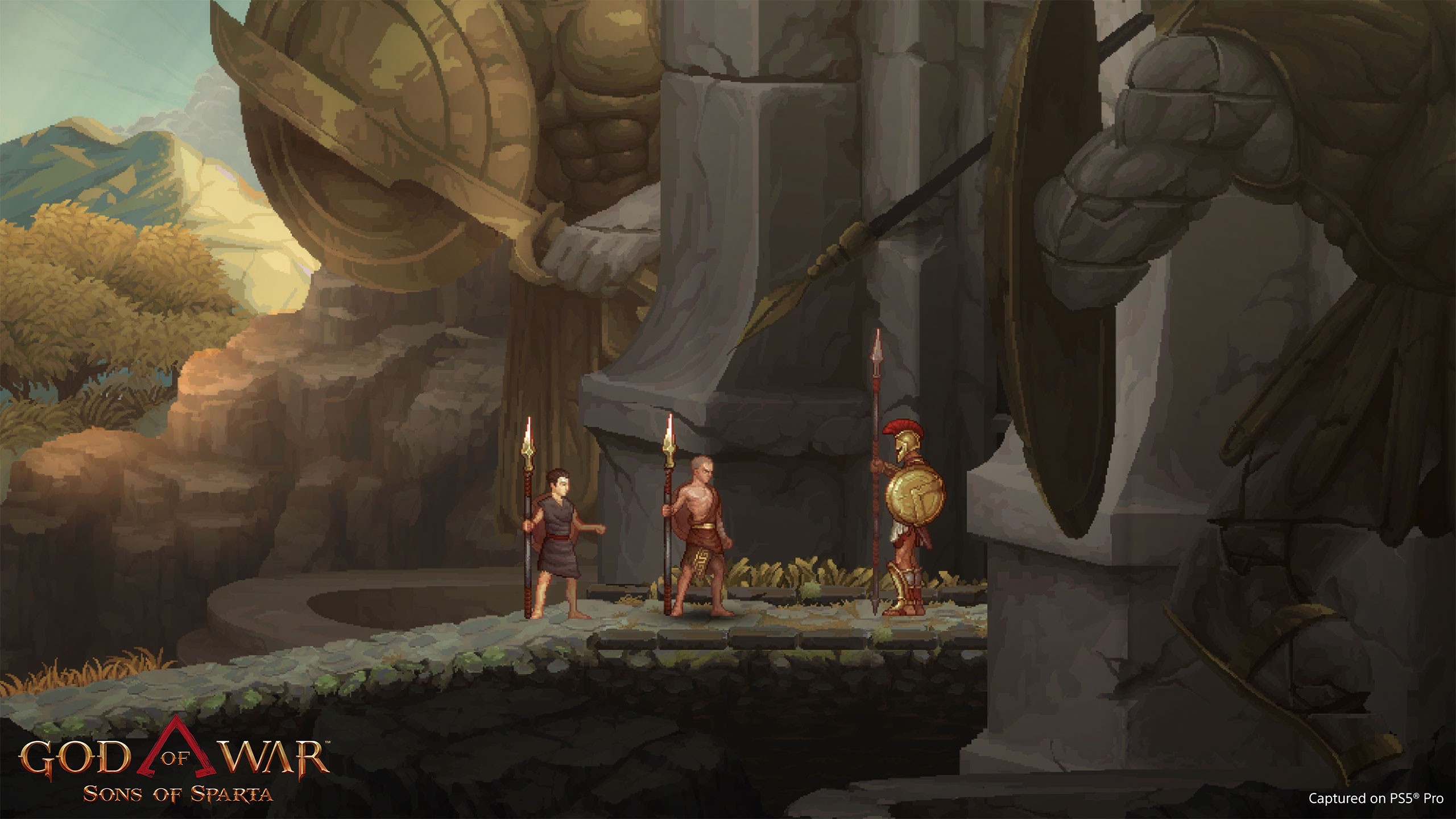
By swapping the highly realistic 3D environments of recent installments for pixel art, a certain contrast does emerge. Santa Monica and Mega Cat Studios aimed to give ancient Greece a retro visual identity. To be honest, we even think it could have been polished further—with, among other things, more detailed textures, better depth effects, and more beautiful lighting... Replaced comes to mind here.
Gameplay
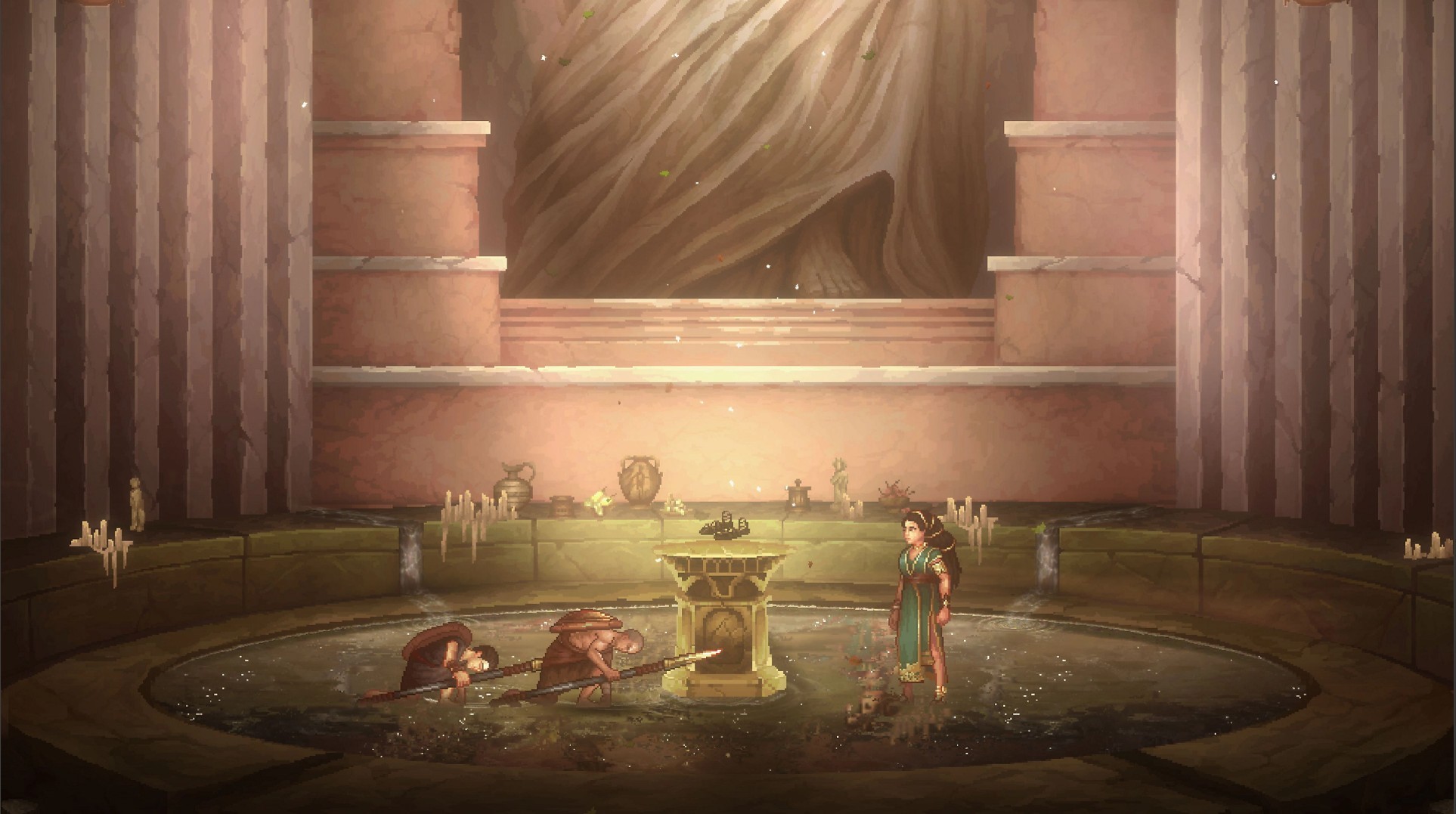
This new adventure is built on a rather unique blend: on one hand, the combat and mythological creatures of God of War; on the other, a 2D structure inspired by retro games and the action-platformer genre. On paper, it’s a formula that deserves credit for thinking outside the box—especially for this franchise—but it suffers from some technical and gameplay shortcomings. As for exploration, the formula is, all in all, fairly standard. Some puzzles, however, require rather tight timing to solve. Interestingly, the Easy difficulty setting in story mode (“Normal” for most games) doesn’t change this aspect at all.
The combat system, centered primarily around the spear and shield, relies on attacks, dodges, and parries (based on a color-coded system indicating the best response to take). Nothing too bad on paper, but it very quickly becomes rather tedious and repetitive. A word of caution to those who’ve gotten too used to throwing axes and using Chaos Blades attached to their arms: here, you’ll mainly be attacking with the square button and blocking or dodging as the situation calls for.
Furthermore, the difficulty level is relatively uneven. Some sections can be navigated with little resistance, while a few battles can present real spikes in difficulty compared to the rest of the adventure. The same goes for the bosses: some offer rather interesting battles, while others turn out to be far too easy or, conversely, artificially difficult with damage windows that are too narrow, which actually prolongs the fight without adding much substance.
Finally, despite the game being titled Sons of Sparta and the emphasis placed on the relationship between Kratos and Deimos, it’s a shame that players can’t experience the main campaign in true two-player co-op fashion… right from the start. What kind of idea is it to require players to finish the game once before they can replay it in co-op? What possible justification could there be for this, which ultimately doesn’t serve the game’s purpose? A fully coop experience might have added some real value to the game here.
Pacing & progression
Unfortunately, the pacing of God of War: Sons of Sparta is one of the weakest points of the experience, with progression that sometimes lacks rythm. The Metroidvania format obviously involves some back-and-forth travel to re-explore areas with new abilities. However, these trips quickly become tedious because, in our opinion, fast-travel points are too few and far between.
The problem is particularly noticeable when you have to return to Sparta to upgrade your gear or advance certain quests: the distance you have to travel each time simply discourages you from returning to the city regularly, so you’d rather keep the momentum going even if it means falling a bit behind on your gear.
Kratos’s progression also sometimes feels a bit stingy: after about five to six hours of gameplay, our gear is still only at level 2, which inevitably limits the sense of becoming more powerful. The same goes for certain essential items, such as the healing potion, which appears surprisingly late in the adventure and gives the impression that the game is artificially withholding certain conveniences.
By spacing out these unlockables so widely, Sons of Sparta struggles to establish a genuine sense of progression. Rebalancing the way levels, gear, and abilities are earned would likely have made the first few hours more rewarding and better conveyed young Kratos’s rise to power. The adventure isn’t actually slow the entire time, but it suffers from a lack of fluidity in its pacing, precisely where a Metroidvania should inspire players to explore, return to previous areas, and immediately see the benefits of each new upgrade.
Sons of Sparta: Wait, weren't we supposed to be two?
The game tells a canonical story set during Kratos’s youth, at a time when the future God of War is still just a young Spartan undergoing the ruthless training of the Agoge. Alongside his brother Deimos, he roams Laconia and must put his military training to use when one of their comrades mysteriously disappears. And here’s the twist that, in our opinion, ruins everything.
Let’s take a step back. We’re talking here about a future god with a bloody past, a hero known for his determination and violence (before he mellows out a tad in God of War: Ragnarök), and the plot point that drives much of the story is a school friend who disappeared, perhaps to find wine and eels for his recipe? The potential is sorely wasted here! There was so much that could have been done with such a nuanced narrative and such polished direction as in the recent PS4 and PS5 installments.
Still, we appreciate the (all too rare) moments when adult Kratos takes over the storytelling with his daughter Callisto. In our opinion, these narrative moments should have been much more frequent, as they serve as a genuine link between the story being told and the present-day Kratos, the one we all know and love.
Since the game is titled Sons of Sparta, we really expect the story to revolve around the two brothers. We expected it to take us back to their past—to their conflicts, victories, and defeats… in short, to the unique bond that united them before it took a dramatic turn, a plot point well-known throughout the rest of the franchise. However, none of that really happened: Deimos makes occasional appearances without ever truly becoming a central part of the storyline.
Technical aspects
In terms of gameplay and controls, the game unfortunately often feels rather rigid, even dated in its design. Movement lacks fluidity, and certain interactions with the environment are unnecessarily restrictive, particularly when an enemy occupies a ledge you’re trying to reach. It’s impossible to climb until the creature has been eliminated, which becomes particularly annoying when it simply decides to camp out in one spot to prevent us from moving forward.
This behavior is far from isolated, as the AI is far too passive or poorly positioned too often, with enemies standing frozen at the edge of a platform without actually attacking.
Added to this are hitboxes that are sometimes imprecise and a few collision bugs that further reinforce this feeling of a lack of polish. Unfortunately, the map and interface aren’t much better: the overall design is fairly basic, hard to read at times, and doesn’t seem to have benefited from any real effort to make navigation easier. Yet, in a Metroidvania where exploration and back-and-forth travel are a major part of the experience, these elements deserved more attention.
Tested on PS5.
See our rating policy here.
5/10
All things considered, God of War: Sons of Sparta boasts a world that’s as captivating as ever, and revisiting Greek mythology and Kratos’s younger years is obviously a pleasure. Still, it’s hard not to feel that there's no wow factor here, especially for a franchise so accustomed to blowing us away. Whereas previous installments have accustomed us to spectacular cutscenes, polished direction, and sequences capable of leaving a lasting impression, Sons of Sparta comes across as surprisingly conventional. and at times, downright unremarkable.
We shouldn’t have expected the scale of a God of War Ragnarök, especially since the game’s positioning and price clearly don’t put it in the same league. But with Santa Monica Studio behind the project, we were still entitled to hope for more. In addition to the various flaws mentioned throughout this review, perhaps the most frustrating aspect is that this impression extends even to the title itself: called Sons of Sparta, the game ultimately does very little to highlight the younger brother and the unique bond that unites them.
Ultimately, this spin-off has good intentions and a universe that remains compelling, but it struggles to recapture the excess and ambition that normally make God of War so unique. It’s not a complete failure, but rather a game in the franchise that’s best left in Tartarus.
- + A world that's as captivating as ever
- + A great soundtrack
- + Interesting enemy variety and archives
- - A superfluous experience
- - Uneven pacing and gameplay
- - An unengaging story
- - A poor technical department