Ubisoft's mascot, Rayman, celebrates his 30th anniversary
, by Quentin
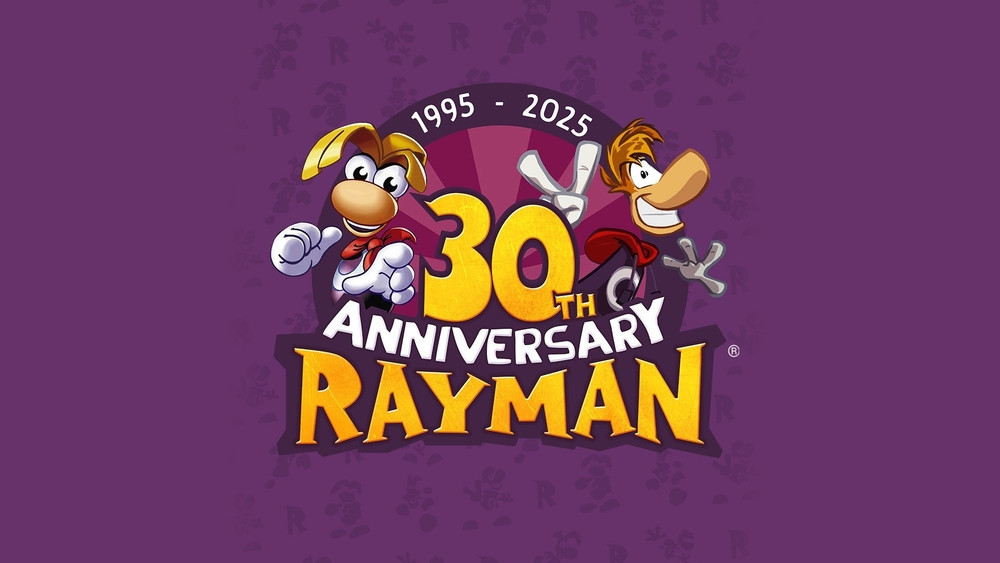
To start off September 2025 strong, Ubisoft is celebrating a very special anniversary. Indeed, it is already the thirtieth year of existence of its greatest mascot. We are, of course, talking about Rayman.
This character helped propel Ubisoft to the top of the video game industry and made it famous with incredibly memorable games over the decades. Today, unfortunately, he is sorely missed and has struggled to make a comeback after more than ten years of absence.
1995, the birth of a legend
It was in the mid-1990s that Michel Ancel and his team brought this strange character to life, with the distinctive feature of having no legs or arms. This is also what makes Rayman so recognizable. The first game was released in September 1995 and became a huge hit on Sony's first console, the PlayStation.
It also propelled Michel Ancel and Ubisoft into other spheres, with critical and commercial success. It must be said that the 2D universe is full of details everywhere on the screen, and the mastery of the animations demonstrates the capabilities of the console. Even though eyes are increasingly focused on 3D, the quality of the platform game is such that it manages to blow away players around the world.
That didn't stop the teams at Ubisoft Montpellier from doing it again in 1999 with Rayman 2: The Great Escape, which became a true 3D platformer and another technical triumph. The artistic direction remained intact and extremely powerful, despite the limitations of fledgling technology.
Our hero is certainly cool enough, but he has a sidekick who is as silly as he is endearing: we are, of course, talking about Globox, that strange blue creature who is an integral part of the series. Rayman also features enemies that are as scary and crazy as ever, adding a certain flavor to Michel Ancel's universe.
This was followed by less memorable titles, such as Rayman M (or Rayman Arena, depending on the country), which combined running and shooting. It was a strange mix that didn't leave much of an impression.
No, one of the greatest episodes would arrive in 2003 with Rayman 3: Hoodlum Havoc, which was handed over to the teams at Ubisoft Paris due to a lack of time on the part of Ubisoft Montpellier and Michel Ancel, who was busy finalizing Beyond Good & Evil.
Despite this change, the third installment proved to be absolutely captivating, with schoolboy humor, magical art direction, and an extraordinary adventure featuring a villain named André, who was as sarcastic as he was hilarious. Even though Michael Ancel wasn't behind the game, it remains a fan favorite to this day.
Following this new success, Ubisoft Montpellier decided to take back control of the license and develop a fourth game, initially planned to be Rayman 4. Internal conflicts and tensions led to a complete reboot and a radical change of direction.
While we were expecting a new 3D platformer, the developers took an intriguing turn in 2006: a party game that took advantage of Nintendo's new console, the Wii, and its Wiimote controls. Thus, Rayman vs. the Raving Rabbids was born.
Although development was short (less than a year) and quite tumultuous, it was a new tidal wave. Beyond achieving another success, Ubisoft gave birth to its new mascots, the Raving Rabbids, who need no introduction today.
Although this was a lifesaver for the company, our good old Rayman suffered as a result and was slightly overshadowed by these loud animals, which sadly put him on the back burner for a few years...
2011: Our hero comes back
In 2011, Rayman finally deigned to show his face again, reconnecting with his origins thanks to the release of a new 2D game, running on a brand new engine from Ubisoft Montpellier.
Rayman Origins was released to great fanfare, with an episode that was as polished and innovative as ever. The music was masterfully crafted by Christophe Héral, who had already composed the music for Beyond Good & Evil.
The teams will not be idle and will deliver the ultimate episode two years later, in 2013, with Rayman Legends, enhancing all the mechanics of the previous game and offering a near-flawless experience.
Despite these successes and a return to undeniable quality, Rayman was shelved by Ubisoft and made only a few appearances here and there, without the benefit of a truly new game.
And Michel Ancel's departure in 2020, amid accusations of toxic management, did not help matters and left the license in limbo. At least, that's what we thought.
Is Rayman making a big comeback soon?
Because yes, Ubisoft doesn't seem to want to bury its mascot indefinitely. The publisher has announced that it is working on a new project based on the franchise, entrusted jointly to Ubisoft Montpellier and Ubisoft Milan.
Unfortunately, we'll have to wait many months before hearing any news, but the company assures us that the project is now in good hands.
What do you think of Rayman? Are you eagerly awaiting his return? Let us know in the comments below!