Are gamers getting tired of open worlds?
, by Quentin
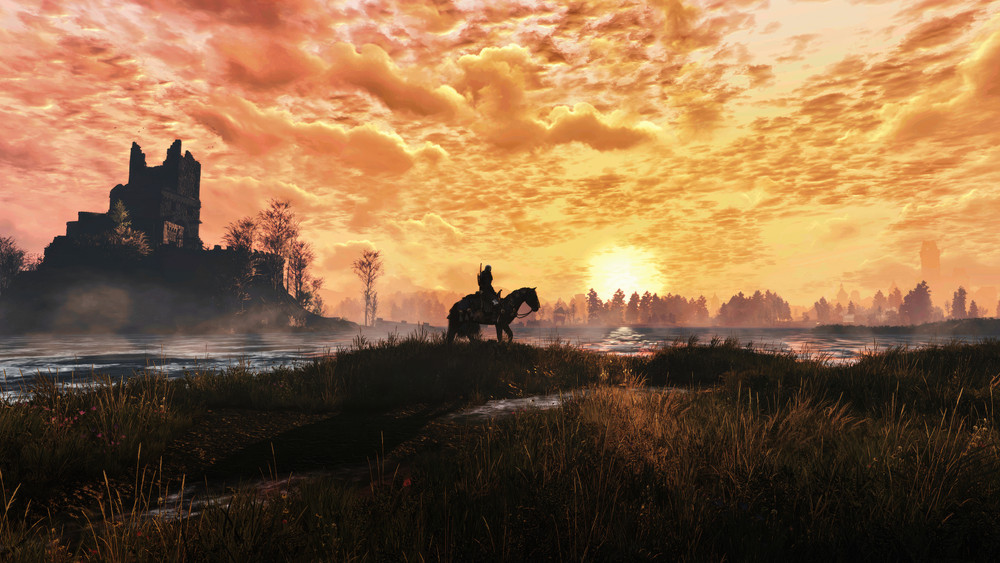
In my spare time on social networks, I've been reading more and more comments about just how tired many are of open worlds in video games, or rather of how they are built. What if the magic is gone? Or does it just take knowledge of how to make them, a spark that most lack?
It's true that, if we look closely, some players in this industry are doing very well. Rockstar Games, CD Projekt Red and Bethesda Game Studios spring to mind. So why is it that some of them are doing so well, while others aren't? Let's try to come up with a few ideas today, and I'm eager to see what you all come up! By all means, please tell me more in the comments.
A simple technological feat or a real positive in a work of art?
In over two decades of playing video games, I've had time to get to grips with the genre. I've also been able to watch the effect it had on me as a gamer, from the moment of discovery, when I became totally passionate about it, to finally getting used to it and being less surprised, less enthralled by it. I remember how I first felt about Grand Theft Auto III and The Elder Scrolls III: Morrowind. At long last, I felt completely free. The joy of discovering settings filled with life, characters who seemed to have a story, and places brimming with secrets. These open worlds were made real thanks to subtle details and real thought from the devs.
What's more, the two titles mentioned above arrived in the early 2000s, while 3D still was in its infancy. Implementing such freedom required know-how, plenty of concessions and true optimization. The moment we discovered that this was possible, we became acutely aware of the technological feat that was unfolding before our eyes.
As a result, many developers wanted to try their luck. The industry soon experienced its first setbacks with the genre. The complexity of open-world games was a major stumbling block for many developers. There are many of them, and I'm sure you're familiar with at least one. There's the catastrophic Driv3r, by Reflections Software and Atari Inc. for example, or some more mixed ones like Prototype.
Many have tried their hand at this, and often left with a sense of failure. And so we come to one of the most criticized problems with open-worlds: that there's a void there that absolutely must be filled... and it's not always done in the right way.
Empty worlds and attempts to fill them
And yes, everything seems to be summed up here. If I put together the biggest criticisms made of the genre, it's that the world in which players find themselves is empty, bland, and that it's filled to the brim with collectibles. Not only does this artificially inflate the lenght of the game, it does so in a way that feels tiring and boring.
Ubisoft is often accused of being one of the biggest ofenders here, and there's some truth to it. Despite a few surprises such as Assassin's Creed, Watch Dogs and a few Far Cry, the quality of the company's open worlds is often up and down. Players seem to be getting increasingly tired of spending dozens, even hundreds of hours in a world that has nothing to offer beyond collectibles and so-called "Fedex" quests, which are just taking something from point A to point B.
Others have mastered the recipe's right ingredients, even today. CD Projekt Red is one of them, having already hit the mark with The Witcher 3: Wild Hunt and confirmed its success with Cyberpunk 2077.
Today, the industry seems to have come to terms with the formula. Sometimes, it even goes back to basics and prefers to write an ode to simplicity rather than excess, leaving us with just a few "open" zones accessible between other, more scripted phases. And that can work just as well! For a long time now, Rockstar Games has been releasing games with larger and larger maps. In view of the numerous leaks and declarations, even one of the pioneers now seems to be abandoning this excess, no doubt preferring a smaller world, but one teeming with ten times as many details and events.
Finally, this freedom doesn't seem to be the sole preserve of open-worlds. Trebds have changed, and the industry is in perpetual motion. From now on, what we want above all is a sincere and effective experience. We're going back to simpler gameplays and shorter, more to the point adventures. Who today still has the time to spend hundreds of hours immersed in a work of art, when there are plenty of new ones coming in every week?
Today, it's no longer a question of technological prowess as it was nearly 20 years ago. Open-world games will always exist, but they will undoubtedly meet our new expectations - or that's what we hope.