Video games adapted from films: a long-lasting fad
, by Quentin
Perhaps some of you have already fallen prey to a licensed game in the past, by which we are refering to a film adapted into a video game. We sure did, and what we ended up with was, at best, a fun time offering nothing new, or in most cases, a poor quality work that made us regret the money spent. However, it might be interesting to understand why this end up being the case most of the time.
Video games not as art, but as just another film-related product
We don't want to spent too long dwelling on this, so we'll get straight to the heart of the matter. Until the early 2010s, movie studios saw video games not as art, but as a mere marketing product to make some quick buck. Just like a figure from your favorite character, really.
And so would they approach a publisher or dev team to comission a game based on an upcoming film. So far, so good. But that's when things get tricky. Devs often get a really limited budget and very, very tight deadlines. The studio has to make do with little, and quick. Usually, they end up having a few months to develop an entire game.
On top on this there's yet another problem: non-disclosure agreements (NDAs for short). Devs don't get access to the film's script or even the character designs. The employees of a French Company, Étrange Libellules, a company behind many licensed games, ended up venting their frustation abouth this whole ordeal a few years later.
The team took the example of the game for Tim Burton's Alice in Wonderland. The director didn't want to reveal anything abot the film, which in turn left the studio's employees with no info to help develop the game. This went to such extremes that the director of Étrange Libellules got some photos of the shoot taken in secret to get a glimpse of what the characters look like! Of course, this in turn had repercussions in the development process, having to rework many aspects of the game to suit the film.
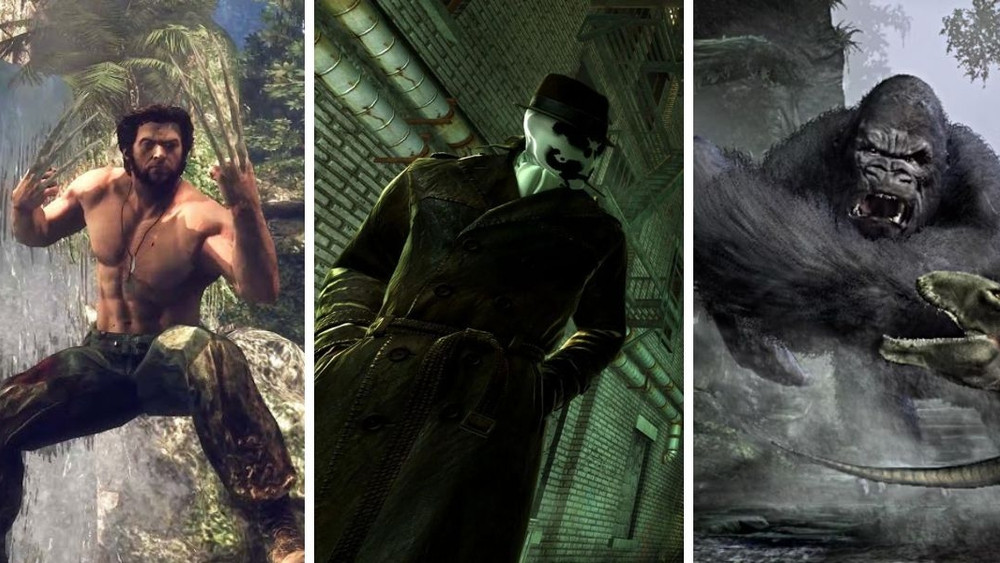
The Danes at Deadline Games experienced a similar situation with Watchmen, not being able to know anything about what Zack Snyder was cooking. Keep in mind that a film can change during production, which forces the hand of the studio to adapt the game in short time.
Add some surprises in the mix
That's not to say that all these games end up being bad. Peter Jackson's King Kong comes to mind. The director had fallen in love with Beyond Good & Evil, and the man himself contacted Michel Ancel to work on the project.
The director put all the necessary elements at the disposal of the father of Rayman, and this, combined with the know-how of Ubisoft Montpellier, made it possible to create a bona fide hit.
There were also titles like X-Men Origins: Wolverine, which was a great adaptation with superb graphics, fun gameplay and the presence of the official voice actors to boot.
Which license games surprised you for good?
But do these games based on films still exist?
That's a good question, really. It's true that, if we take a closer look at what's currently being released, games adapting films no longer exist.
The reason is quite simple. Studios have become aware of the reputation that those adaptations can have on their teams. Do you remember Eurocom's disastrous fate about the release of the mediocre 007 Legends.
Today, film studios are also changing their strategy, grating more creative freedom to devs. There's good games about movies nowadays, such as Marvel's Spider-Man, Avatar: Frontiers of Pandora or Hogwarts Legacy, that feature a original scenario. We no longer talk about adaptations based on specific films.
Whatever the case, it was a prevalent practice in the industry, and it was worth talking about.