DLSS 5: artistic revolution or technical misstep?
, by Enzo
Between technical prowess and artistic intent: is NVIDIA pushing the boundaries of realism too far? There are plenty of headlines that could describe this technology. For anyone interested in current affairs and complex debates, DLSS 5 is undoubtedly one of them. After all, this new technology sits at the crossroads of two particularly dynamic yet controversial areas in recent years: artistic intent in video games and AI-powered technology.
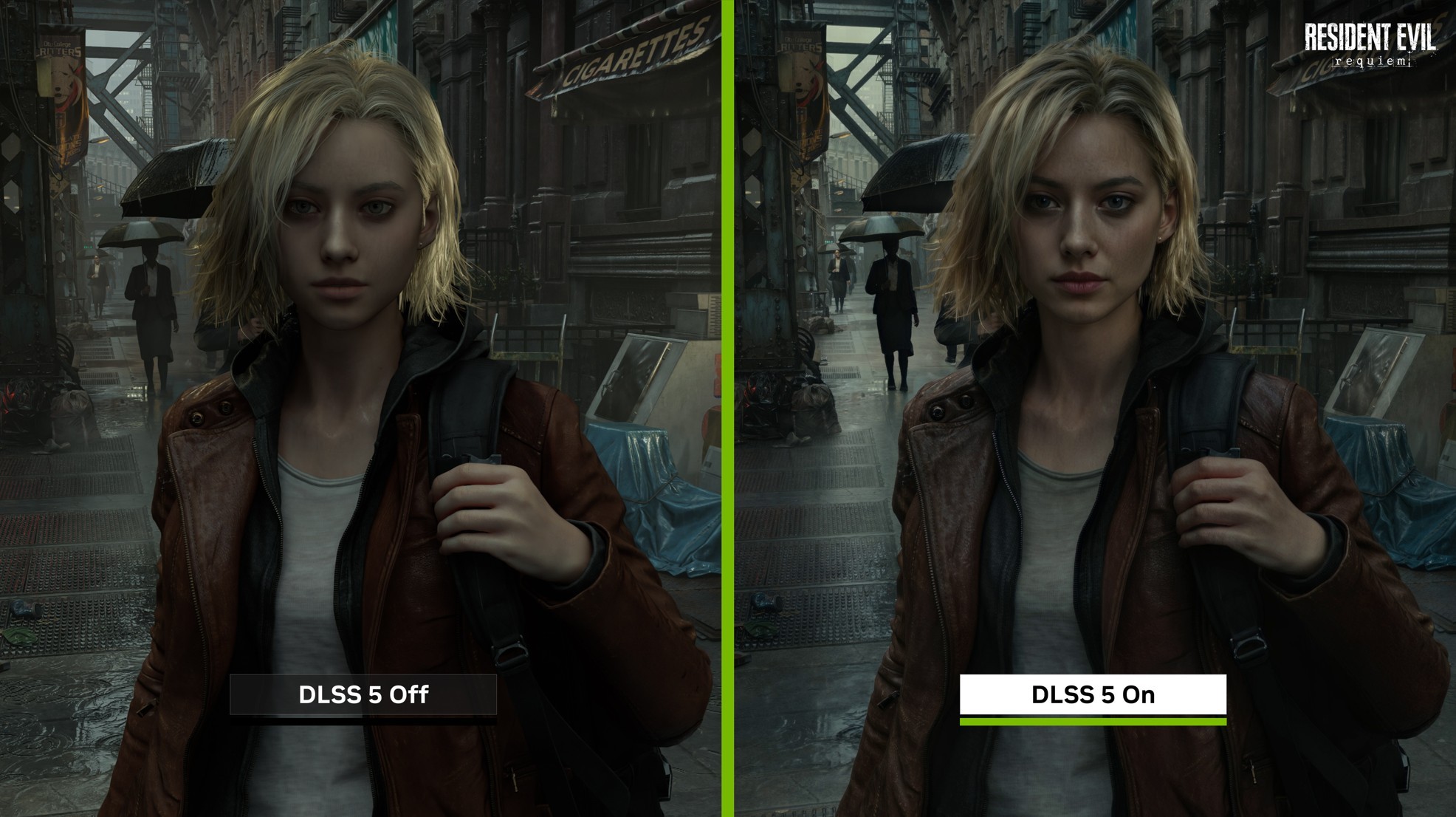
It has taken several generations of graphics cards to push visual realism to its current limits, but NVIDIA is looking to take it even further with a new offering: DLSS 5. Announced in March 2026 as a genuine revolution, this technology marks a turning point in the integration of artificial intelligence into video games. While previous DLSS versions primarily focused on improving performance and image resolution, this latest iteration goes much further, modifying lighting, shadows and materials to bring our games closer to photorealistic visuals.
However, behind this technological promise lies a far more delicate question: how much creative control should we allow AI to have? Altered faces, compromised art direction, visual homogenisation and even a loss of control for developers… There are plenty of reasons to be concerned. And that's without considering the questions surrounding the hardware required to run this.
So, is DLSS 5 the next major leap forward for video games, or another step towards increasingly artificial experiences? One thing is clear though, NVIDIA has opened a debate that could shape the future of the industry.
DLSS 5: more than an upscaling tool
Since its introduction in 2018, DLSS (Deep Learning Super Sampling) has evolved considerably. Initially designed to improve performance by reconstructing higher-quality images from a lower resolution, it has gradually gained new features such as Frame Generation and Ray Reconstruction. Its core objective, however, has remained the same: allowing players to enjoy increasingly advanced graphics without sacrificing smooth performance.
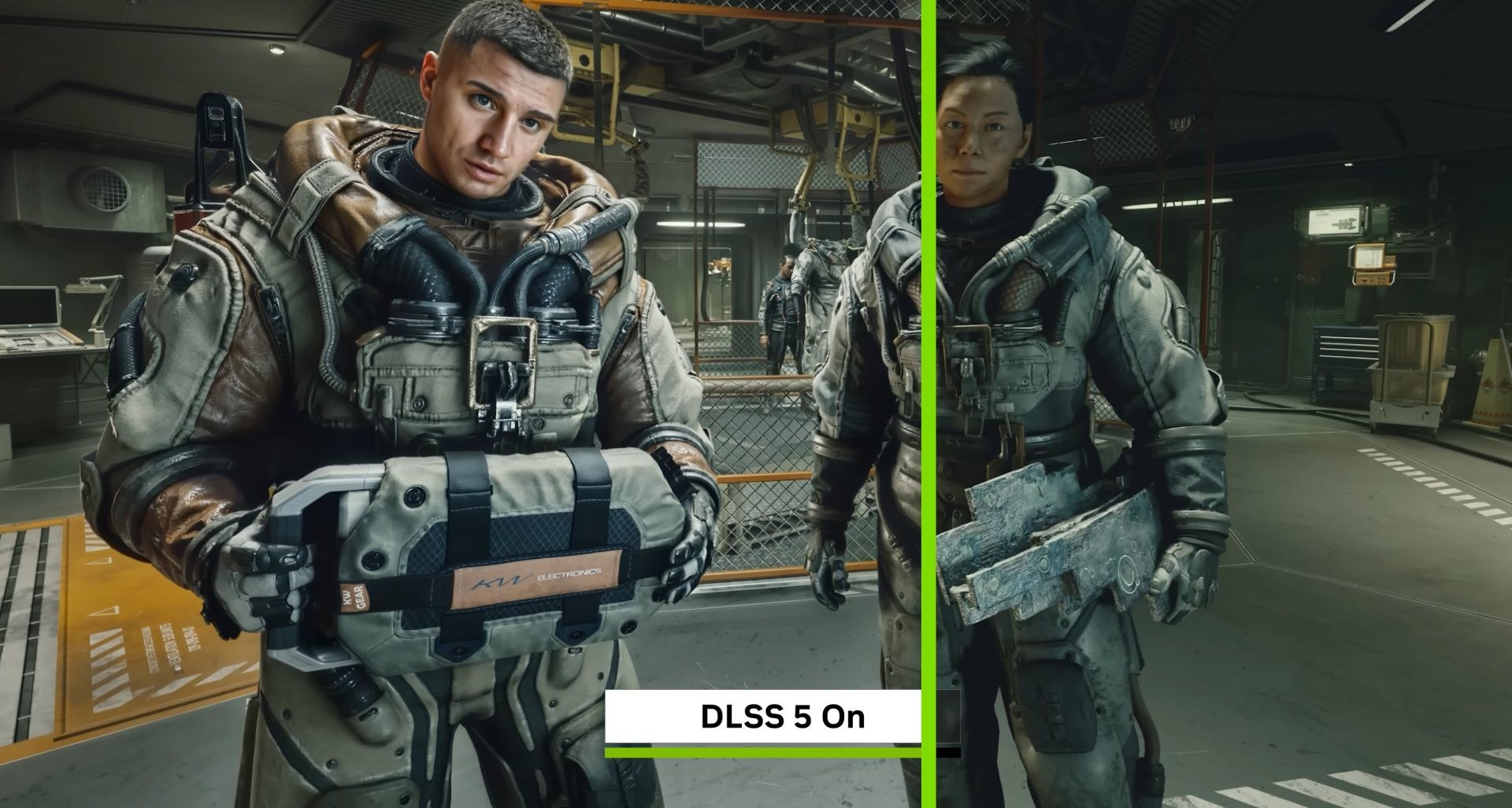
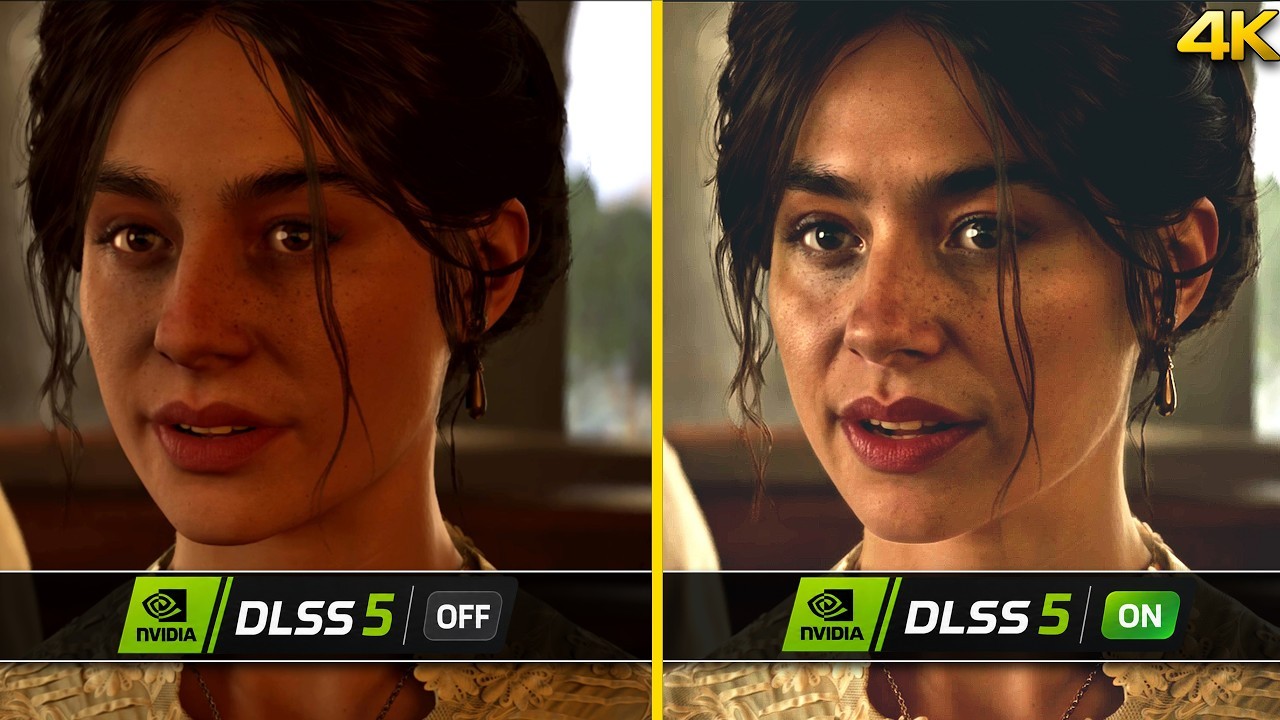
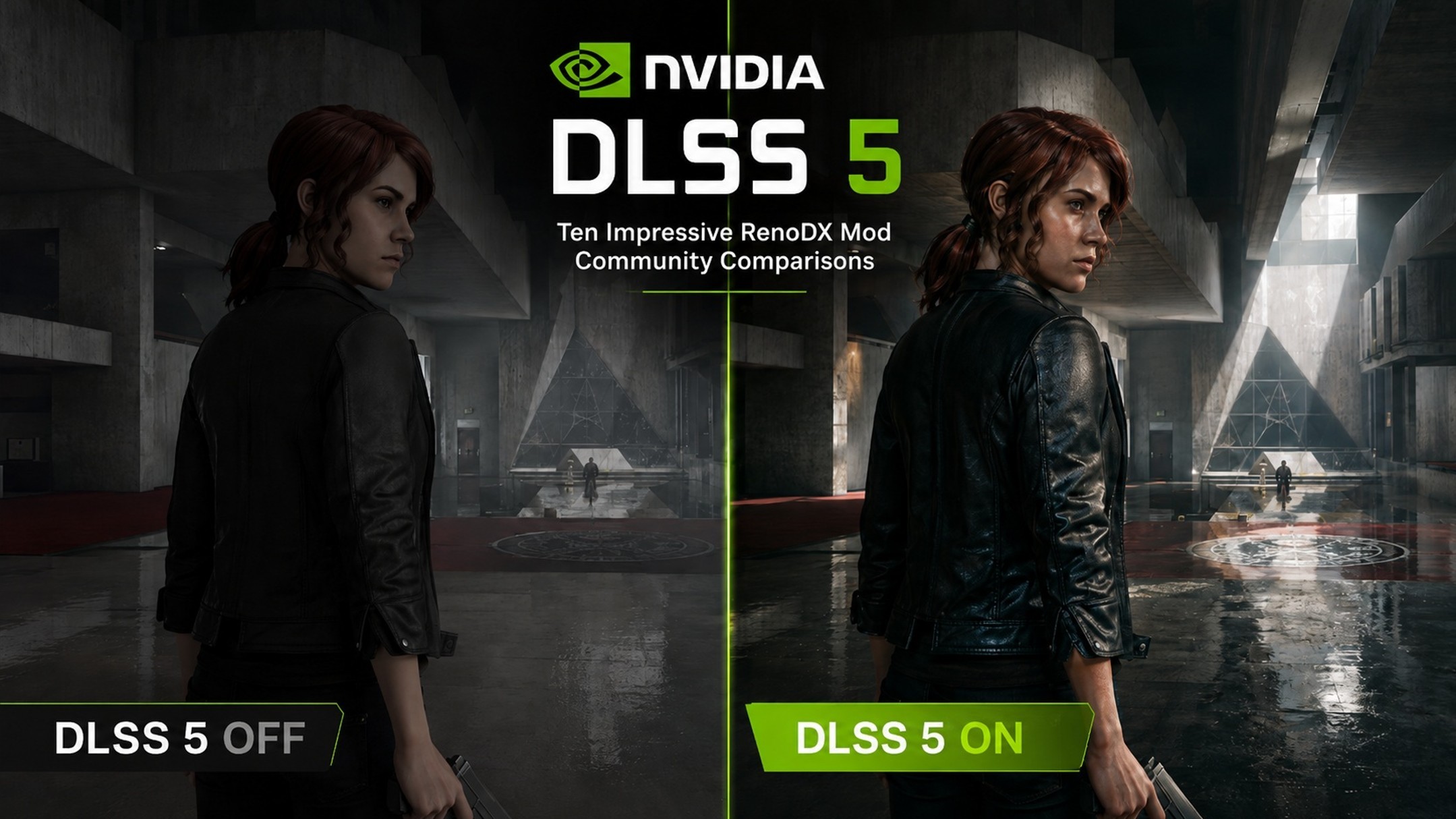
With DLSS 5, NVIDIA is taking things to another level. Thanks to 3D-Guided Neural Rendering, artificial intelligence now works directly on the appearance of images by using the game's own 3D data. Lighting, shadows, materials and character rendering can all be reprocessed to achieve more realistic results. More detailed skin, better-lit hair and more natural-looking fabrics: the technology is no longer simply about improving resolution, but about visually enhancing every scene.
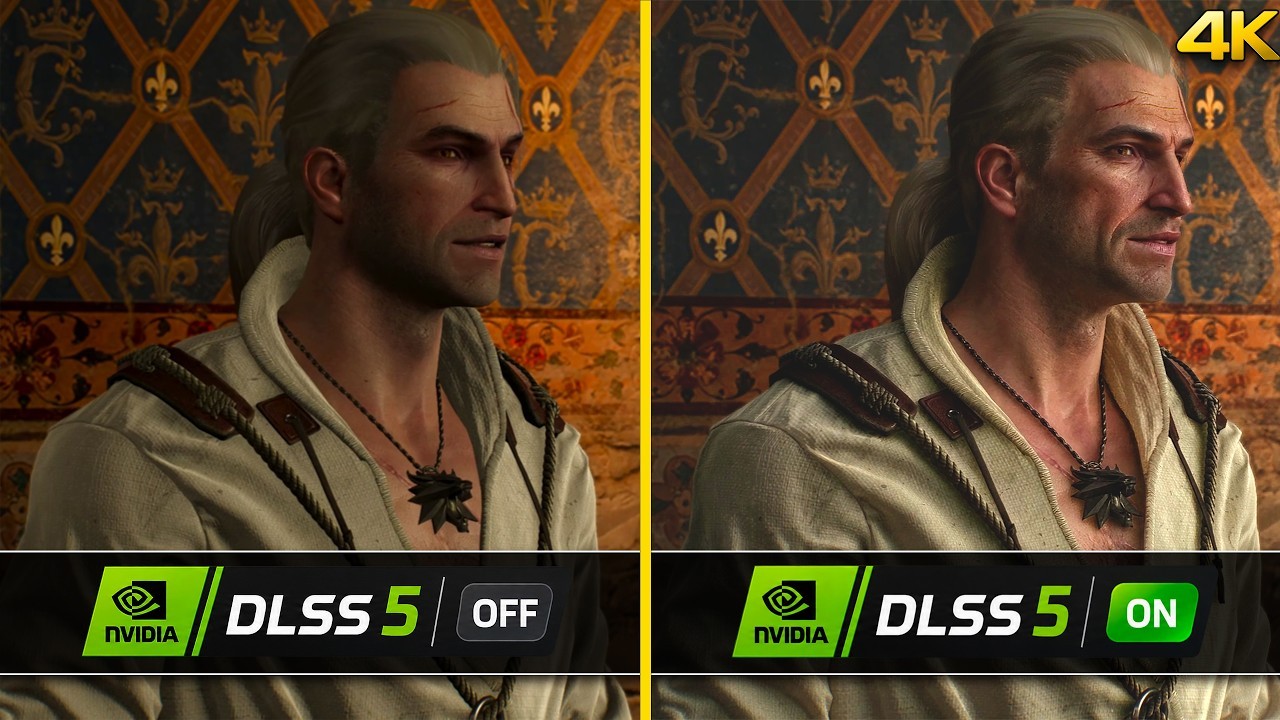
Several industry figures and studios have already publicly voiced their support for this technology. One notable example is Daniel Vávra, director of the Kingdom Come: Deliverance titles. According to him, the lighting looks more realistic and enhances certain details, including the expressiveness of some characters' faces. Hair shadows also benefit from improved rendering.
When realism becomes a threat to art direction
This is probably the biggest point of contention surrounding DLSS 5. From the moment it was unveiled, the first demonstrations sparked numerous negative reactions among players and industry professionals alike. The main issue? An occasionally excessive tendency to alter characters' appearances, resulting in overly smooth faces, modified facial features and visuals that make certain protagonists look artificial. Comparisons with beauty filters and AI-generated images quickly flooded social media.
This situation raises a fundamental question: do video games really need to pursue photorealism to look impressive? Art direction is one of the cornerstones of any game's identity. Zeldas, Clair Obscur: Expedition 33, Borderlands or any pixel-art indies have no need to look reali to leave a lasting impression. In fact, their artistic choices, often deliberately detached from realism, are an essential part of what makes them unique.
The risk, therefore, is that we could end up with a degree of visual homogenisation, where artificial intelligence gradually applies the same formulas to worlds that are fundamentally different. There are also concerns about the role of graphic designers and artists in the creative process. If AI can now intervene in such important elements as materials and lighting, how far will its influence extend? We must also consider the hardware resources required to run this technology, which could further widen the gap between different PC configurations.
A technical advancement that has some strong arguments in its favor
That said, dismissing DLSS 5 as nothing more than a threat to creativity would be an overly simplistic view. As with any new technology, its usefulness will largely depend on how developers choose to implement it. NVIDIA has explained that it is providing studios with various control tools to adjust the effects, their intensity and the elements they affect. The goal is to allow developers to retain control over their artistic direction while benefiting from the improvements offered by neural rendering.
The possibilities are particularly interesting for the most ambitious games, like open-world experiences, sims and narrative experiences aiming for photorealistic visuals. By enhancing certain materials and lighting effects, DLSS 5 could allow studios to improve visual quality without constantly increasing the complexity of their models and traditional rendering calculations.
It would also be premature to consider artificial intelligence a replacement for artists. When used properly, it can become another tool in their creative arsenal, just like previous graphical innovations. The real challenge will be finding the right balance between automation, artistic freedom and performance.
It’s available, yes, but who can actually use it?
Since its announcement back in March 2026, DLSS 5 has gradually started appearing in games developed by NVIDIA's partner studios. The company announced its official launch for early September 2026. However, there's one major drawback worth considering: the significant performance drop. Since the technology is still far from being a finished product, NVIDIA continues to refine it week after week. At launch, initial estimates pointed to a 50–60% performance drop in compatible games.
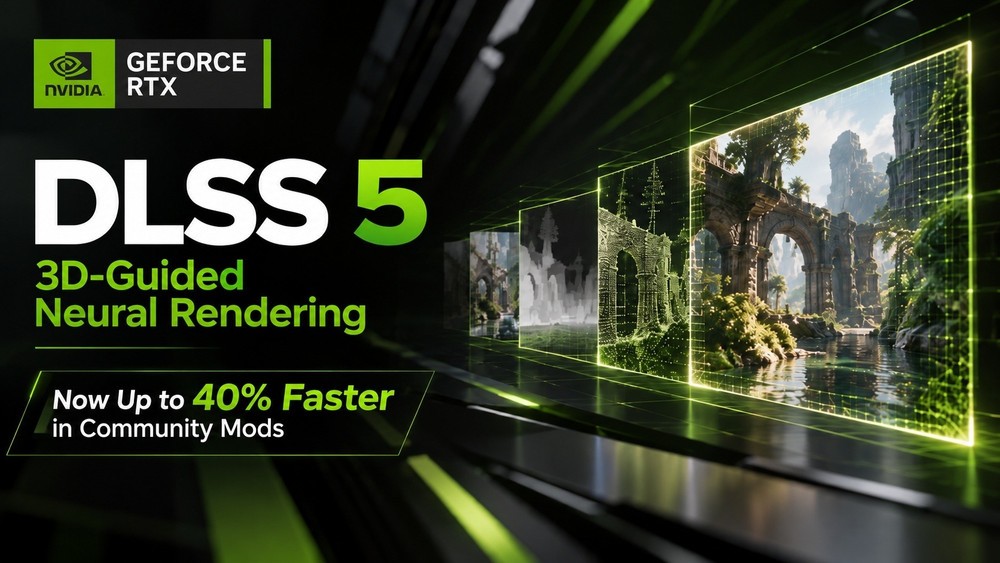
NBA 2K27 and Hogwarts Legacy are among the first games to support the technology, while other titles such as War Thunder and Where Winds Meet are also expected to join the lineup during November 2026. In the meantime, the technology has continued to evolve and now delivers a 30–40% performance improvement compared to its initial version, according to some tests by some internet users.

NVIDIA has also announced plenty of partnerships with big publishers and studios, highlighting the company's ambitions for this new generation of neural rendering. However, the technology's wider adoption comes with several requirements. For starters, DLSS 5 requires a compatible GeForce RTX graphics card, with initial support focused on the RTX 50 series. NVIDIA has nevertheless already confirmed plans to bring the technology to RTX 40-series GPUs.
Developers must also integrate the technology into their games, which involves additional work and means adoption will inevitably take time. In other words, although NVIDIA wants to make DLSS 5 the new graphics standard, not every player will be able to take advantage of it straight away.
What do I need to try DLSS 5?
To experience DLSS 5, you'll first need an NVIDIA GeForce RTX 50-series graphics card, the latest graphics drivers and a game that supports the feature. Once that's taken care of, simply enable the technology in the game's graphics settings. In many cases, it appears as DLSS Neural Rendering. Be warned, though: it is particularly demanding on hardware resources.
Despite the optimisations promised by NVIDIA, neural rendering requires considerable computing power, which can quickly push certain PC configurations to their limits. Ideally, you'll want a sufficiently powerful machine to enjoy the experience under decent conditions without turning every gaming session into a slideshow.
For those without an RTX 50-series card but with an older GPU (RTX 40, RTX 30, etc.), there is an unofficial way to experiment with the technology. This involves using unofficial modifications and community-developed tools such as DLSS Unlocked or OptiScaler, which can bypass some of the original limitations.
Some modders have managed to get around the initial hardware restrictions by adapting certain files from NVIDIA's technology. However, it's important to stress that these are experimental procedures: they can lead to significant performance drops, graphical glitches or crashes. Detailed guides are already available on some specialist websites.
In the end, the future of gaming isn’t just a matter of pixels
Ultimately, it's difficult to determine whether DLSS 5 will represent a genuine revolution or simply become another feature in NVIDIA's technological arsenal. Its success will depend just as much on developer adoption as on its ability to respect the artistic intent behind each title. If studios manage to take advantage of its capabilities without sacrificing their visual identity, this technology could become an extremely interesting tool. Otherwise, it risks becoming a symbol of a race towards realism that the industry may not actually need.
Because perhaps that's where the real problem lies: as we strive to bring video games ever closer to reality, are we at risk of forgetting what makes them so special in the first place? The greatest gaming experiences aren't necessarily those with the most detailed textures or the most natural-looking lighting. They're also the ones that offer unique worlds, a distinctive identity and a clear artistic vision. DLSS 5 is therefore neither the saviour of video games nor necessarily the industry's next major technological misstep. Above all, it's a new tool whose value will depend entirely on how it's used.