Escape from Ever After Review: An anti-capitalist fairy tale
, by Enzo
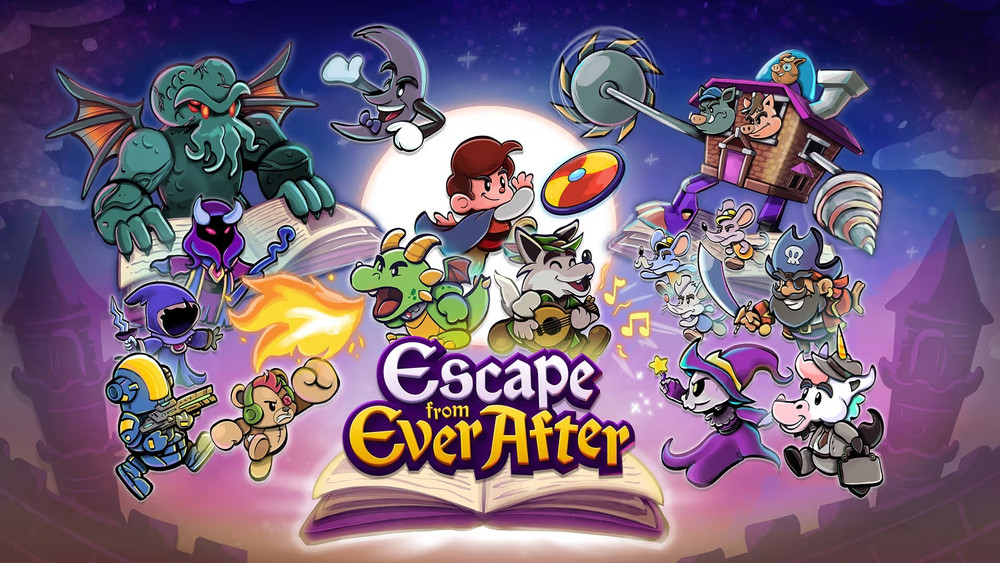
Some games plunge players into the heart of magical fairy tales, while others simply decide to blow them to pieces. Escape from Ever After falls into the latter category. The game takes great delight in deconstructing the very idea of “they lived happily ever after,” using it as the starting point for an adventure that’s as dark as it is surprising.
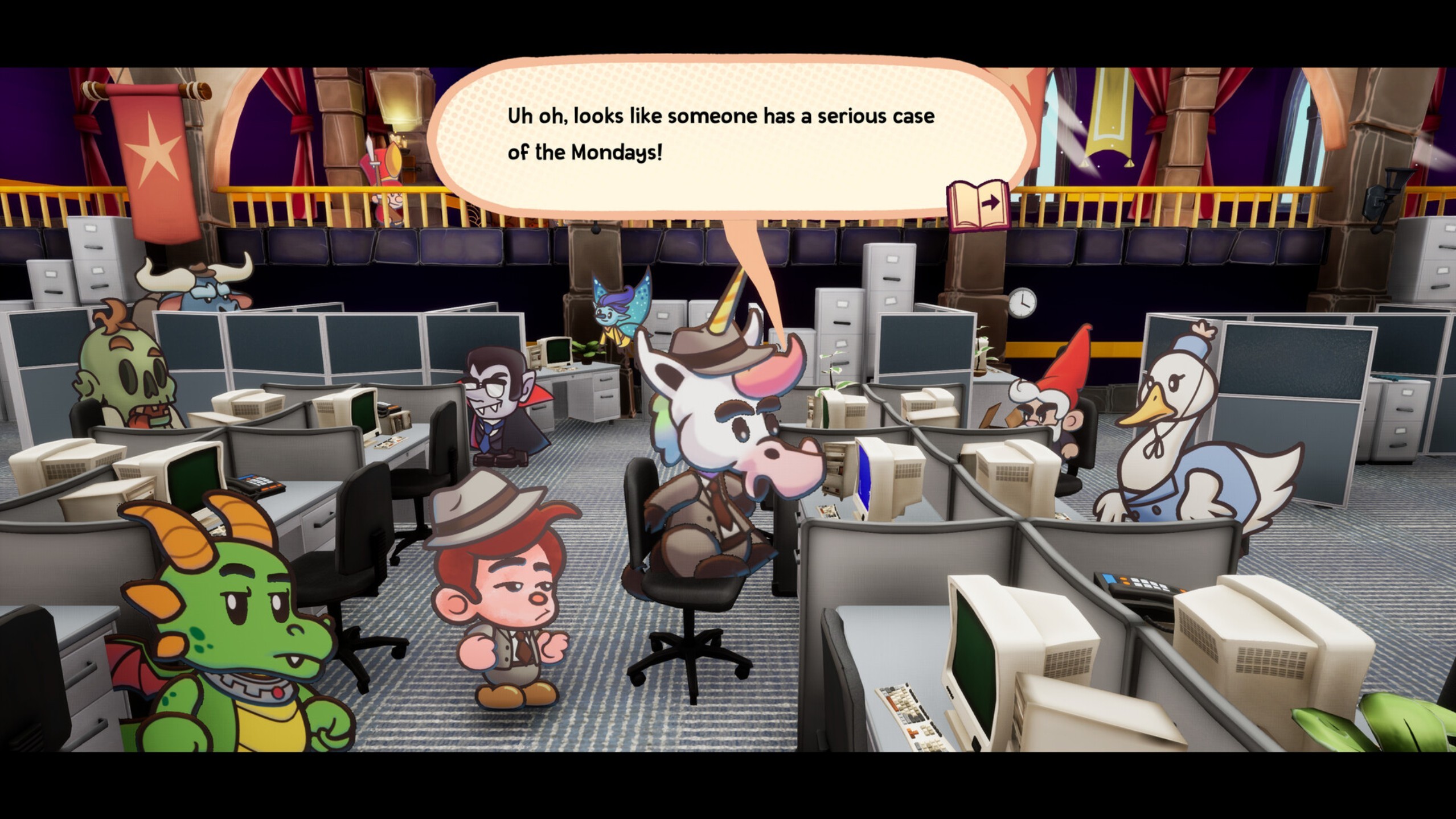
A true love letter to Paper Mario with its colorful, paper-inspired art style, be careful not to be fooled by its sweet, interactive-fairy-tale vibe. Expect to discover, in reality, a much more complex experience that oscillates between satire, a narrative escape game, and a reflection on the genre’s archetypes. Let’s dive together into the shoes of a hero who infiltrates a mega-corporation from the inside to confront capitalism through reimagined children’s stories. Nothing less.
An impeccable art direction
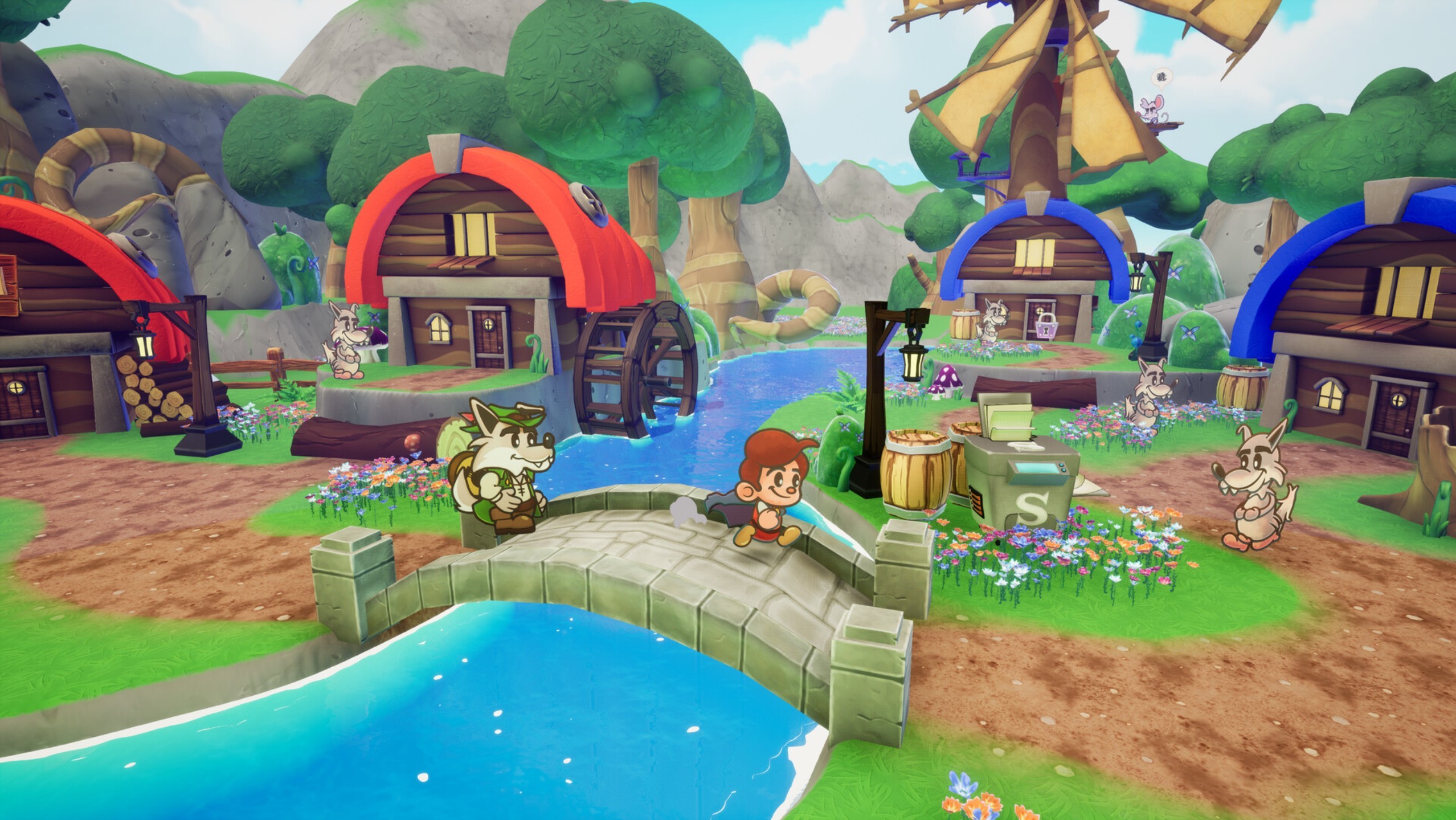
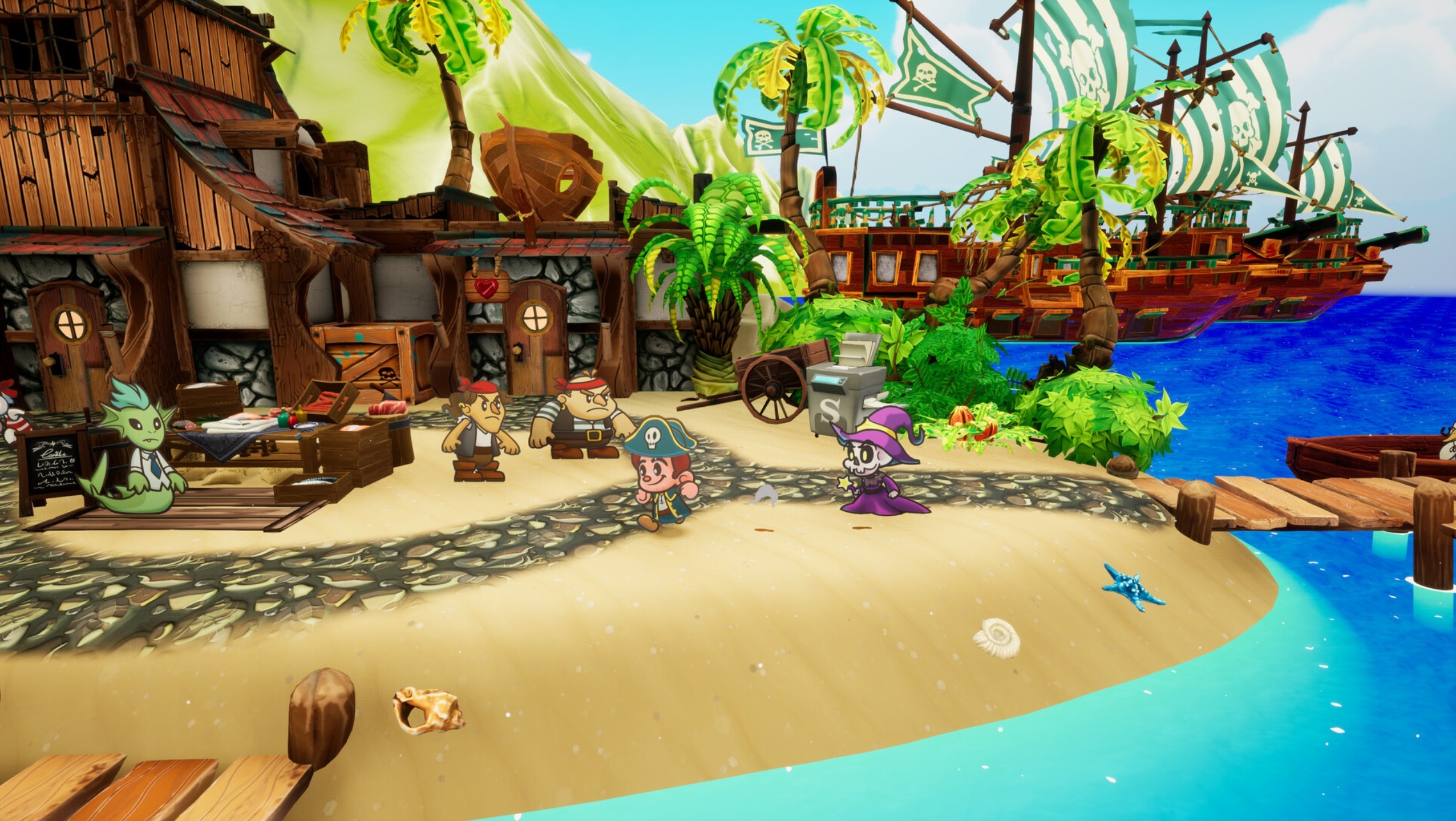
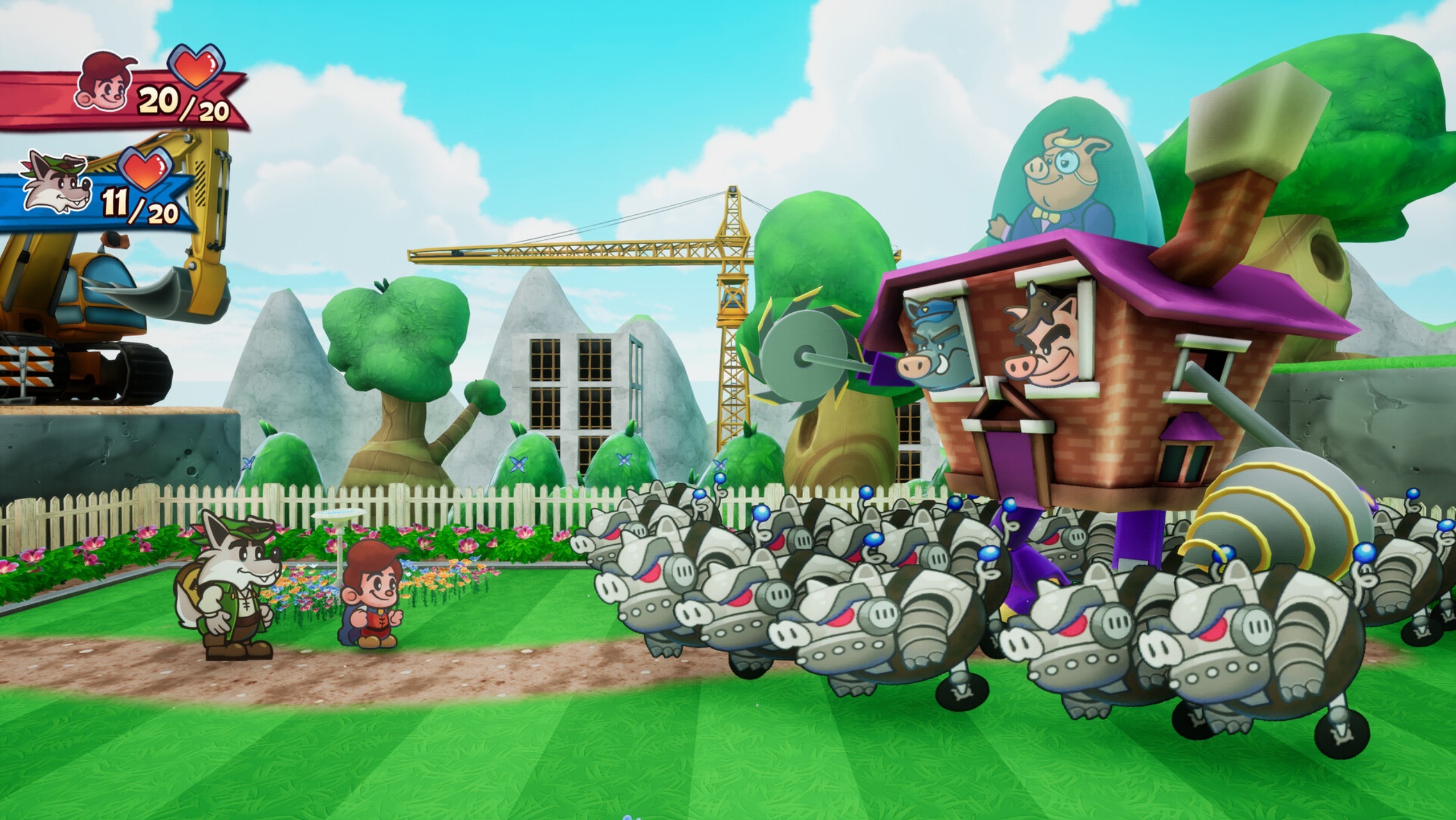
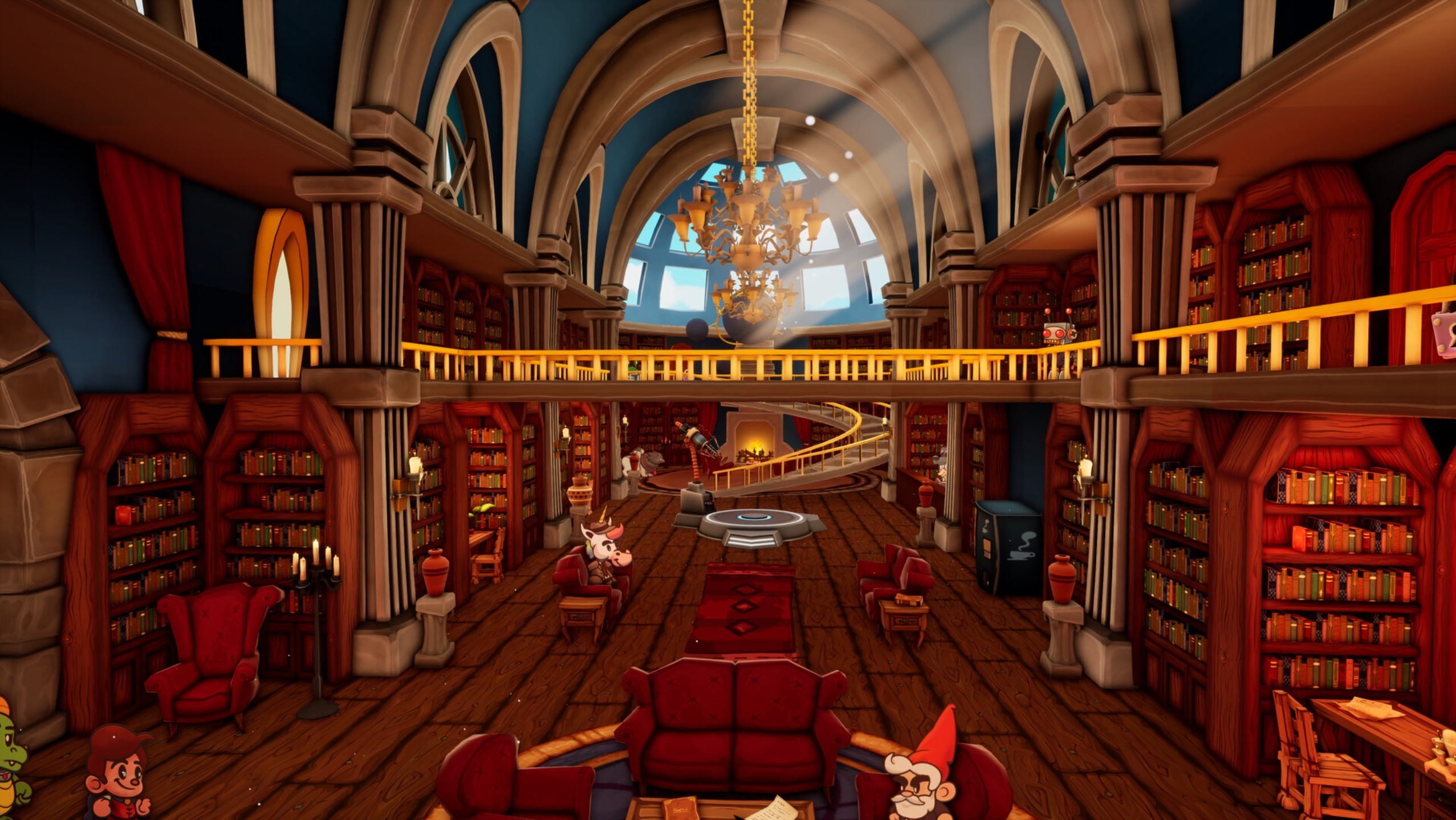
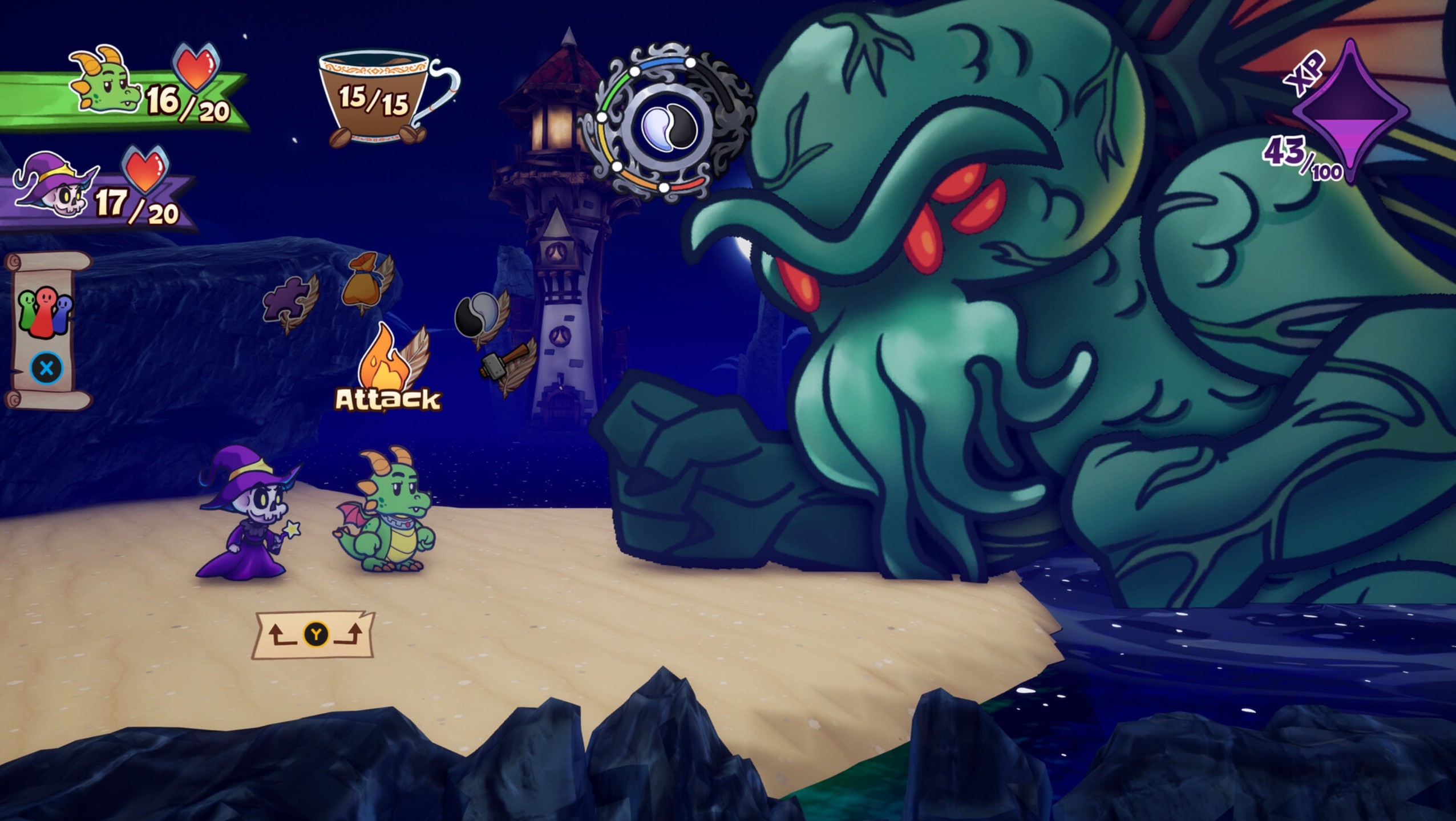
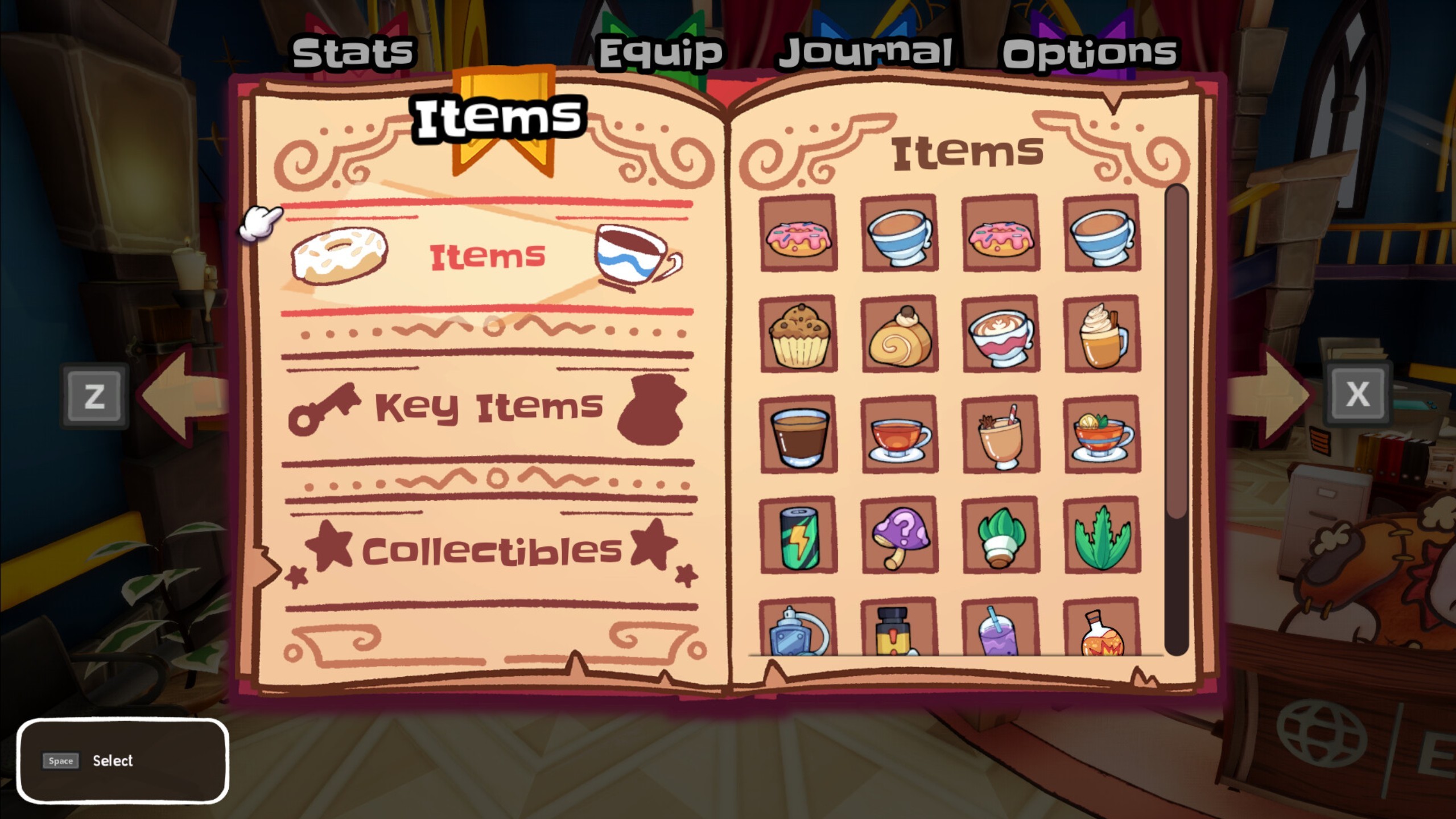
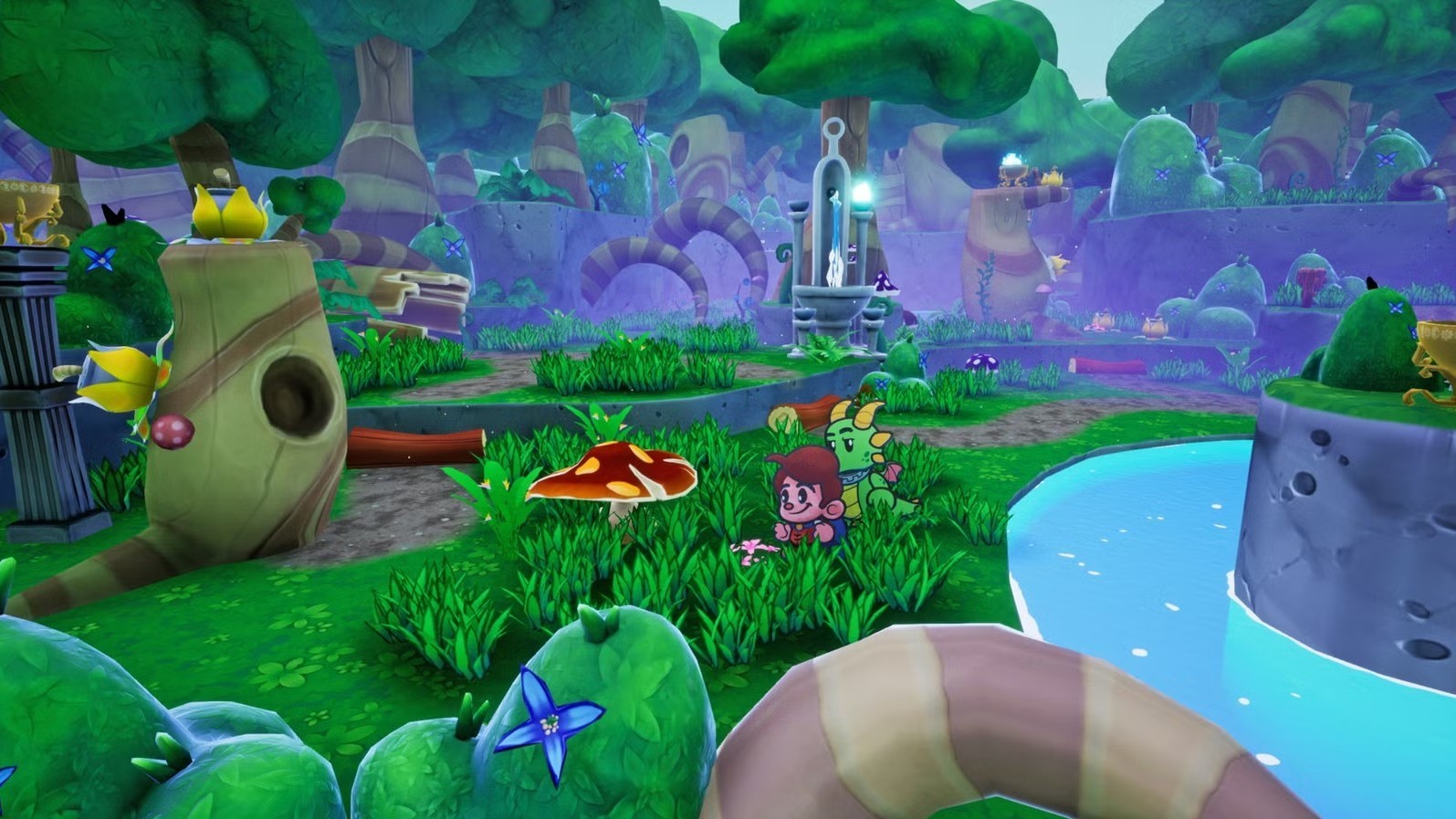
Artistically speaking, the game just works. The settings blend a fairy-tale aesthetic with unsettling details, creating a constant contrast between beauty and unease. To enhance immersion, you heal yourself with cakes instead of bandages, drink coffee to restore mana, and so on.
The characters, for their part, feature deliberately caricatured, almost static designs that reinforce the sense of an artificial world. This visual style is accompanied by a subtle soundtrack that alternates between gentle melodies and more oppressive soundscapes, perfectly highlighting the narrative turning points.
From the very first minutes, the tone is set. You play as a character trapped in a kingdom where stories are frozen in happy endings… but where something is off. Prince Charmings have become apathetic, heroines seem trapped in their own roles, and the setting itself feels like a play repeating itself endlessly. The goal? To break this cycle and literally “escape” from this world trapped by its own clichés.
Spot-on storytelling
The game’s greatest strength lies in its storytelling. Rather than following a single, linear plot, Escape from Ever After features a fragmented structure, where each chapter corresponds to a reimagined fairy tale. Players move from a castle inspired by classic stories to an eerie forest where the rules seem to constantly change. Each environment is filled with clues, ambiguous dialogue, and mechanisms to decipher, reinforcing the feeling of being inside a sort of gigantic narrative puzzle.
The game goes for a tone that is both ironic and melancholic, playing with the player’s expectations. The dialogues often have a double meaning: what appears to be a simple line from a fairy tale actually conceals a critique of stereotypes or a reflection on the characters’ freedom. This narrative depth gives the game an almost meta dimension, where you’re not always sure if you’re playing… or analyzing a story that’s unraveling before your eyes.
Gameplay
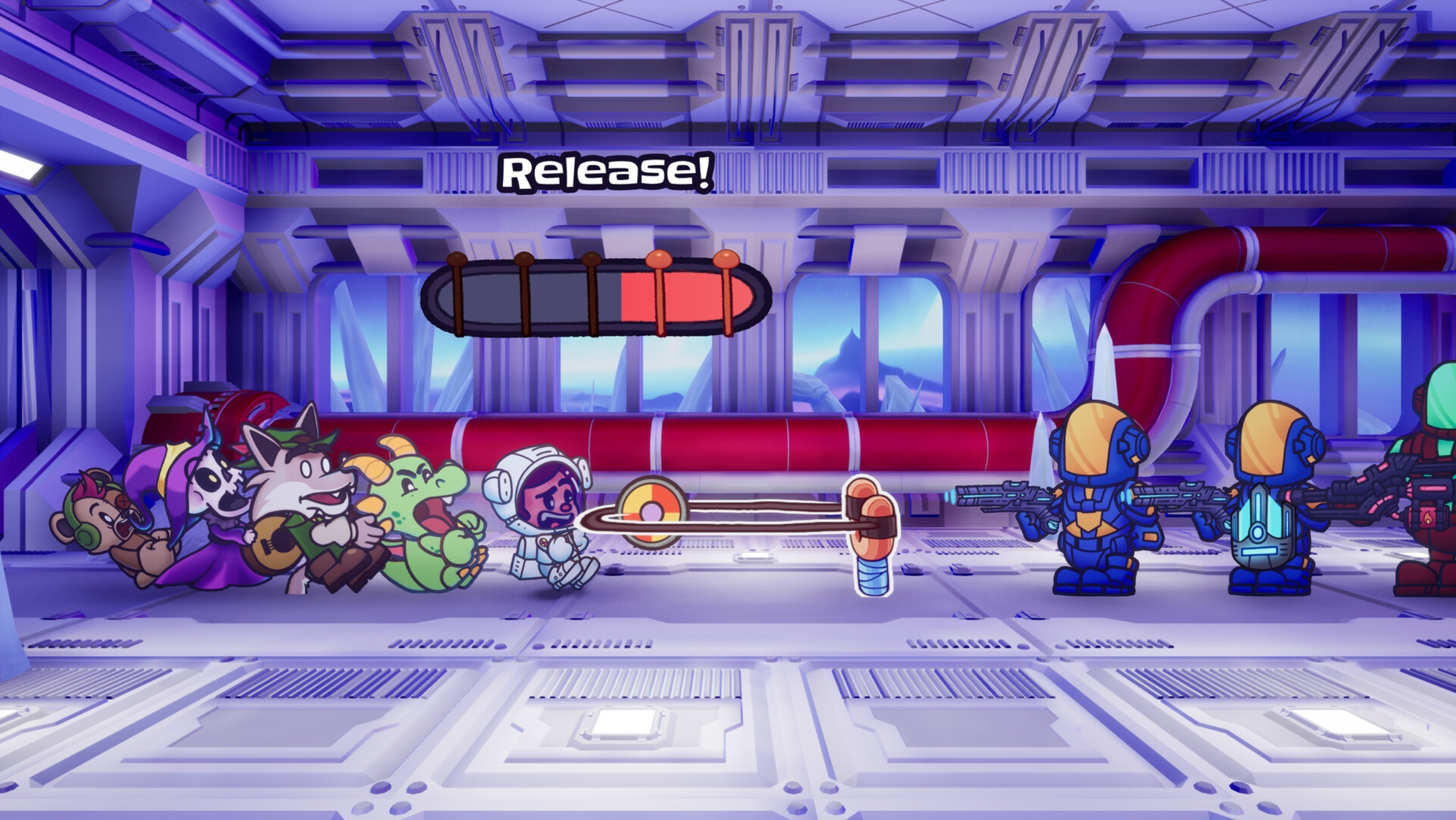
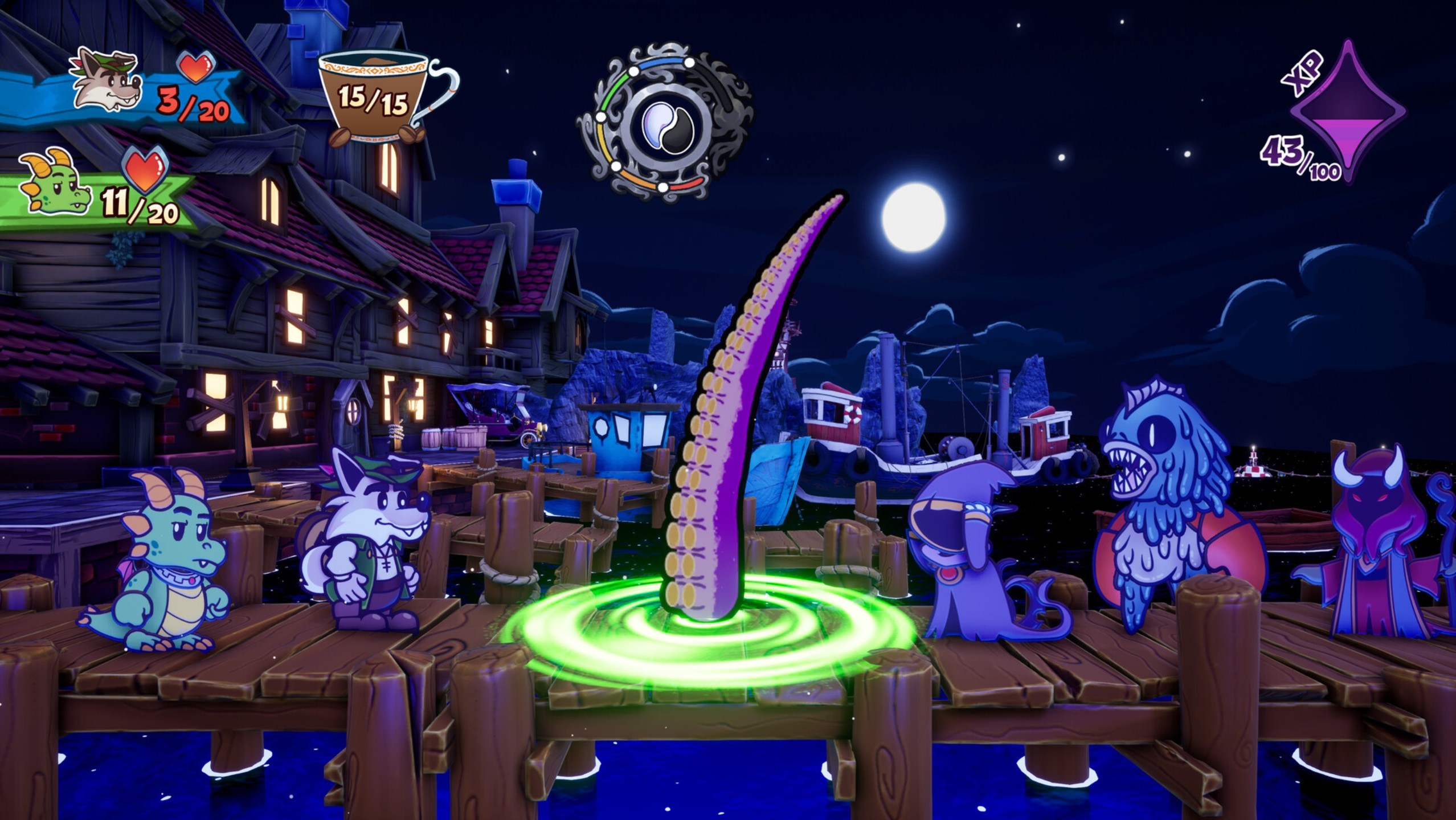
The gameplay focuses primarily on exploration, puzzle-solving, and turn-based combat, in which each encounter will require strategy and reflexes (QTEs). Offensive and defensive combos, partner switching, and elemental weaknesses will all be part of the mix. Your team grows throughout the game and improves through skill trees and various mechanics. While it might seem like a basic side-scroller, there’s actually a whole depth of the world to explore, filled with subtle puzzles, references, collectibles, and even side quests.
But where the game really stands out is in the way it integrates its mechanics with its narrative. Some puzzles directly play with fairy tale conventions: reversing roles or even rejecting an “obvious” quest. They can take all sorts of forms, ranging from visual and mathematical puzzles to auditory memory challenges. This leads to situations that are sometimes confusing, but often brilliant.
Areas for improvement
Not everything is perfect, of course. The pacing can occasionally suffer as a result of this approach. Some sequences drag on, particularly when the puzzles become too obscure or rely on non-intuitive associations. The game doesn’t always take the time to provide enough guidance to the player, which can lead to moments of frustration. Something else that is worth mentioning is how the game’s characters give away the plot right from the main menu, which kind of spoils the fun of figuring out which fairy tale we’re about to dive into.
Finally, we need to talk about difficulty: for those who think the game is just a cakewalk through a theatrical experience, you’re in for a disappointment. In fact, you need a certain degree of strategy and quick reflexes to win the game’s battles, which caught us off guard more than once, especially the boss fights. Accessibility options are available, however, if needed, but we would have preferred ones that weren’t quite so overpowered: rather than making the player completely immune to damage, wouldn’t it be better to simply offer a story mode, or to make the dodge window more obvious?
Tested on PC. See our rating policy here.
7.5/10
What stands out most of all beyond its strengths and weaknesses is the uniqueness of the project. While many games are content to simply reimagine fairy tales from an aesthetic perspective, Escape from Ever After makes them the very heart of its gameplay and its message. It’s not just about experiencing a new story, but about questioning the way stories are constructed, repeated, and imposed. Ultimately, this isn’t a game that will appeal to everyone. Its unconventional pacing, its sometimes challenging puzzles, and its offbeat narrative approach may put some players off. But for gamers seeking an original experience, this is a must-play.
- + Original and well-executed concept
- + Captivating storytelling
- + Immersive and engaging world
- + Well-designed tutorial
- - Combat difficulty is a bit over the place
- - Dialogues can be a tad long at times
- - Could help being more intuitive (QTEs, puzzles…)