Assassin’s Creed Shadows Review: A new dawn for the franchise?
, by Enzo
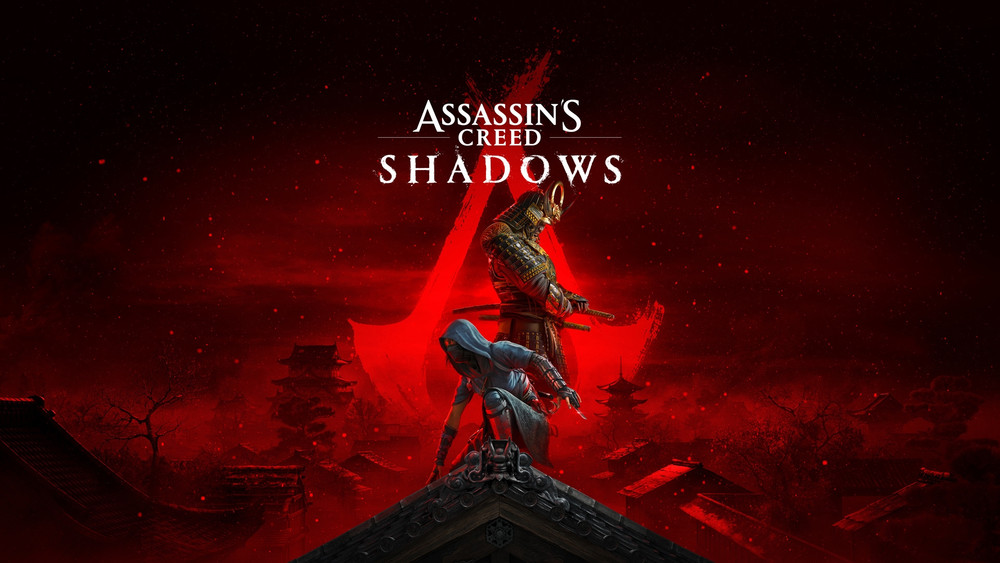
Highly anticipated after a relentless marketing campaign and a predecessor that both delighted and discouraged players due to its length, Assassin’s Creed Shadows was finally released in 2025, offering fans the chance to set foot in feudal Japan. Ubisoft Quebec has attempted here not merely to transplant its usual formula into a new setting, but to offer something a little different. By featuring two protagonists with radically different playstyles, an open world governed by the cycle of the seasons, and an approach more focused on observation and stealth, this installment seeks to breathe new life into a series that needed it. Did it succeed?
A really compelling feudal Japan
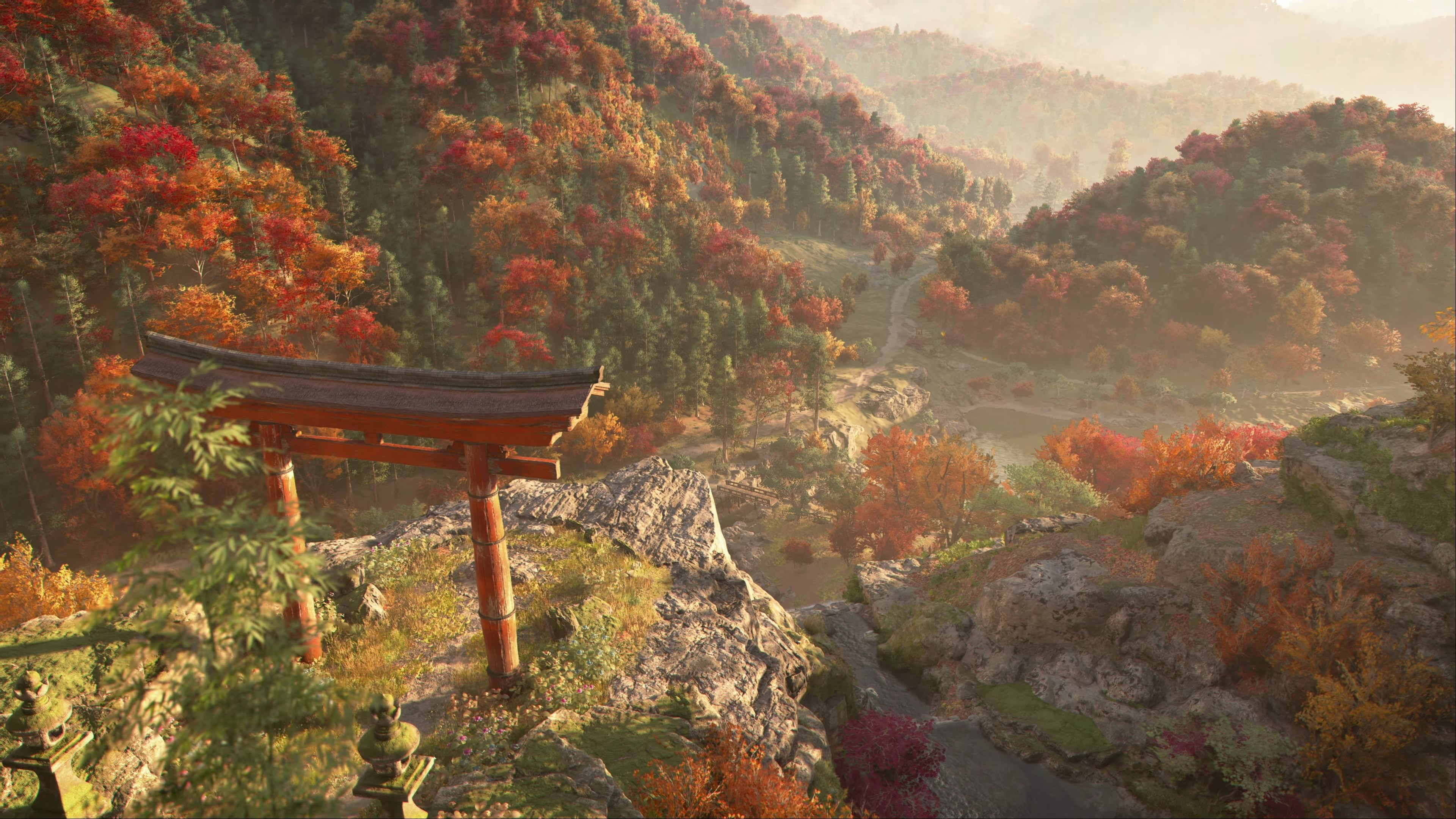
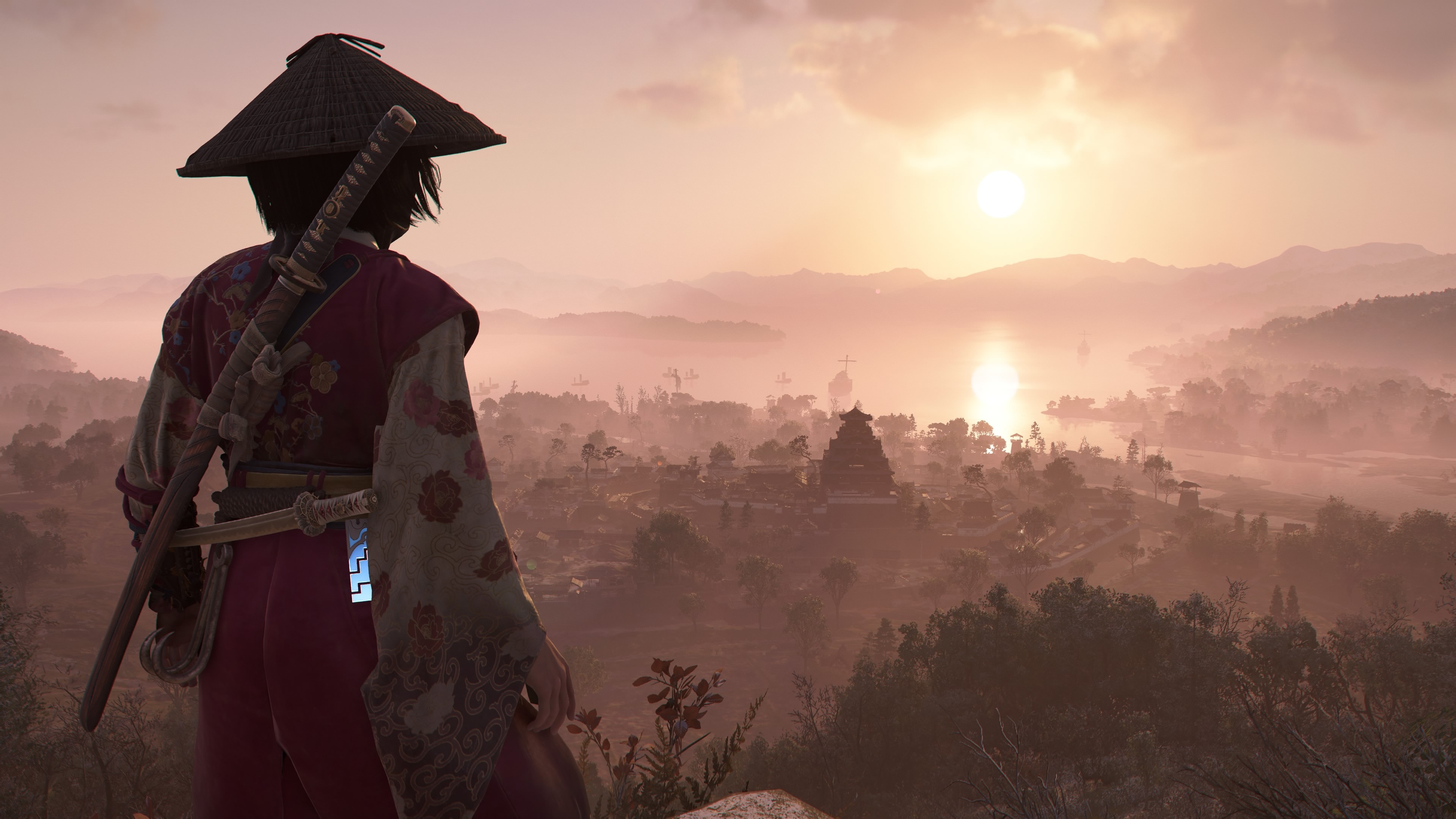
From the very first moments, it’s hard not to be captivated by Assassin’s Creed Shadows! In fact, that’s honestly one of its greatest strengths: it’s stunning. You’re transported to late 16th-century Japan, in the midst of the Sengoku period, as the country undergoes a time of profound political and military upheaval. From Kyoto to rural villages, via castles, ports, forests, and shrines, Ubisoft offers a remarkably diverse open world.
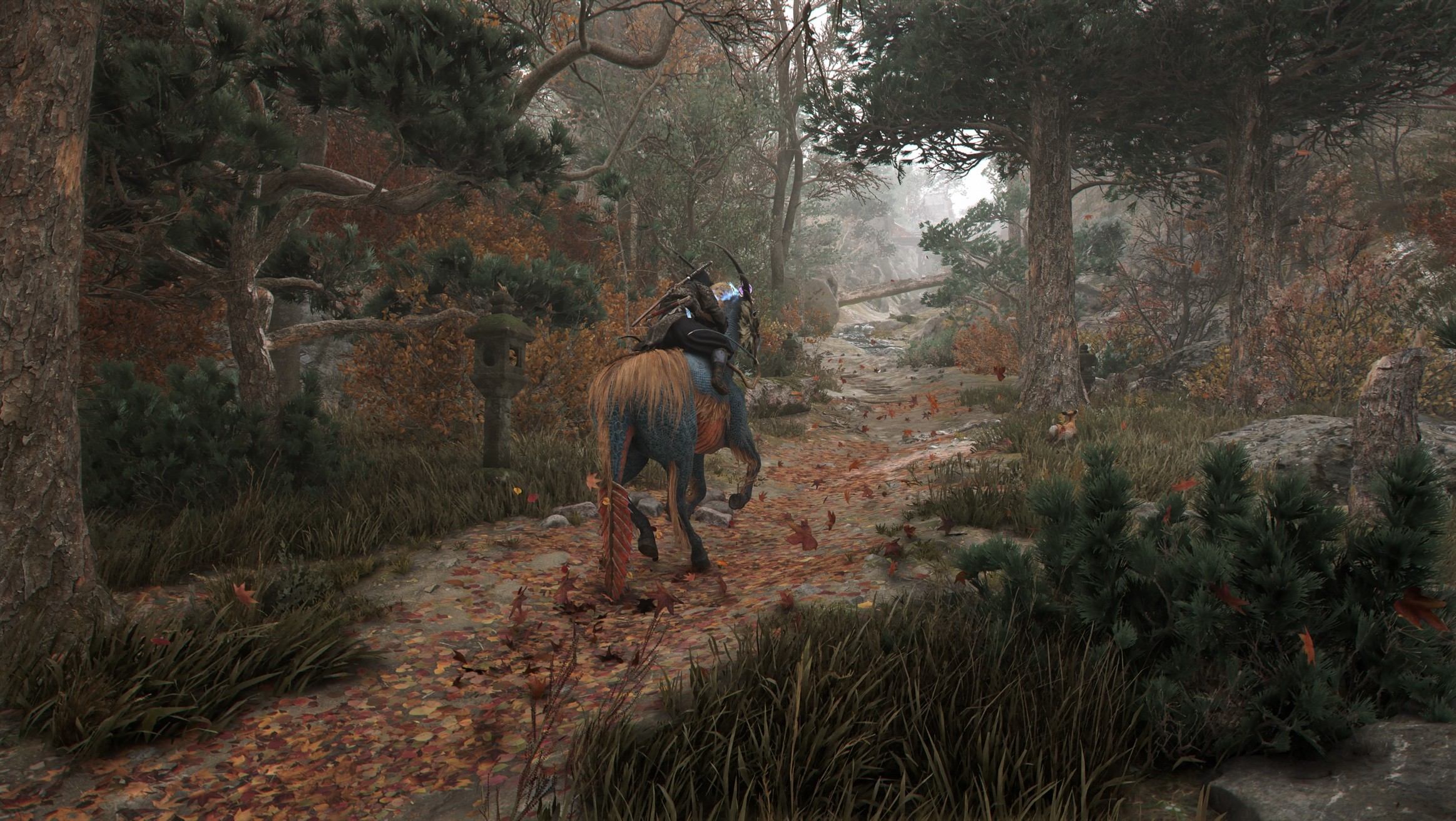
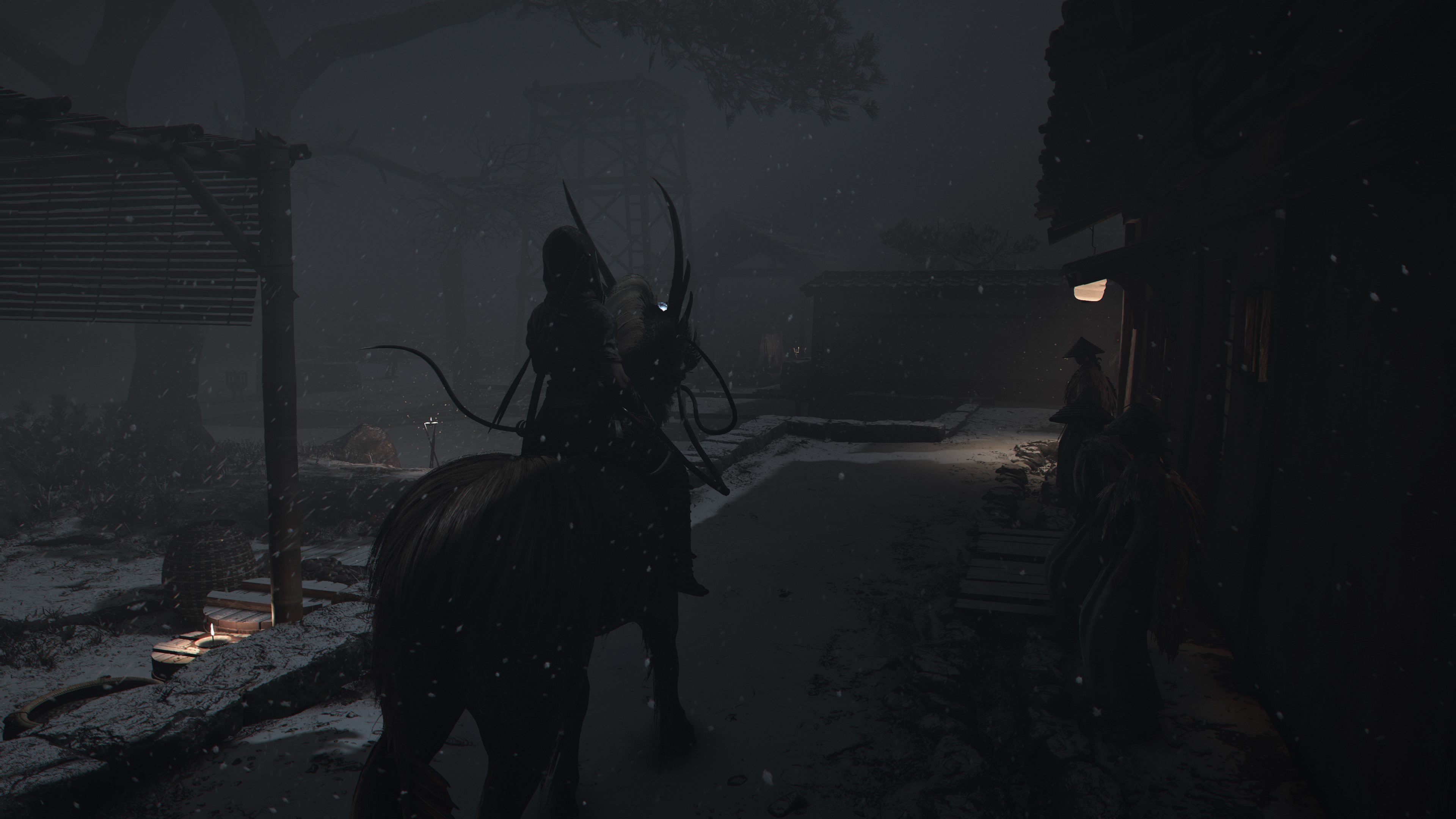
But it’s the atmosphere that’s most impressive. The landscapes benefit from magnificent art direction, with vistas that alternate between misty mountains, fields of flowers, lush forests, and imposing fortresses. The cycle of the seasons also gives the world a distinct identity: the same locations gradually transform, shifting from lush greenery to snow-covered landscapes or the flamboyant colors of autumn.
Certain elements of the scenery also change, such as the vegetation and bodies of water. Furthermore, the dynamic weather system is exceptionally well-designed, and periods of rain and storms are deeply immersive. The game’s opening sequence alone is a real showstopper in this regard. With such visual and even auditory pleasure on display here, exploration quickly becomes one of the game’s greatest joys. You’ll often find yourself straying from your objective to admire a temple in the distance, wander through a forest, or discover a new village.
Naoe and Yasuke: two visions of Assassin’s Creed
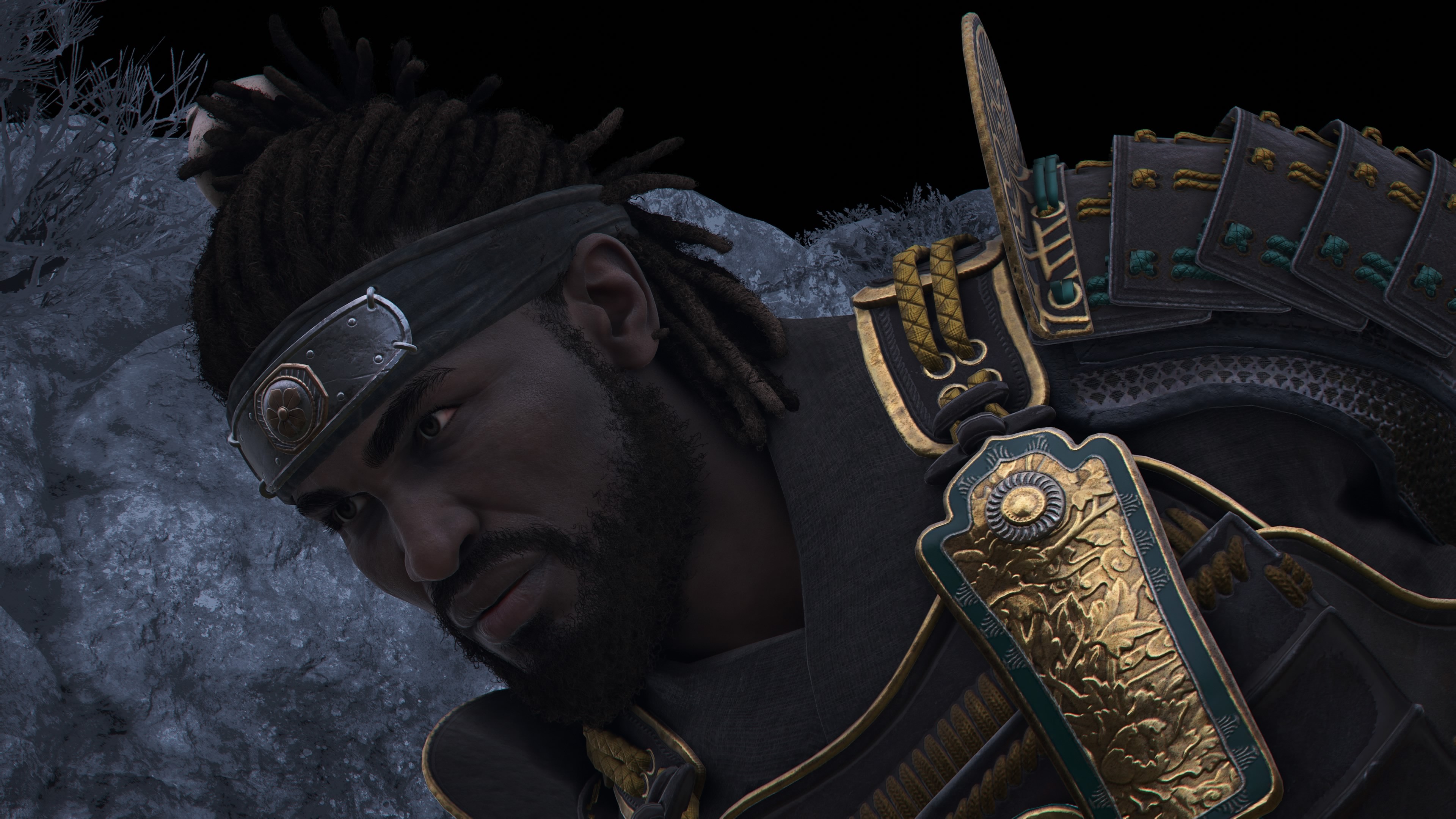
The standout feature of Assassin’s Creed Shadows is, of course, its two protagonists. Naoe is a shinobi from the province of Iga, while Yasuke is a samurai inspired by a historical figure who actually lived in Japan during the 16th century. Controversy aside, this duality isn’t just an aesthetic choice: the two heroes offer genuinely different gameplay experiences.
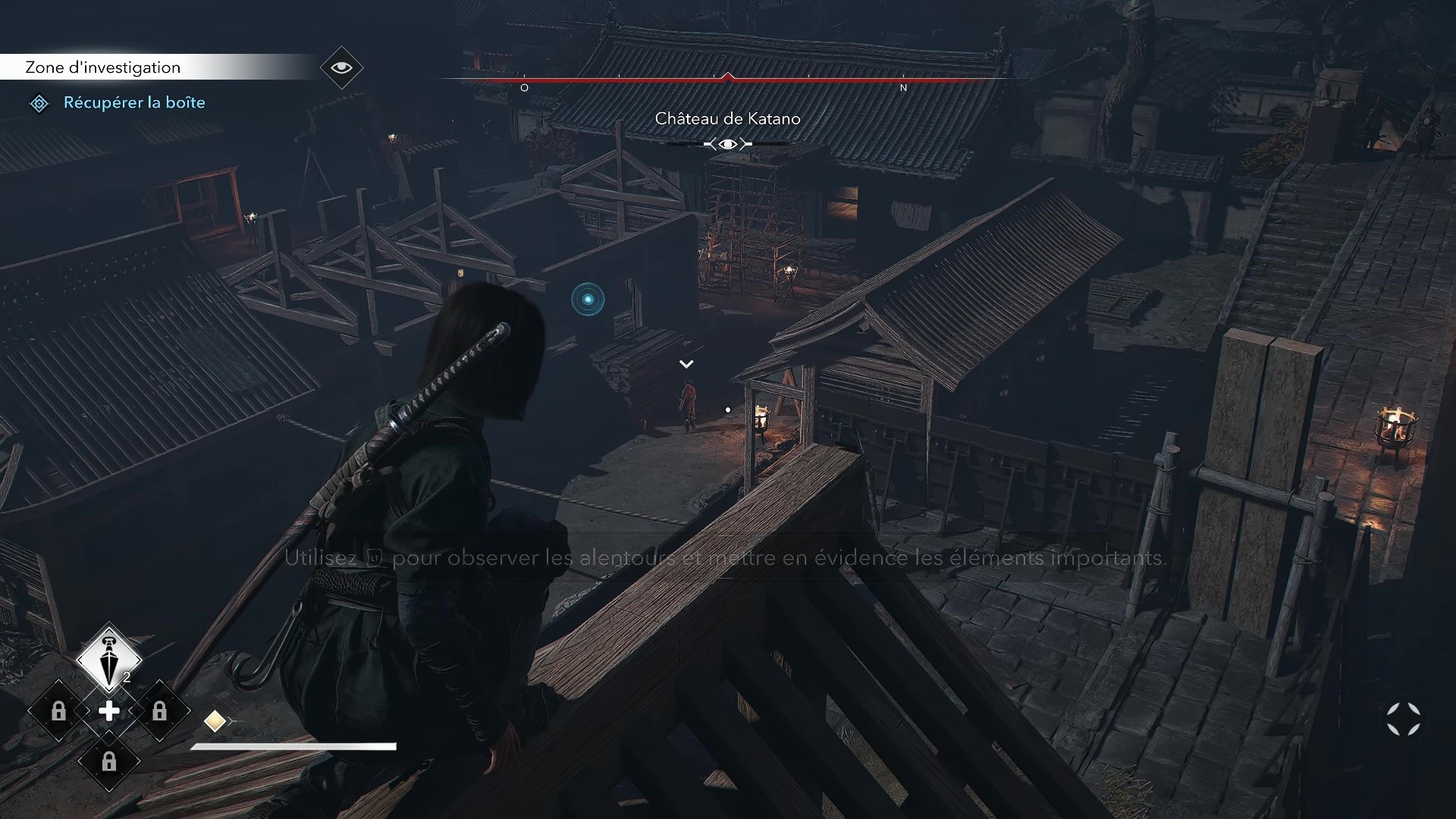
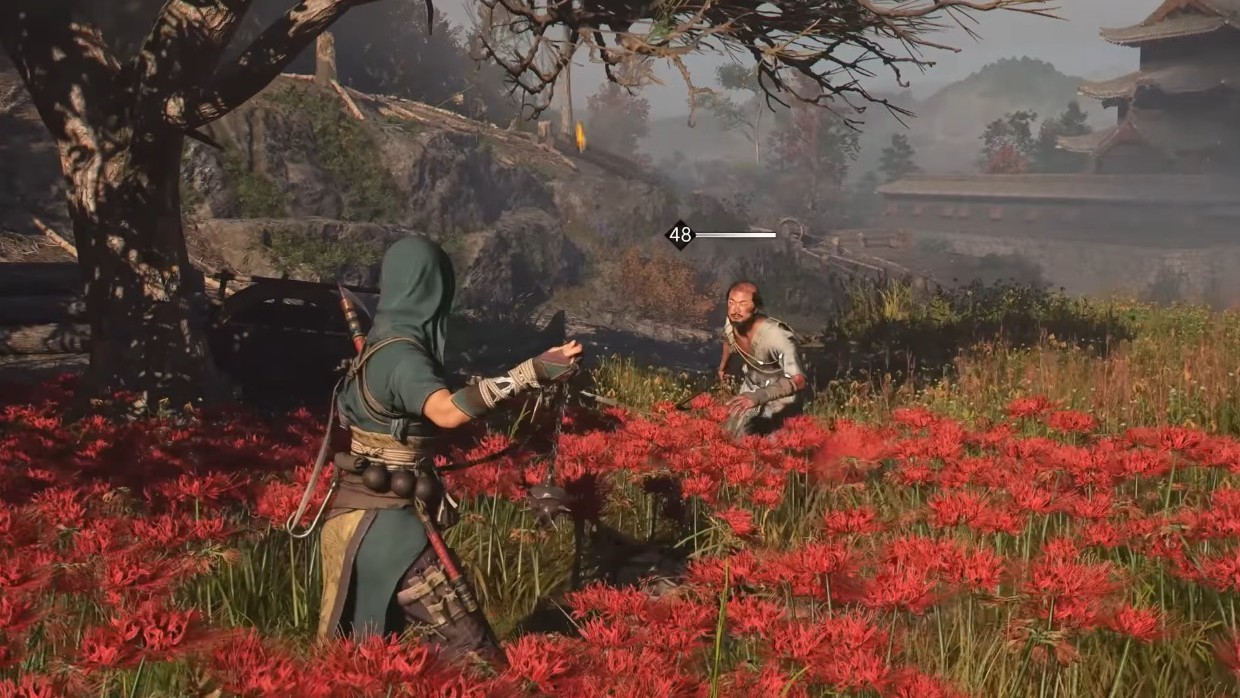
Naoe embodies what we traditionally expect from an assassin. Agile, stealthy, and particularly vulnerable in head-on combat, she possesses an impressive arsenal designed for infiltration. Kunai, shuriken, smoke bombs, a grappling hook, and even a hidden blade allow you to infiltrate enemy bases and eliminate opponents without being detected. It’s with her that Shadows truly reveals its potential. Stealth sequences feel more organic and sometimes require taking the time to observe the surroundings before acting. Snuffing out a torch to plunge an area into darkness, waiting for a guard to move away, or taking advantage of favorable weather can sometimes lead to truly satisfying little moments.
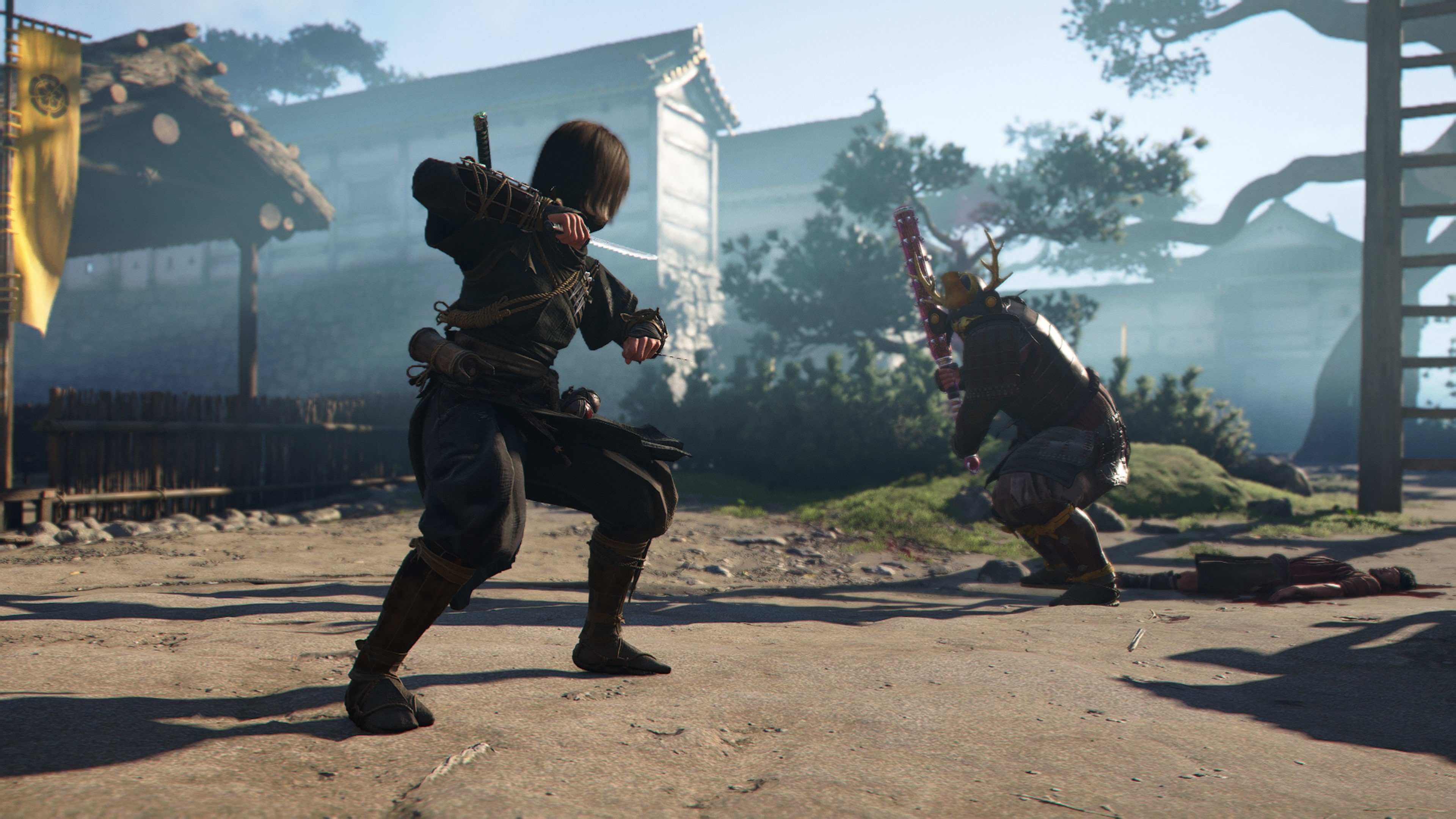
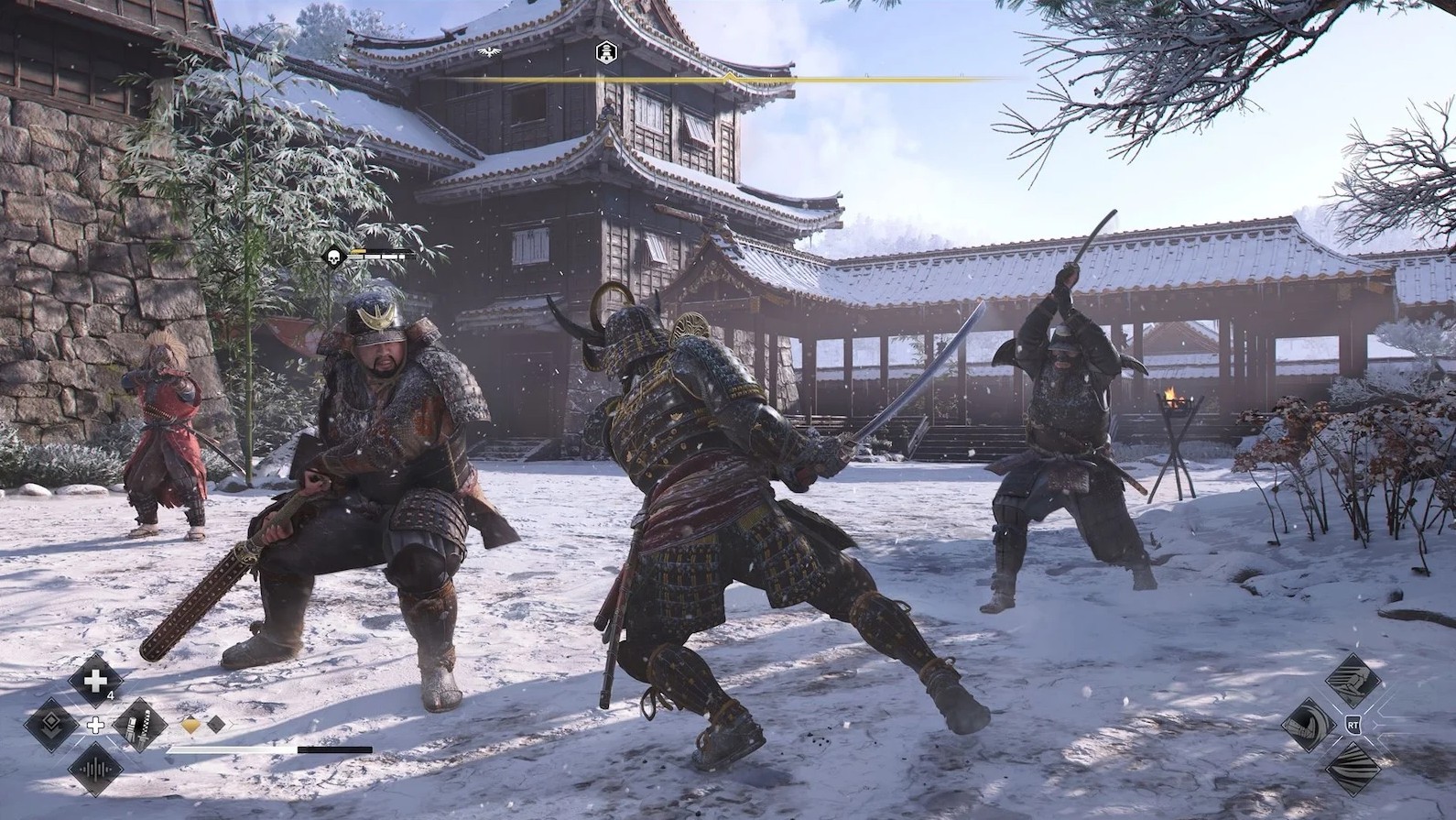
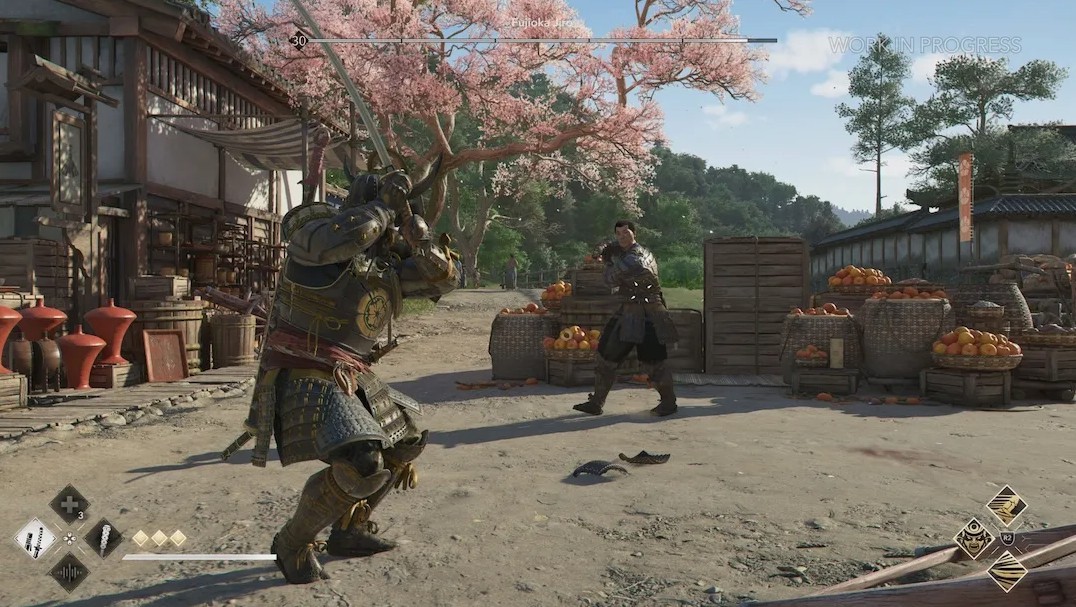
Yasuke, on the other hand, takes a much more direct approach. Armed with his katana, kanabō, naginata, or even his bow, he can take more damage and, above all, inflict considerable damage. The contrast works particularly well. He can literally storm into a courtyard (by smashing through the gate, of course) and take on multiple opponents at once, without having to worry too much about making a quick escape. Escape isn’t really an option anyway once you try to get this colossus off the ground. The combat system thus takes on greater importance, with parries, dodges, counters, and powerful attacks that make the battles much more intense than in some previous episodes.
A much more distinct combat system
The combat system is likely one of the most notable improvements in this installment. Attacks feel truly impactful, and the various weapons do more than just alter the character’s stats, they genuinely change how you approach battles.
Yasuke obviously benefits the most from this aspect. His arsenal allows him to adapt his style to the situation, ranging from ranged weapons (bow, teppo) to heavy weapons that require good timing but deal devastating damage. Ubisoft has also worked on armor destruction and enemy stances, adding more depth to the combat.
Naoe, however, isn’t completely helpless when she’s spotted. Her kusarigama, in particular, allows her to control multiple enemies, and her agility offers interesting possibilities for repositioning herself, such as a somersault over an enemy.
Not everything is perfect, though. Some animations can lack fluidity, especially when multiple enemies are present at the same time. The system also retains a few minor clunkiness issues carried over from previous installments: the hitboxes aren’t perfect, of course, and sometimes attacks pass slightly through enemies… In and of itself, this doesn’t ruin the experience, but it’s enough to remind us that Shadows is, after all, still an Assassin’s Creed game.
Redesigned exploration and mechanics
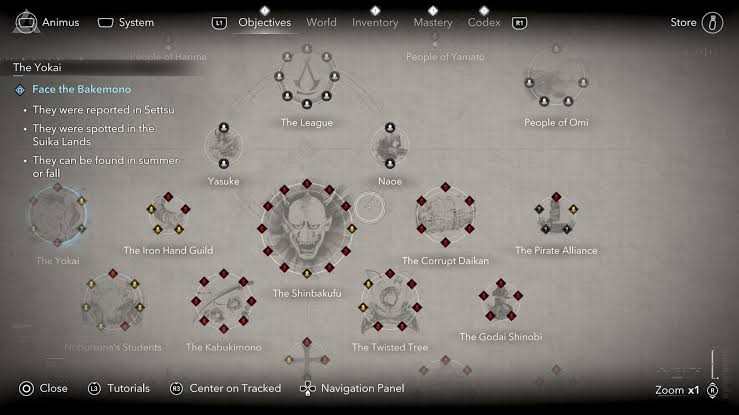
Another notable change: Ubisoft has slightly revamped the way players discover their environment. Rather than simply filling the map with icons, Shadows places greater emphasis on observation and gathering information. Players can also build a network of spies to obtain intelligence on their next targets and streamline certain searches.
This approach lends a more natural rhythm to the adventure. You spend less time mechanically following a series of markers and more time observing the world to figure out where the objective actually is.
In terms of gameplay, there’s been some improvement, but the community has been quick to point out that certain older titles—some dating back as far as 10 years—offered a better experience. Several updates have introduced a host of new features and enhancements to existing mechanics and animations.
A two-tiered narrative that leaves a bit to be desired
Narratively, Assassin’s Creed Shadows benefits most from its two heroes. Naoe and Yasuke have personalities, motivations, and backstories that are distinct enough to make their partnership interesting. Naoe’s story centers on revenge, loss, and the need to gradually move past this trauma. Yasuke, on the other hand, has a particularly unique backstory, rooted more in samurai loyalty, which allows the game to explore another facet of Japan during that era.
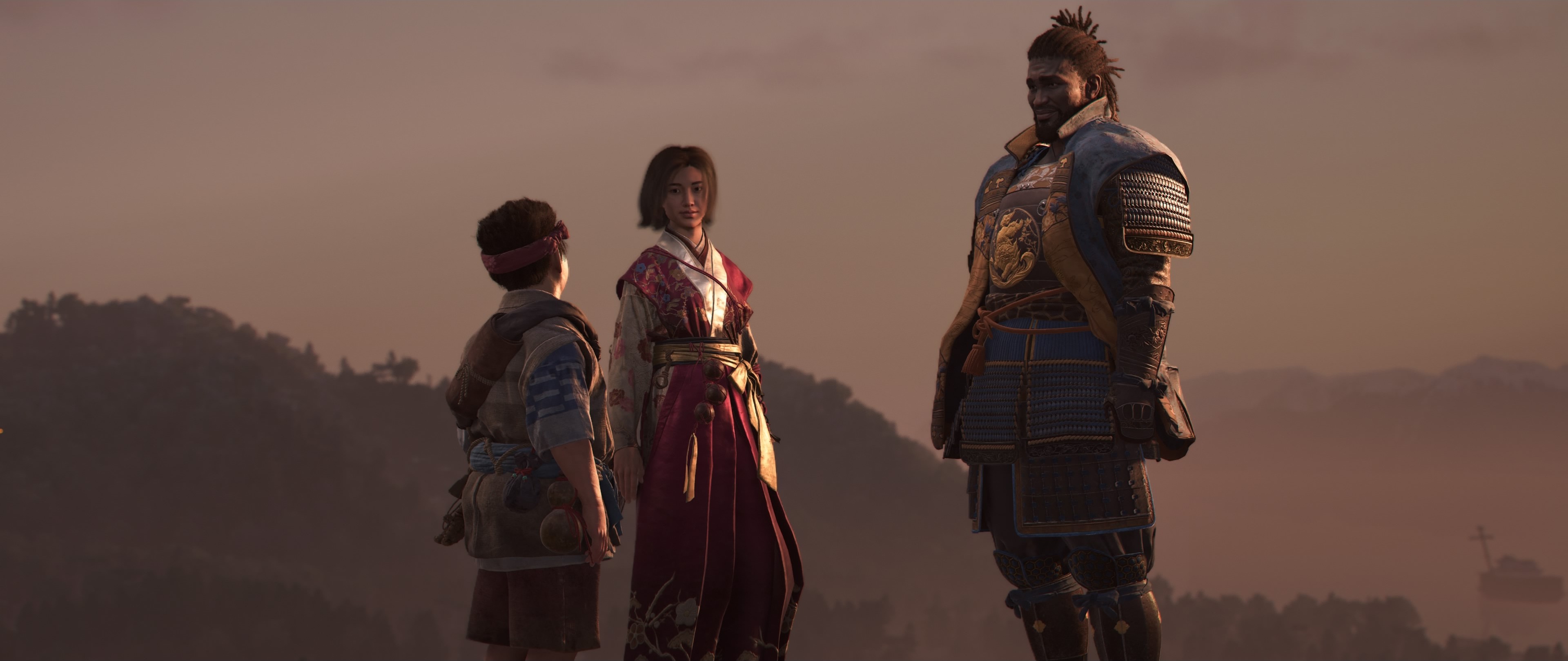
This duality works particularly well when it allows the two characters to confront their worldviews, offering the player the opportunity to make choices. Their relationship gradually becomes one of the driving forces of the adventure and, in our opinion, provides some of the campaign’s best moments. On the other hand, the main storyline suffers from a few lulls in pacing. Certain passages lack intensity, and the overall structure can feel unnecessarily drawn out. Indeed, several critics have rightly pointed out that the individual stories of the two protagonists can prove more interesting than the central plot.
Hideout: A good idea, but badly executed?
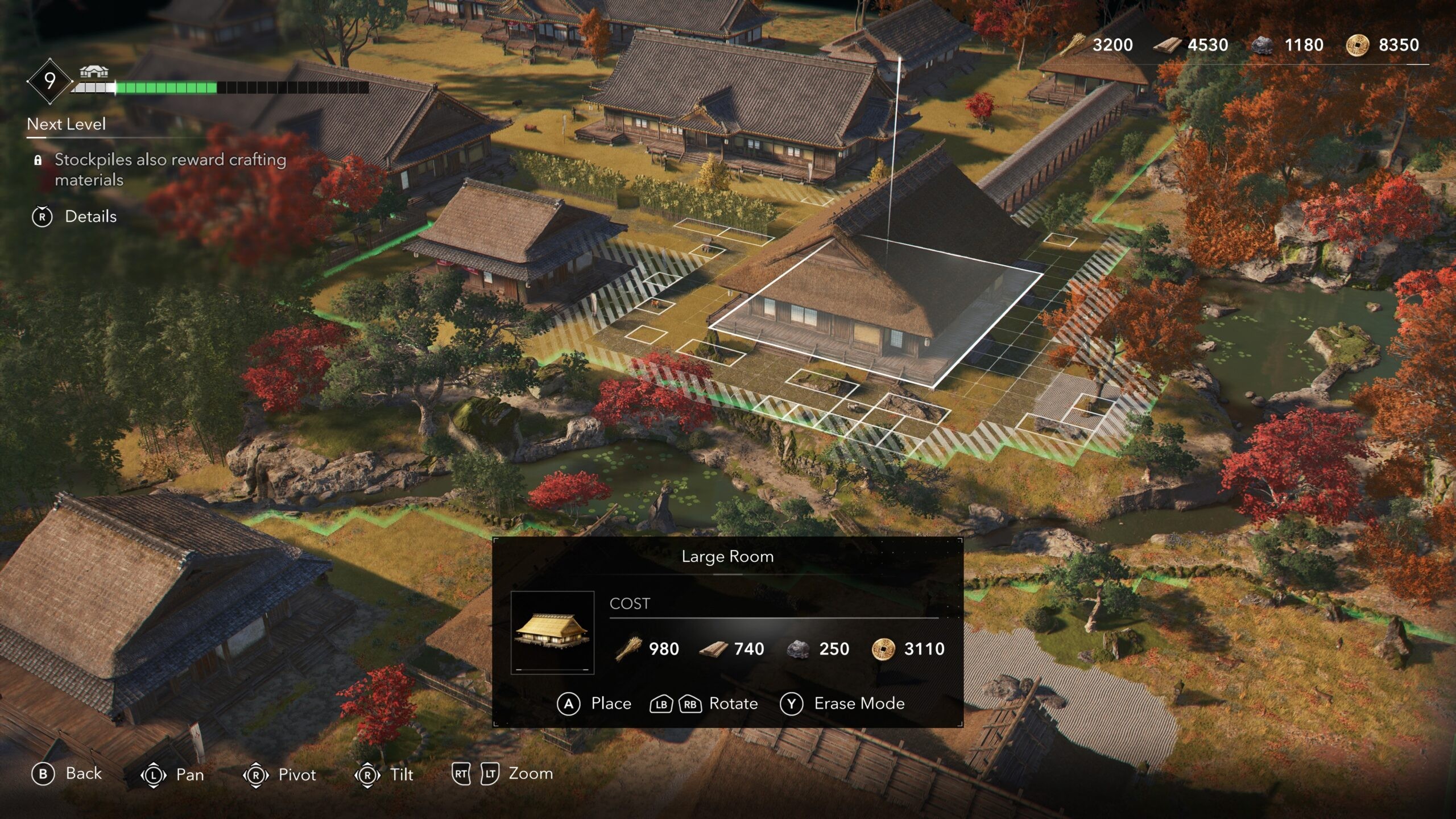
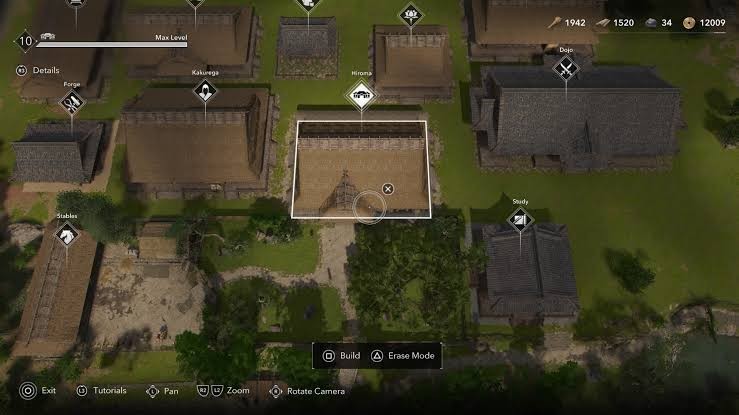
Among the new features, the hideout is probably one of the most surprising. Players have a full-fledged headquarters to develop, upgrade, and customize. You can construct various buildings there, which allow you to unlock additional features and improve available resources. You gradually reunite with your allies, upgrade your infrastructure, and can even decorate the space. This aspect adds to the appeal of spies, who also help steal and divert resources from enemy camps to fund construction.
However, this system sometimes struggles to fully justify its existence. The idea is interesting on paper and adds a more personal dimension to the adventure, although part of the community seems to have settled for the bare minimum. Once the thrill of discovery wears off, the hideout becomes primarily a fairly optional progression tool rather than a true living space. It accompanies the adventure without ever becoming a truly essential mechanic, particularly due to the performance issues that plagued it in the months following release.
Technical aspects and areas for improvement
Despite its many new features, Assassin’s Creed Shadows remains an Assassin’s Creed at its core. This continuity can be seen as a strength or a weakness, depending on your expectations. Those who appreciate the modern formula will quickly find their footing. Conversely, players hoping for a true departure from the series may be left wanting.
As for improvements, we would have liked to see more effort put into facial animations, particularly during cutscenes. Yasuke often looks much more convincing alongside Naoe. While the main storyline isn’t boring, it isn’t particularly engaging either: the sheer number of targets to take down becomes almost overwhelming, and the list of objectives can quickly become dizzying. After a few dozen hours, it’s hard to remember the faces of those you’ve killed (even though they’re listed on the board).
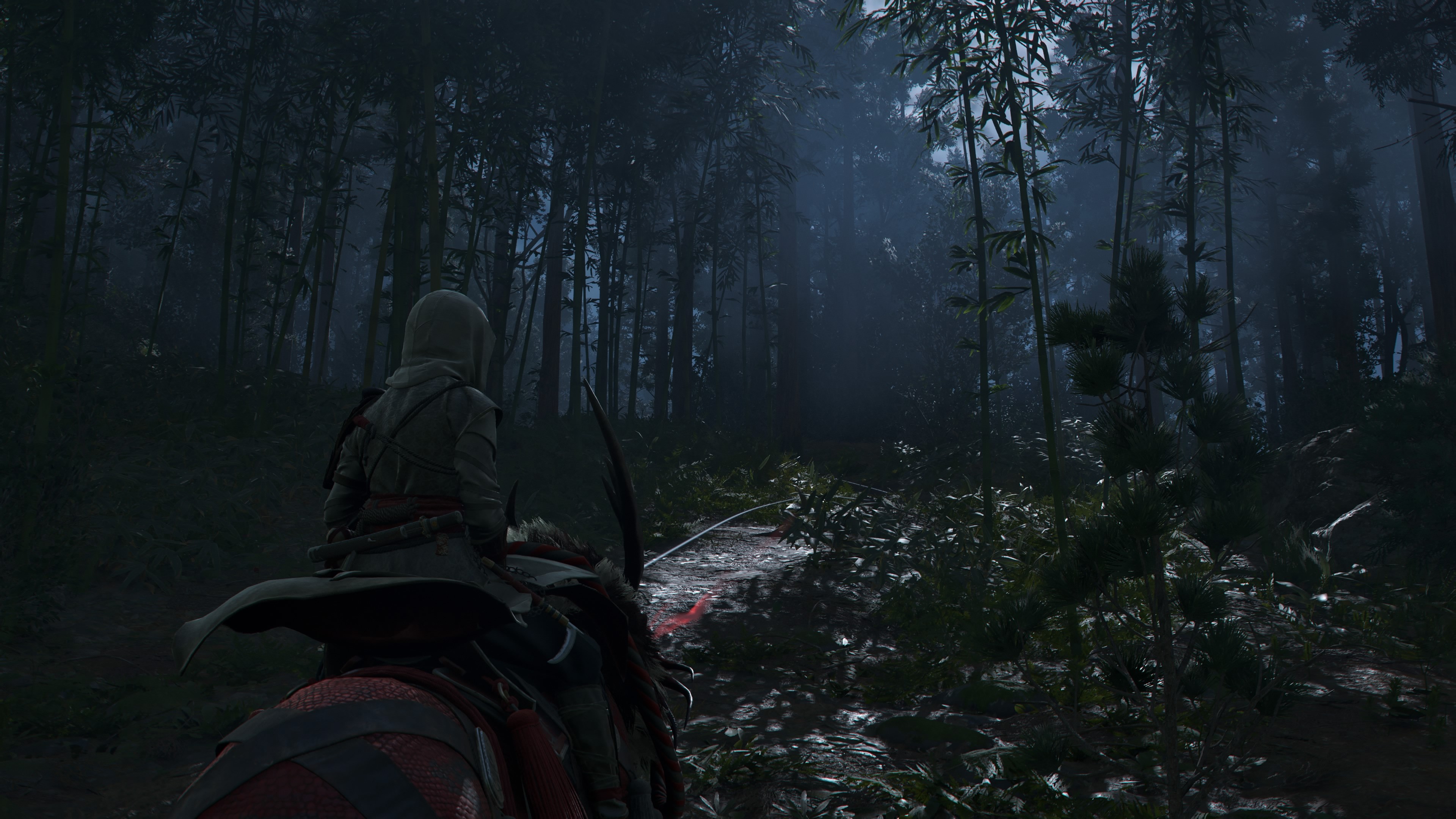
While the environments, atmosphere, and weather are magnificent, there’s an unexpected flaw: some areas of vegetation are so dense that they’re difficult to navigate. You’re constantly bumping into things and getting stuck in a tricky spot, sometimes even ending up there unintentionally due to a misjudged joystick move. This might seem like a minor issue, but those who, like us, have often found themselves stuck will remember it well. For those who love to explore maps 100% in games, good luck with that here!
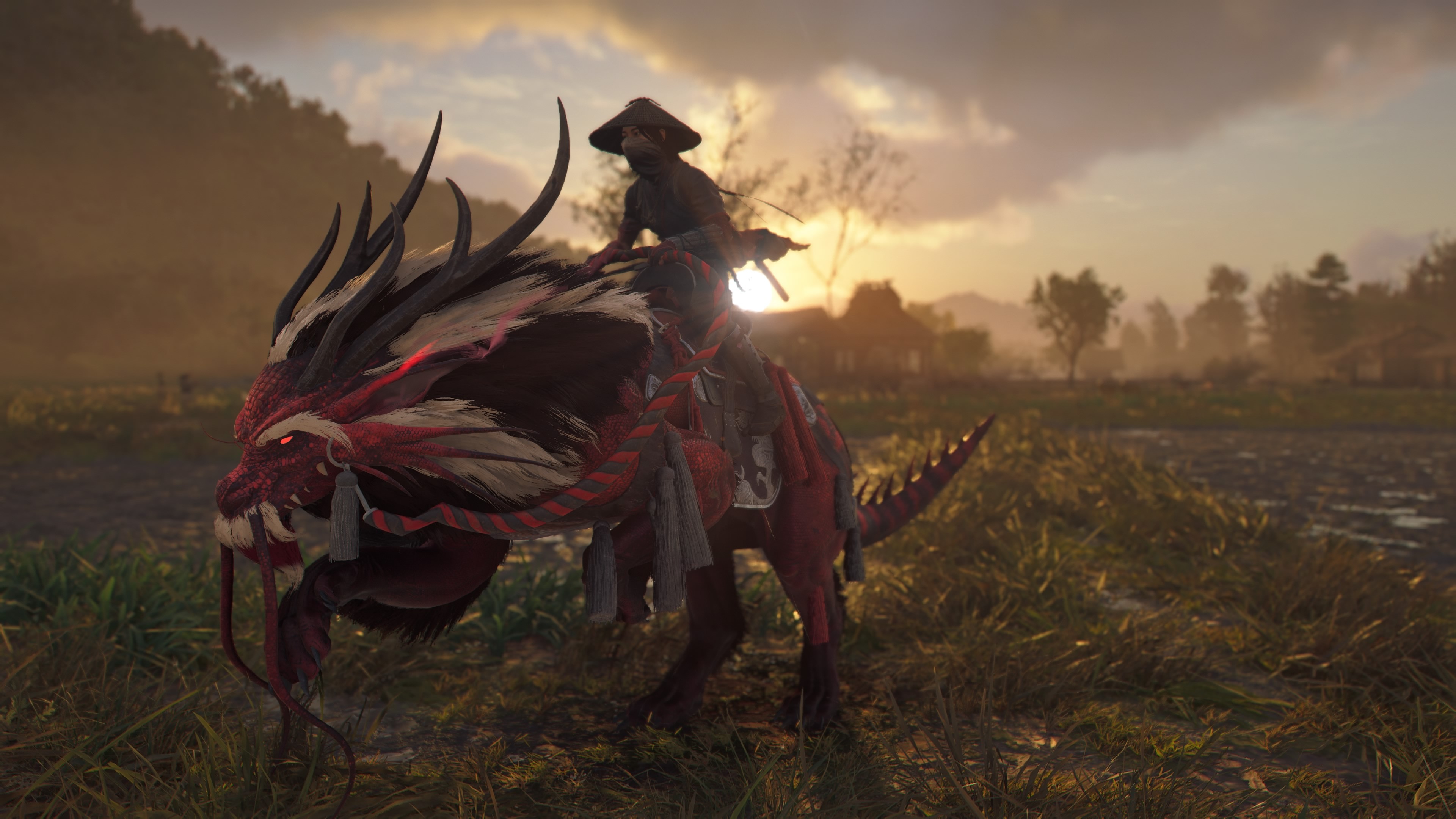
Expansion: Claws of Awaji
Released six months after the game’s launch, Hunt on Awaji is the main expansion for Assassin’s Creed Shadows, featuring a ten-hour-plus adventure set on Awaji Island in Osaka Bay. It’s free for all players who pre-ordered the game, but is sold separately for €24.99 for others. It adds a new open-world area, new enemies, several bosses, and brand-new gear, including Naoe’s legendary bō, and the new skills and outfits carry on to the main game.
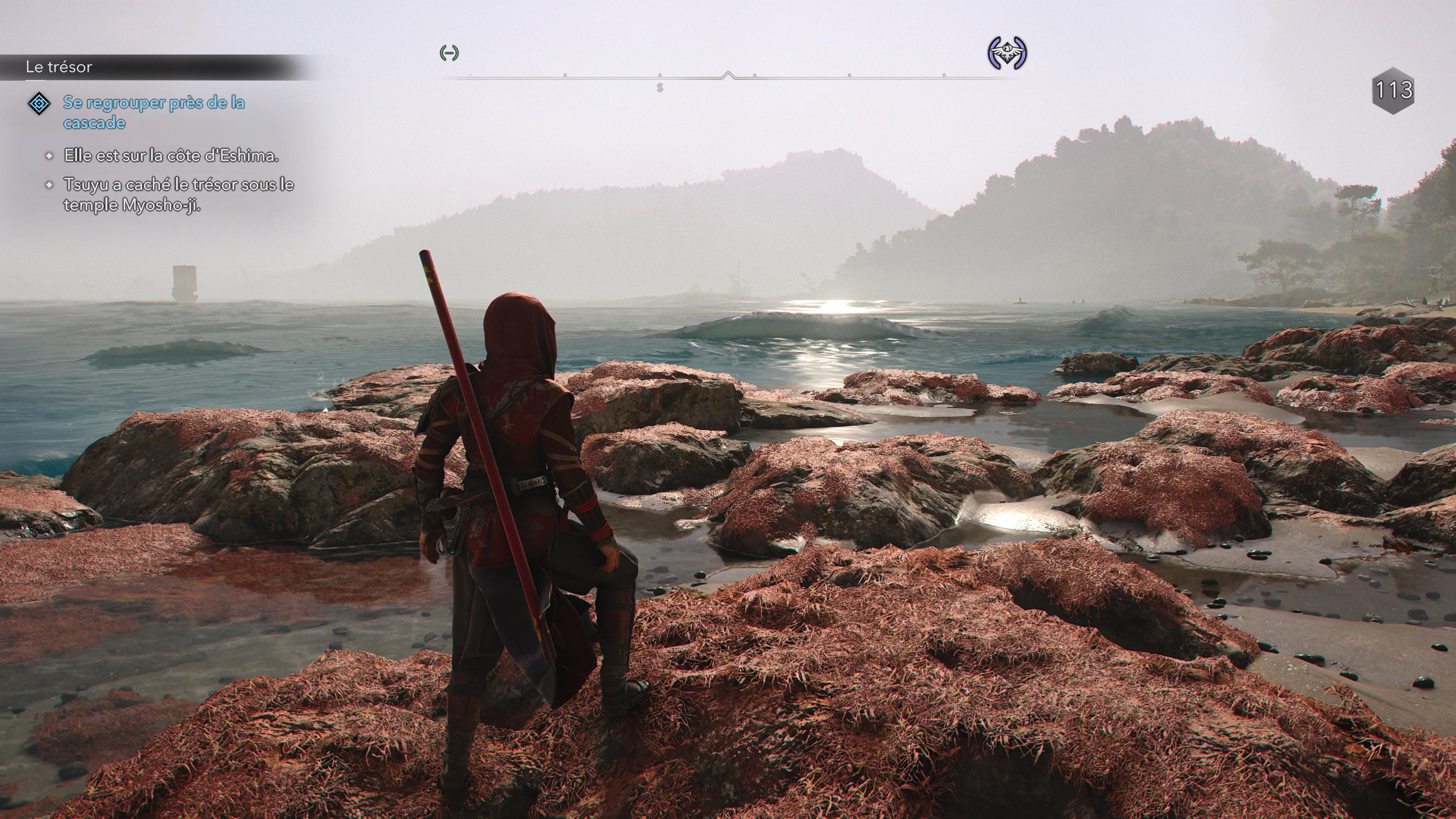
Ultimately, this expansion is primarily a continuation of Shadows, without ever really seeking to shake up the formula: it feels more like a nice update than a true expansion. Its introductory mission, however, makes a good impression, notably featuring a nice horizontal scroll and a captivating narrative. The reunion with Naoe’s mother and a well-thought-out alternation between the two characters hint at something interesting, but it never really comes to fruition. Like the rest of the adventure, it offers some enjoyable moments, even if the experience as a whole remains fairly conventional and never truly delivers the wow factor one might expect from an expansion of this scale and at this price point.
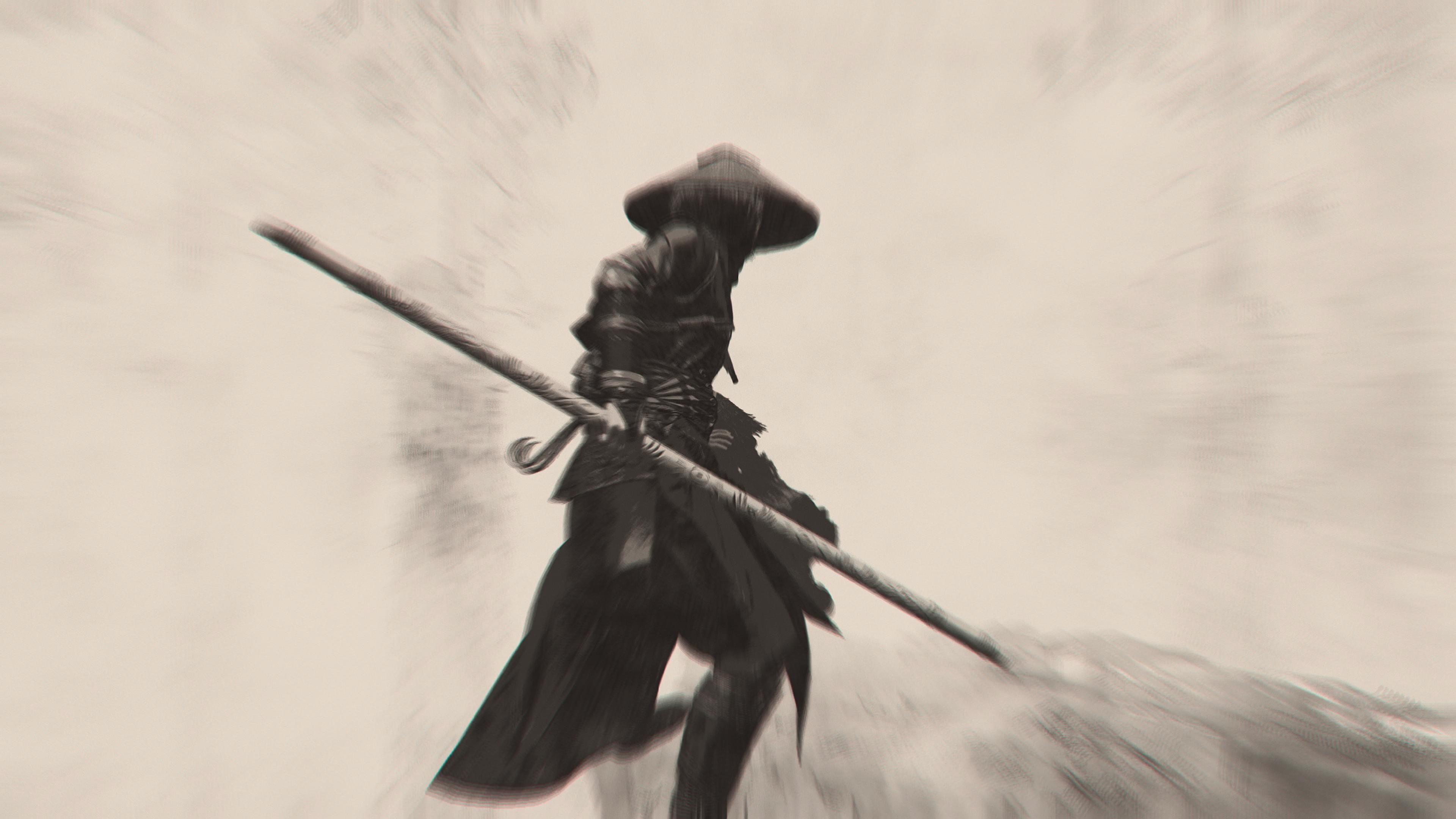
The real surprise comes from the boss battle, which is fascinating in its presentation and, above all, demands much greater concentration compared to the game’s usual encounters. Naoe’s new weapon also offers quite enjoyable gameplay; we didn’t put it down for the entire duration of the expansion. A pleasant experience that’s consistent with the original title, then, but one that feels more like an additional chapter of Shadows than a true standalone expansion.
Tested on PS5. See our rating policy here.
7.5/10
Assassin’s Creed Shadows isn’t the revolution or reinvention that some might have hoped for in the franchise, but it’s certainly one of the most polished entries in the saga’s RPG era. Feudal Japan is magnificent, the switching between Naoe and Yasuke works quite well, and stealth takes center stage once again thanks to more sophisticated mechanics. Combat is also more satisfying, and the cycle of seasons and dynamic weather give the world an exceptional visual identity.
However, there's a few flaws to take into account: the structure still feels too repetitive at times, an uneven main plot, and a few technical imperfections or animations that could still be improved. But when Shadows lets us infiltrate a castle plunged into darkness with Naoe or break down a door with Yasuke before drawing his katana in a 1-on-5 battle, it reminds us that the franchise can still deliver. It finally offers the franchise a playground that seems to align well with its DNA. And after several episodes that were too similar, this simple feeling of rediscovering the joy of stealth is enough to make this Japanese adventure a particularly compelling chapter for the franchise.
- + Interesting character duality, though not always well executed
- + Excellent atmosphere and environments
- + Superb dynamic weather
- + Plenty of content as always (perhaps even too much!)
- - Side objectives that quickly become tedious
- - Some technical areas leave a bit to be desired
- - Vegetation is too dense, so much that it's obstructive at times