Shapez 2: automation at its best
, by Enzo
Automation games have always held a somewhat unique place in the gaming landscape. At first glance, they may even seem particularly austere: machines, production lines, conveyor belts, and a steady stream of resources to process—all presented without necessarily trying to impress with spectacular visuals… You can’t exactly call it particularly sexy.
Yet, as long as you’re willing to embrace their logic, these games can become truly captivating. Shapez 2 is an excellent example of this. While it doesn’t revolutionize the genre, the game succeeds above all in making automation immediately understandable, pleasing to watch, and surprisingly comfortable to play. An ideal gateway into a genre that might seem very niche.
A factory that builds itself almost naturally
The concept behind Shapez 2 is, however, very simple. You have to extract different shapes, transport them, cut them out, color them, assemble them, and finally deliver them to meet the game’s requirements. Gradually, the shapes become more complex, and the production lines must become more efficient. It’s really a very visual experience, but we’ll come back to that later. As the demands increase, you’ll need to rethink your factory, optimize routes, and find new ways to organize your space.
On paper, there’s nothing particularly original here for automation veterans. But it’s precisely in its approach that the game stands out. The game carefully avoids overwhelming the player with dozens of systems right from the start. In fact, you play in creative mode: building resources are unlimited. The goal is truly to offer players a design and automation experience, not the frustration of juggling resources in every direction.
Game mechanics are introduced gradually, in a logical order, allowing players to understand the possibilities almost instinctively. It’s even possible to unlock mechanics in any order via an unlock system, further reinforcing the game’s natural feel.
The secret: art direction that makes all the difference
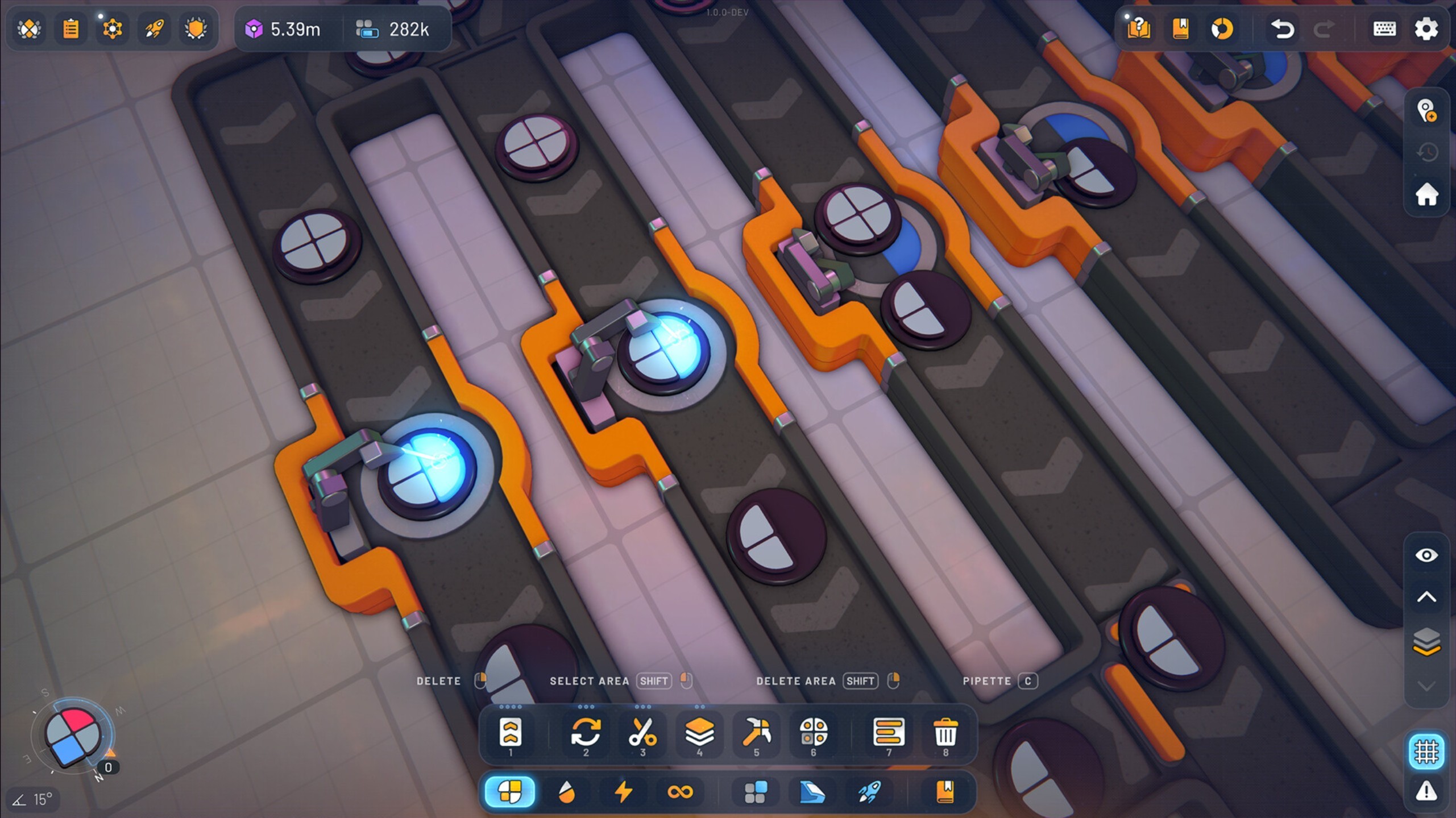
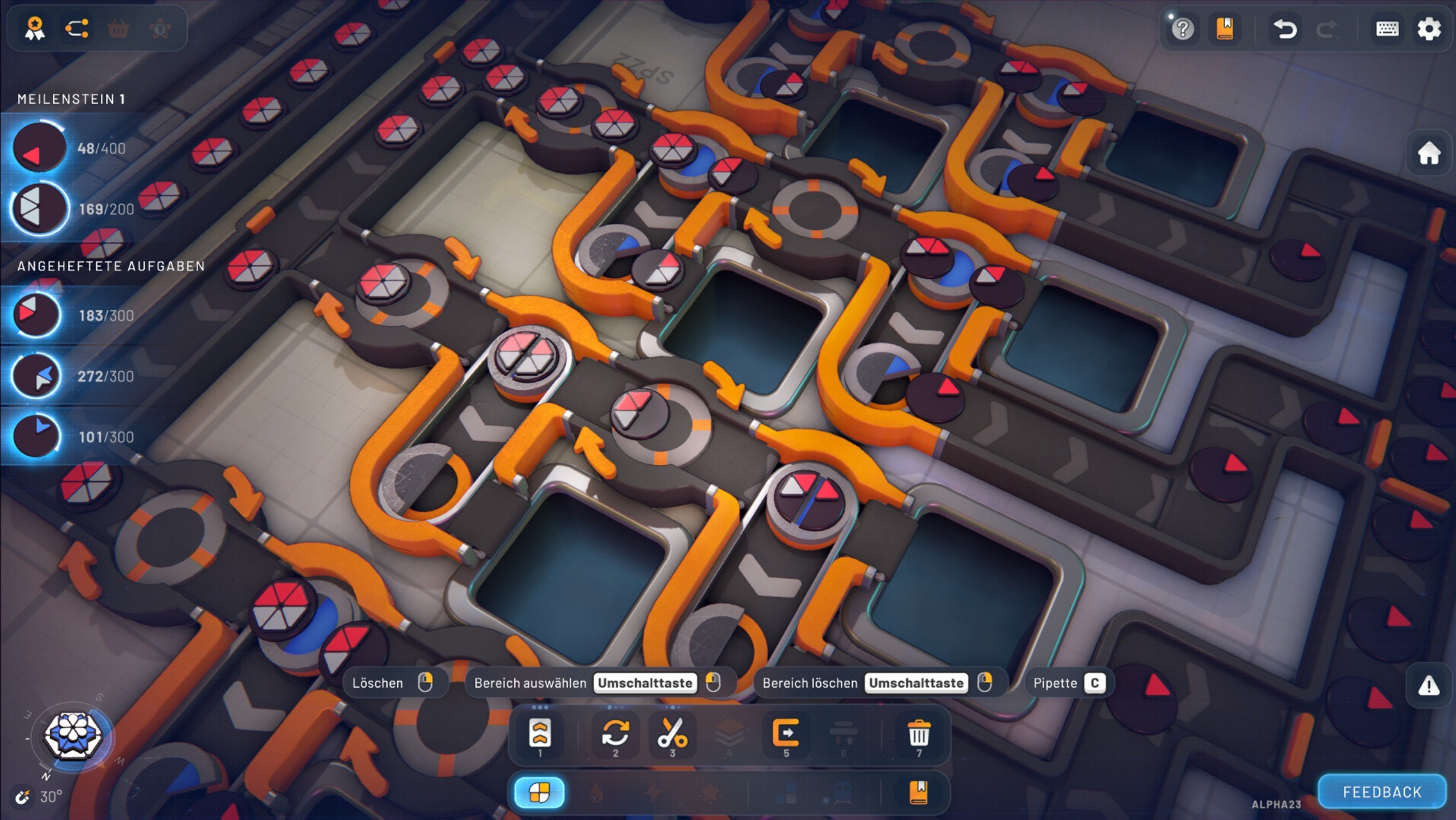
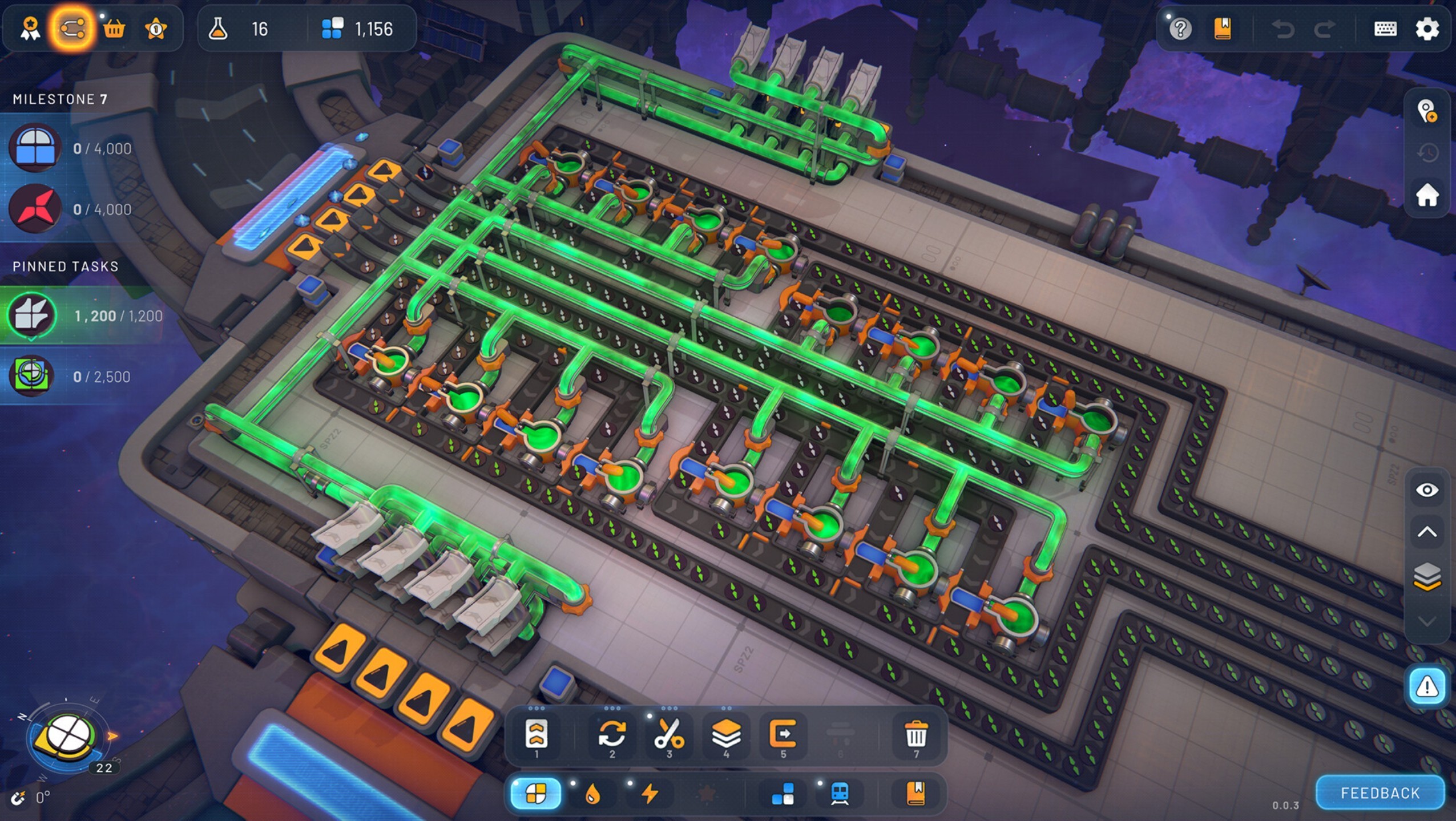
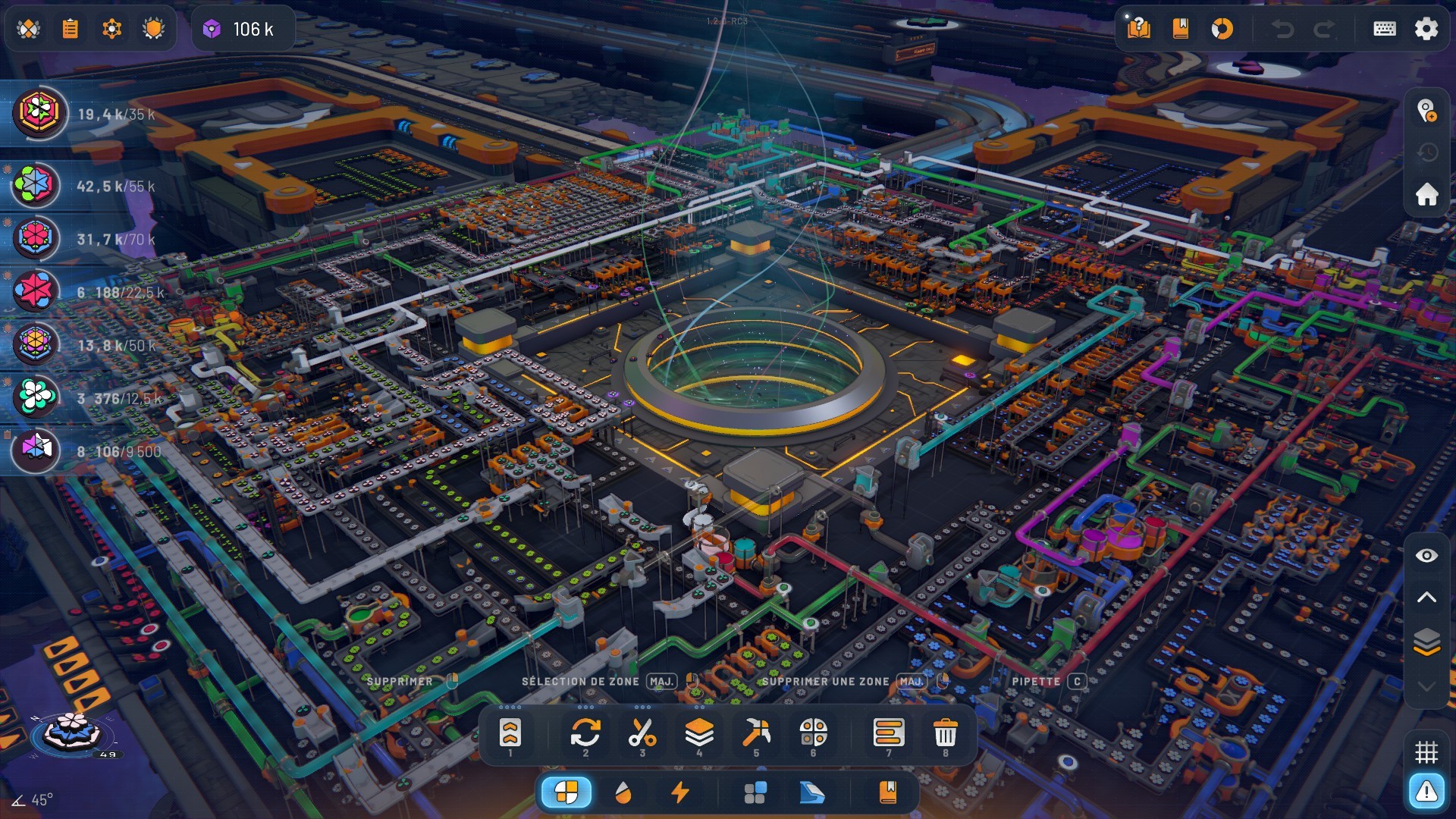
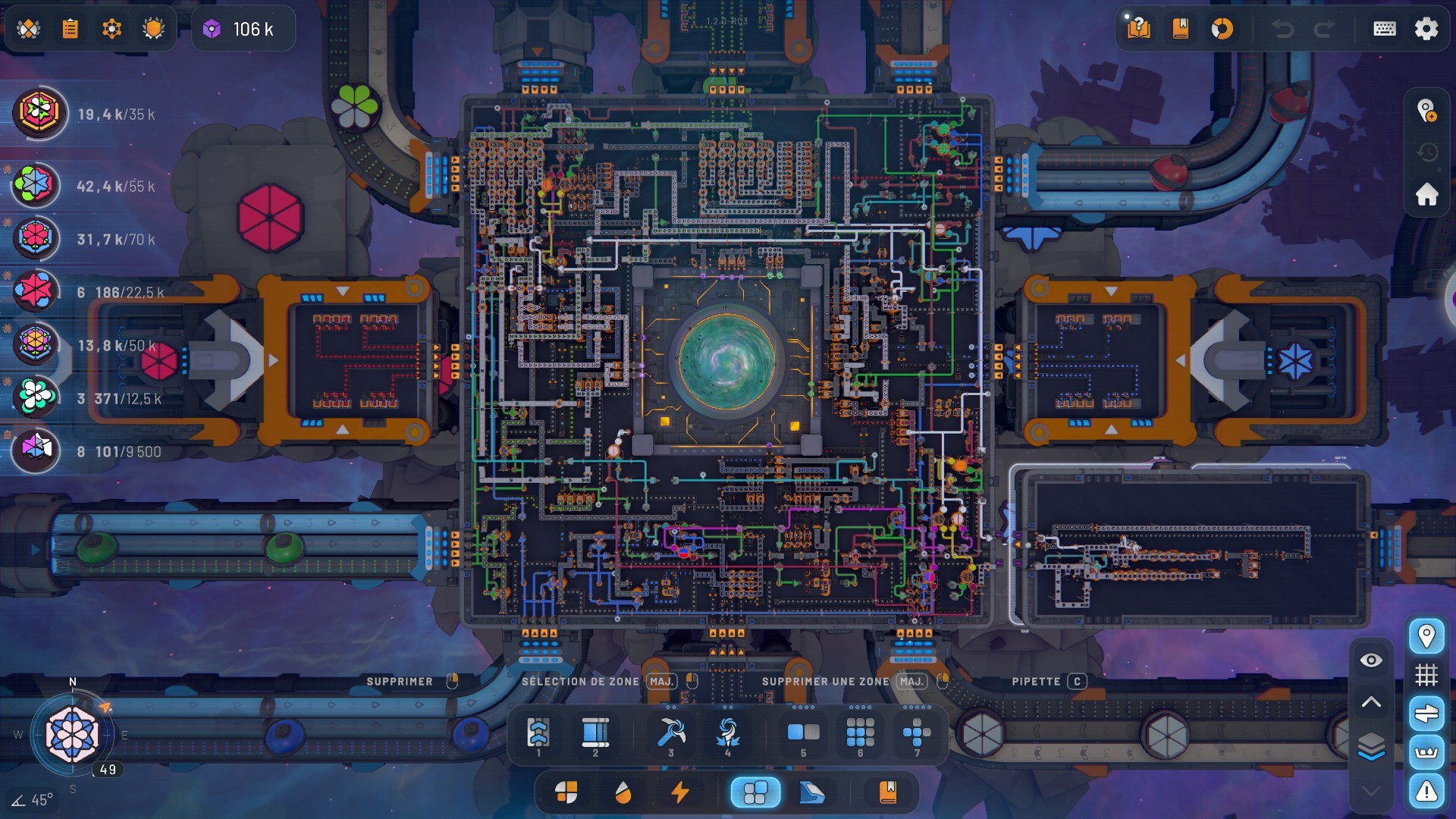
In a nutshell: it’s beautiful, it’s clear, and it’s fluid. In more detail: one of the great strengths of Shapez 2 lies in its art direction. While many automation games can quickly become visually cluttered—or even downright hard to follow as installations grow in scale—this title adopts an extremely minimalist aesthetic. (We emphasize “extremely”).
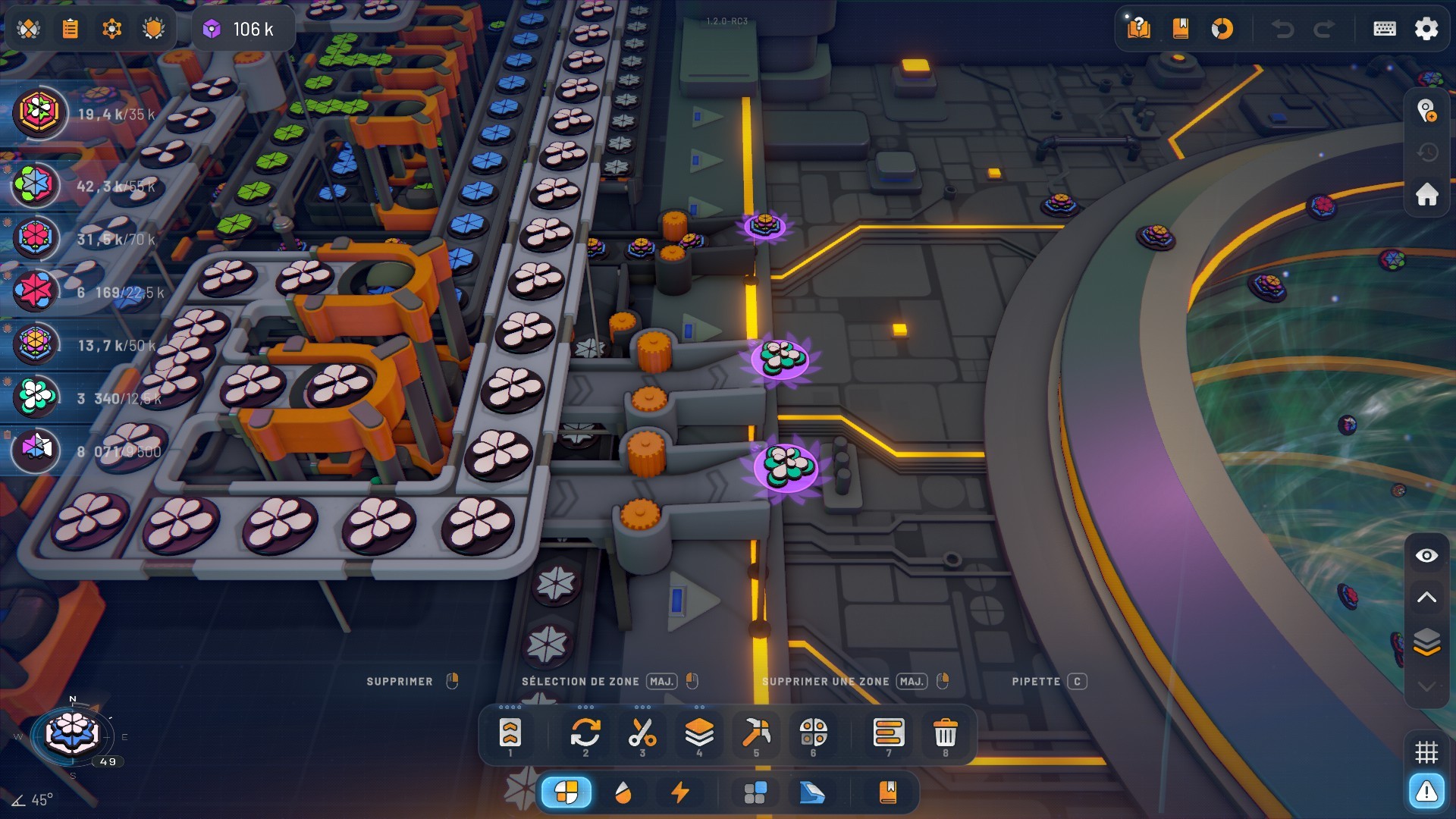
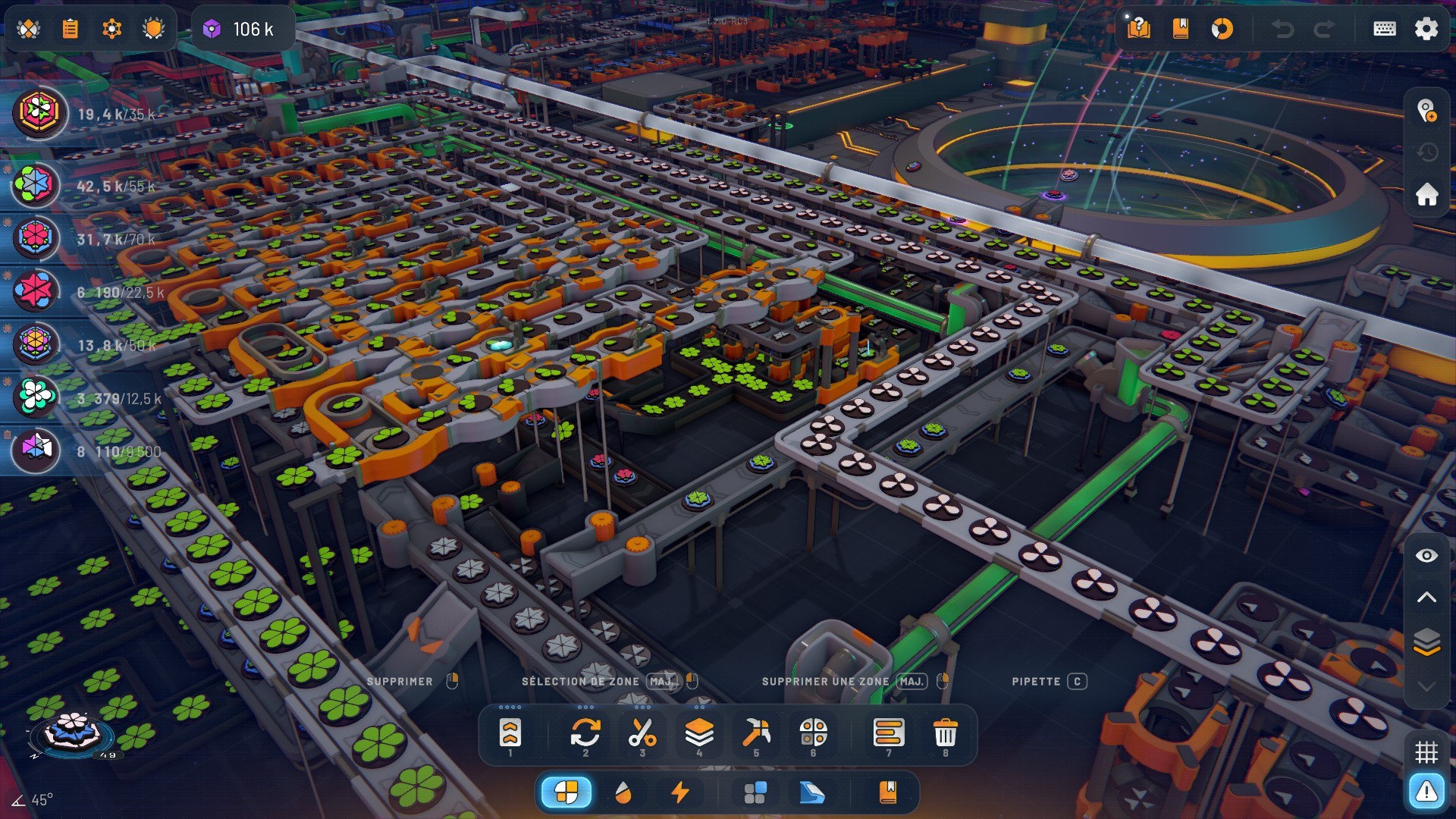
The geometric shapes, bold colors, and perfectly ordered lines give the game an instantly recognizable identity. Above all, this artistic direction isn’t just there to look pretty—it directly enhances readability. Every element is identifiable at a glance, the various resources stand out clearly, and even the most complex factories remain relatively easy to understand.
The result is particularly pleasing to the eye. There’s something almost relaxing about watching shapes move along conveyor belts, pass from one machine to another, and gradually become more complex products. The production lines even end up forming actual geometric compositions. This is probably one of the few automation games in which spending several minutes simply watching your factory operate is so satisfying.
Various interesting game modes
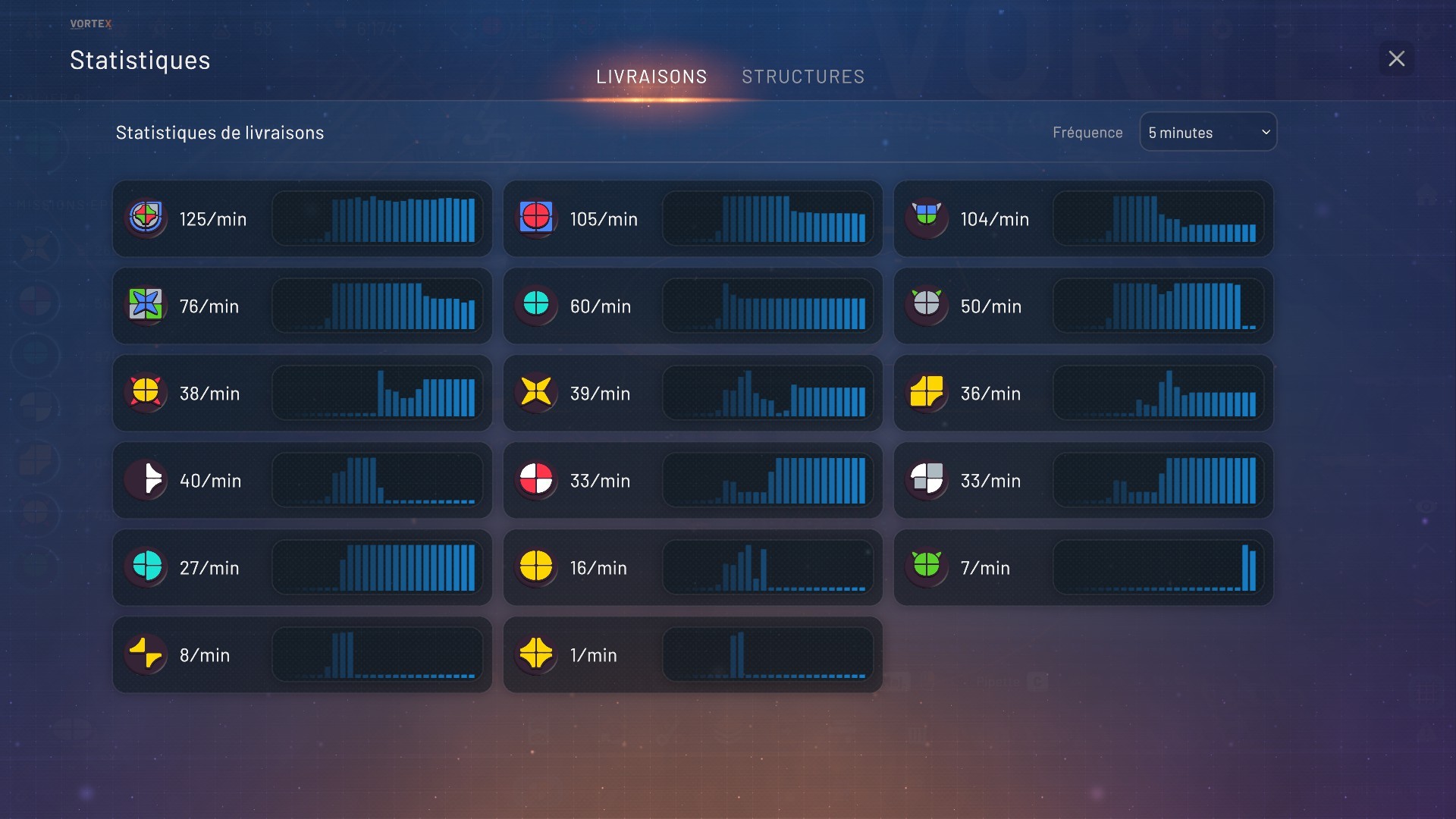
The first game mode to arrive during early access is the one now known as “Manufacture”. It’s geared more toward players who want to let their creativity run wild and build without the constraints of traditional progression. Players can then take full advantage of the game’s capabilities to design massive factories, experiment with different layouts, or simply optimize their production lines in their own way. It’s also the ideal mode for those who prefer the sandbox aspect of automation, offering nearly total freedom in designing their factory.
Before the official release, the community made it clear that they’d prefer a more cohesive narrative thread in the gameplay experience—something less like a sandbox and not just a long series of disparate objectives. Eager to meet the community’s needs, the “Manufacture” game mode was introduced.
Here, players are given their first production objective. This will be useful for Phase 2, whose objective will in turn be useful for Phase 3, and so on. As a result, it’s essential to optimize the factories from the very beginning, so as not to hinder the entire production chain—which remains the same from the start to the end of the game. This progression provides a solid framework for the experience, without ever feeling like it’s holding the player’s hand. Players naturally learn the intricacies of automation, eventually finding themselves managing particularly ambitious production lines.
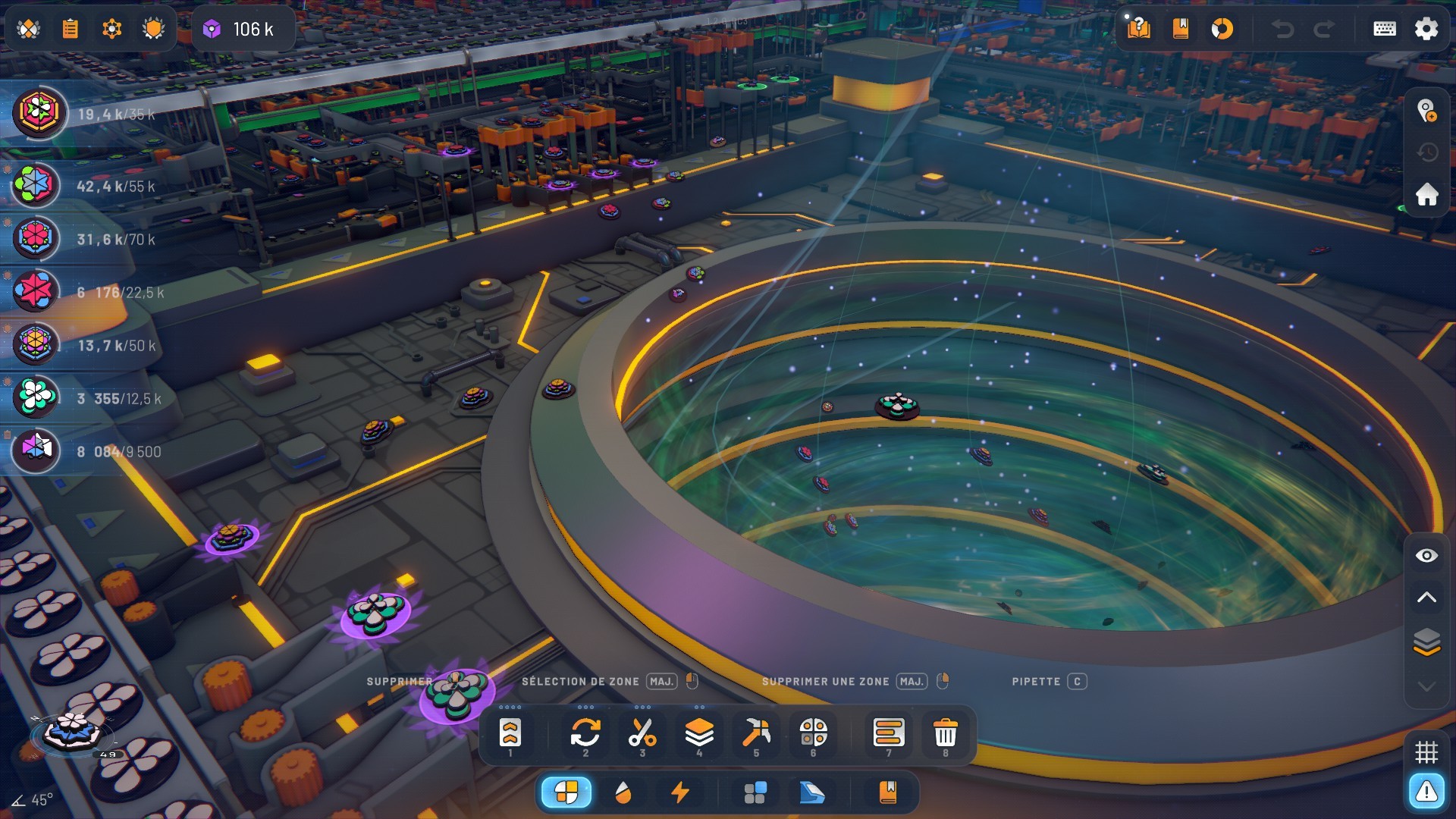
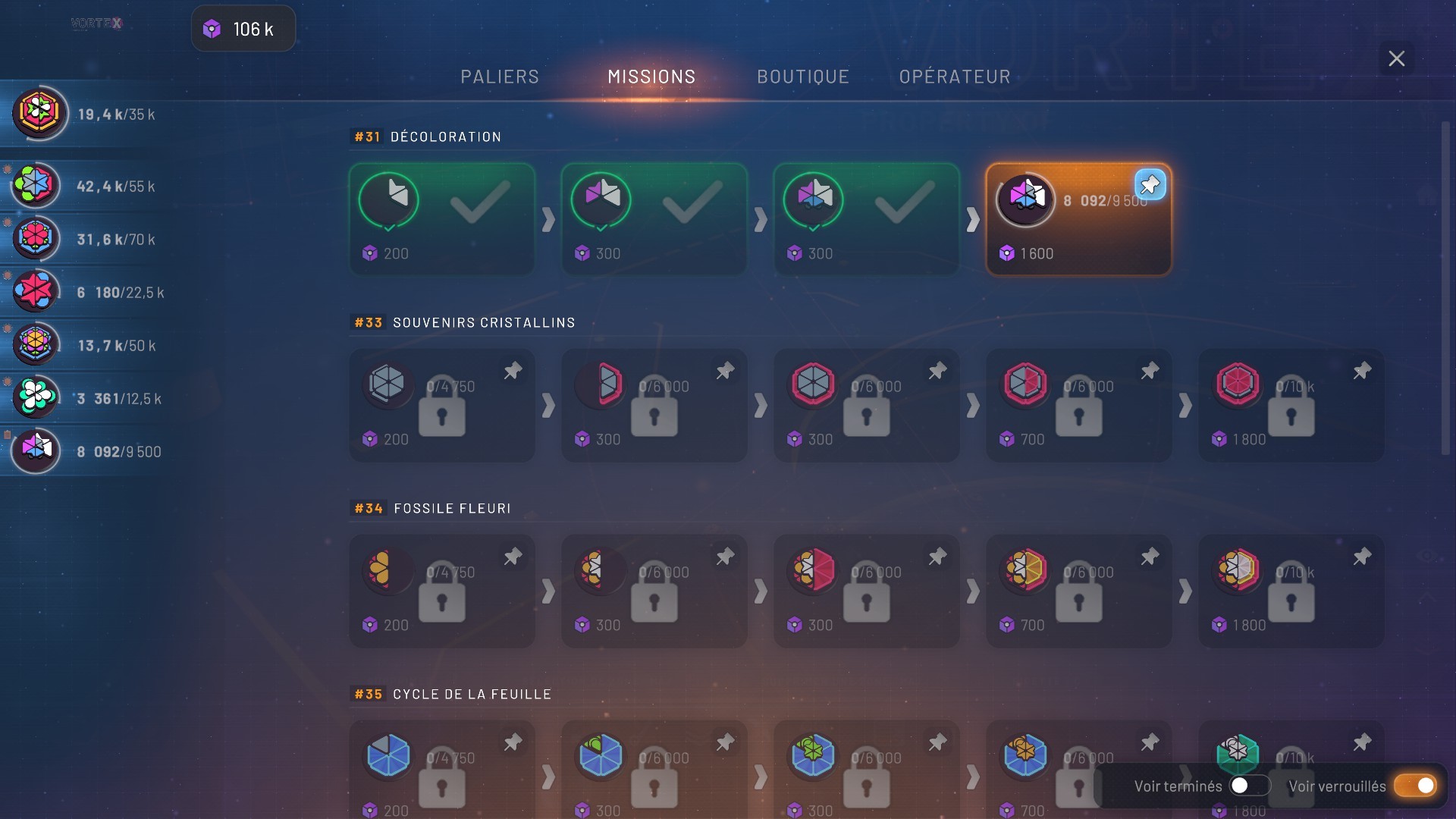
Beyond these two modes, a fairly lengthy and very comprehensive tutorial guides aspiring engineers step by step. Called “Certification”, it focuses more on challenges and optimization. Players must meet specific production goals by building a line capable of manufacturing the requested shapes, with particular attention paid to the factory’s efficiency and organization. It’s an excellent way to put the mechanics learned in the main mode into practice, while providing a more restrictive framework.
In a nutshell, if you love building factories in every possible way to get the most out of the game—without worrying about whether what’s asked of you makes sense—and where you’ll be building and destroying left and right, the Classic (Free) mode is definitely for you. On the other hand, if you’re looking for a bit more structure, with a continuous flow from start to finish, check out the “Manufacture” mode.
Get ready to use CTRL+C and CTRL+V
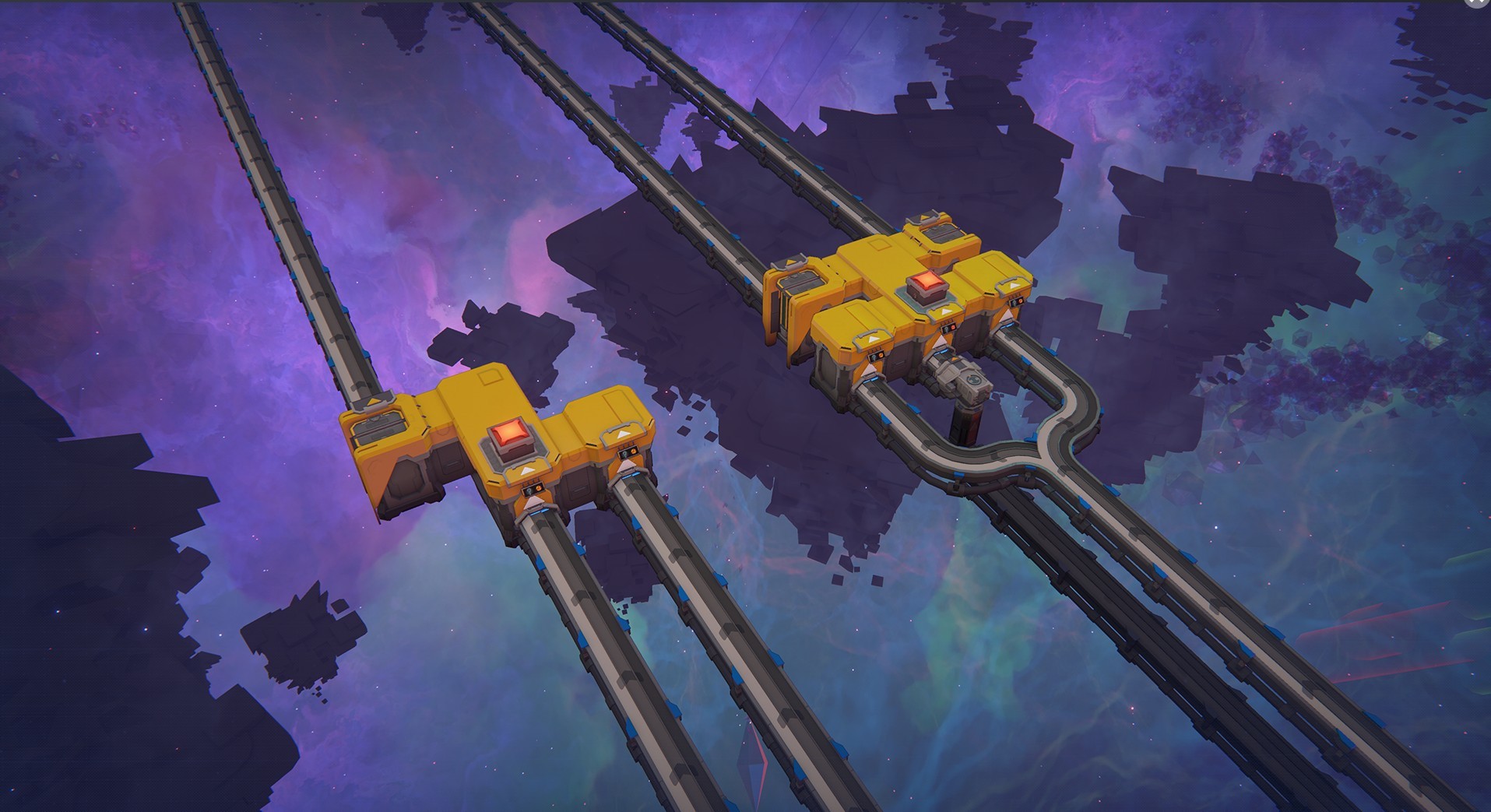
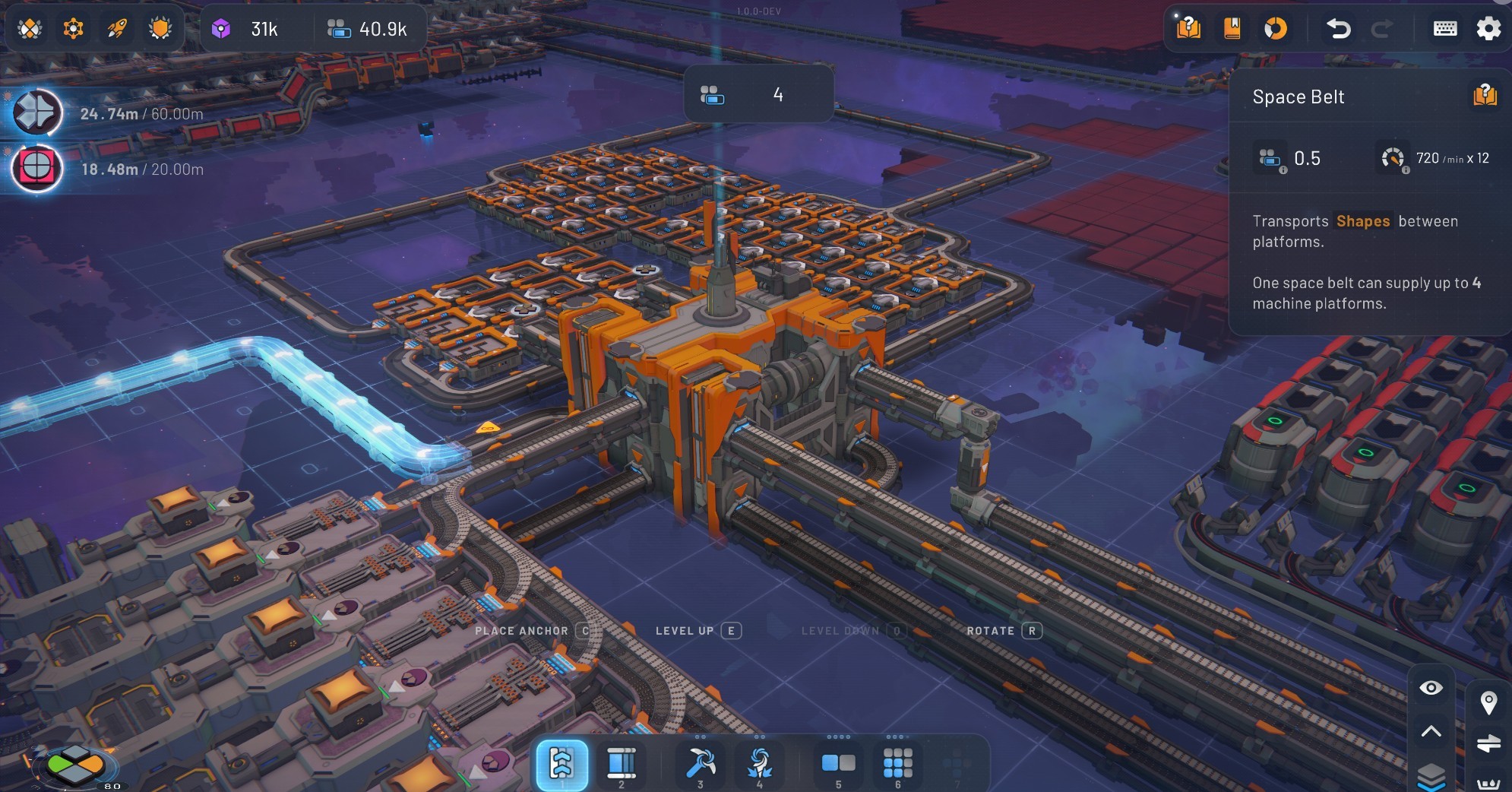
Shapez 2 doesn’t just make automation appealing. It also shows remarkable attention to detail when it comes to gameplay comfort. This is undoubtedly one of the most impressive aspects of the experience, as virtually every element seems to have been designed to avoid the usual minor frustrations of the genre.
Building is fast, precise, and particularly intuitive. The tools make it easy to modify setups, select multiple elements, and reorganize part of your factory without feeling like you’re struggling against the interface. Space management is also much more enjoyable thanks to the various options available to the player. What a pleasure it is to be able to manually select areas, use CTRL+C and CTRL+V to your heart’s content, and save entire factory blueprints…
Above all, Shapez 2 offers a tremendous amount of freedom in how you play. There are numerous customization options that let you tailor the experience to your preferences. This philosophy is also reflected in the overall presentation. The interface remains unobtrusive, important information is quickly accessible, and the various settings let you truly shape your experience. For a game whose core mechanic is based precisely on the repetition of many small actions, this level of comfort makes a considerable difference.
A gateway to automation
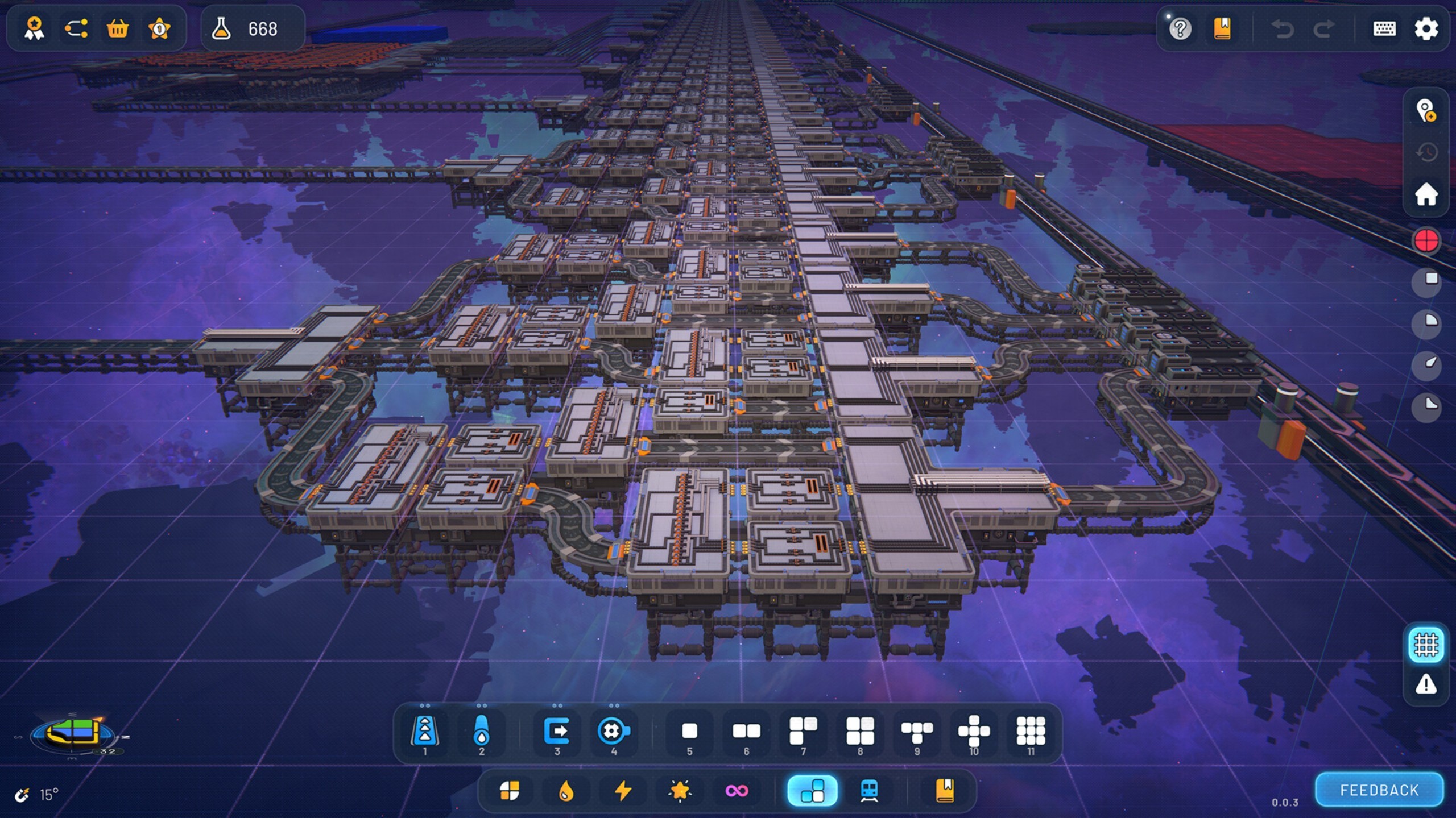
Ultimately, this is perhaps where Shapez 2 is most compelling. The game is obviously aimed at automation enthusiasts, but it can also serve as a great introduction to a genre that can sometimes be intimidating… as proven by new players to the genre in our own circle of friends. Players accustomed to more spectacular games might be surprised by the minimalist nature of the experience, but this simplicity is one of its strengths.
You don’t need to know the conventions of the genre to understand what to do. Just start with a small production line, then watch as problems arise. Too many resources? You need to increase production. Not enough space between two machines? You need to rethink the layout. Is a shape becoming more complex? You need to design a new production line without compromising the original one.
The pleasure comes less from immediate rewards than from the satisfaction of gradually solving problems you’ve created yourself. And the more the factory grows, the more addictive this feeling becomes.
Tested on PC. See our rating policy here.
9/10
Shapez 2 is a low-key release for those unfamiliar with the genre, but it’s a must-play for anyone looking to dip their toes into it. The game doesn’t set out to radically transform the automation genre; instead, it does something far more meaningful: it elevates its fundamentals. Thanks to minimalist yet exceptionally well-executed art direction, an intuitive learning curve, and exceptional gameplay comfort, the game makes its complex mechanics surprisingly accessible.
Its niche appeal is obviously still there: if the idea of building production lines for dozens of hours leaves you completely indifferent, its qualities probably won’t be enough to win you over. But for the curious as well as for fans of the genre, it’s a remarkably well-crafted experience. It’s easy to jump into, you quickly understand what you need to do, and then you find yourself spending much more time than expected perfecting a factory that, at first, was supposed to be just a small assembly of machines. And then, you even leave the game running in the background all afternoon so you can enjoy it as soon as you get back. It’s an experience that’s as relaxing as it is addictive, proving that an automation game can be deep, accessible, and particularly pleasing to the eye all at once.
- + Beautiful art direction
- + Easy to pick up
- + Top-notch guides and interface—very easy to read
- + Several game modes
- + Unfortunately, very addictive...
- - Obviously repetitive