Zoominoes review: dominoes on steroids
, by Enzo
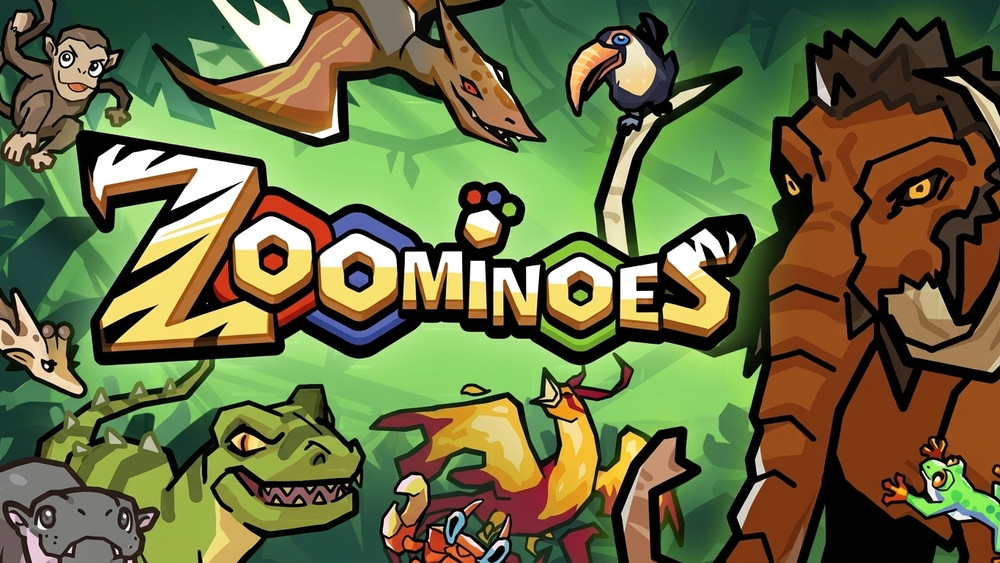
Developed by the tiny French studio Starlight Games, Zoominoes is one of those many low-key releases that almost go unnoticed. A few weeks after its launch, it appeared in the recommendations on Steam. The thumbnail features beautiful colors, and the letters are a lovely gold… it catches our attention. Naturally, we clicked, and found ourselves on the product page, only to discover that it’s not a zoo management sim, but a roguelike with deck-building. Yet another one. Still… it looks appealing, and features mechanics similar to those of dominoes. So we decided to give it a try. Too late—the trap had already snapped shut.
First impressions
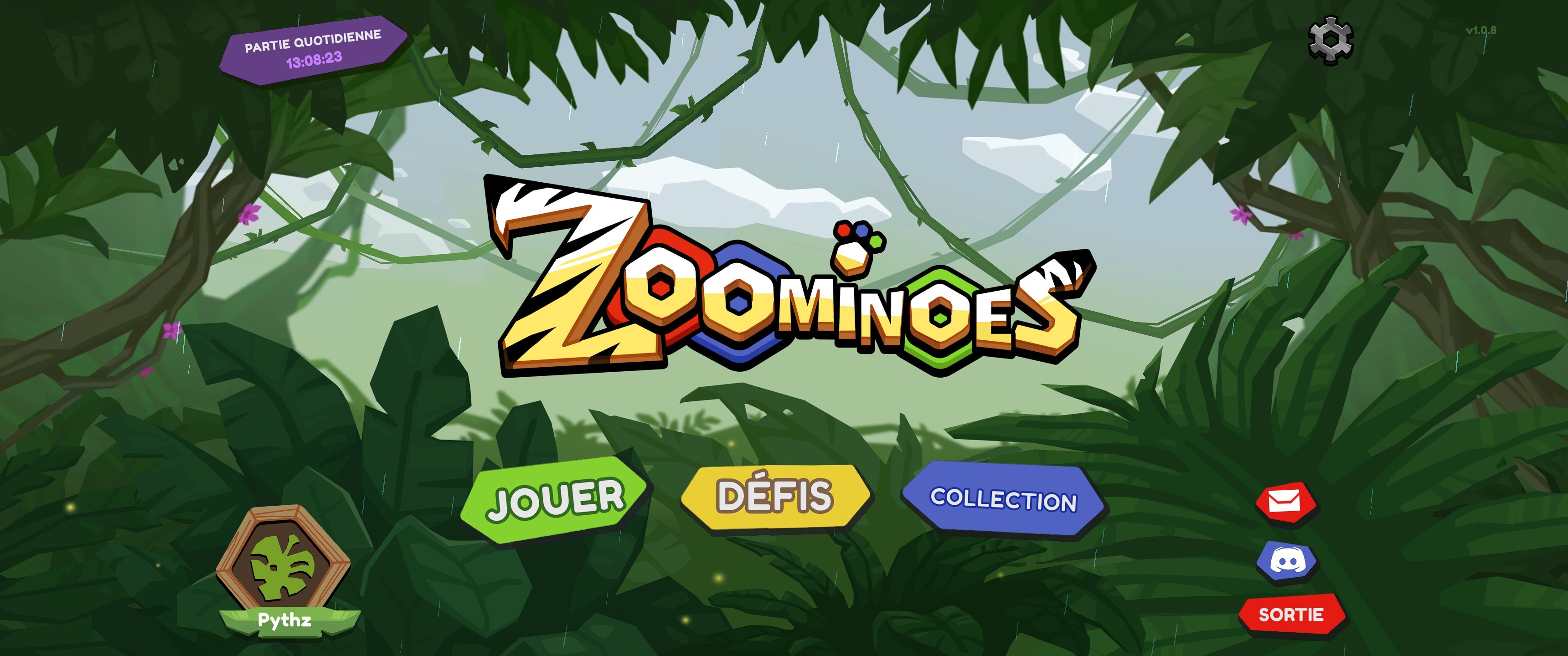
To be honest, we’re quickly charmed by the game’s art style. Right from the main menu, the atmosphere is quite warm, the colors are lush and green, and the soundtrack perfectly complements this little tropical moment amidst the vines. The attention to detail extends even to the sound each animal makes when you click on it.
The first few rounds—corresponding to the days of the week—flow smoothly, and the gameplay is intuitive right away. So intuitive, in fact, that you might almost think the game is too easy—that you’ll manage to last the entire month (the goal of each game) and that you’ll have seen everything it has to offer in a single evening. But that sense of simplicity quickly fades.
Zoominoes doesn’t just mechanically replicate the conventions of the genre. Here, the game board also plays an essential role. Available spaces, modifiers, and the layout of the various tiles must all be taken into account to maximize multipliers. The fun comes as much from building your deck as from finding the perfect layout.
Gameplay loop
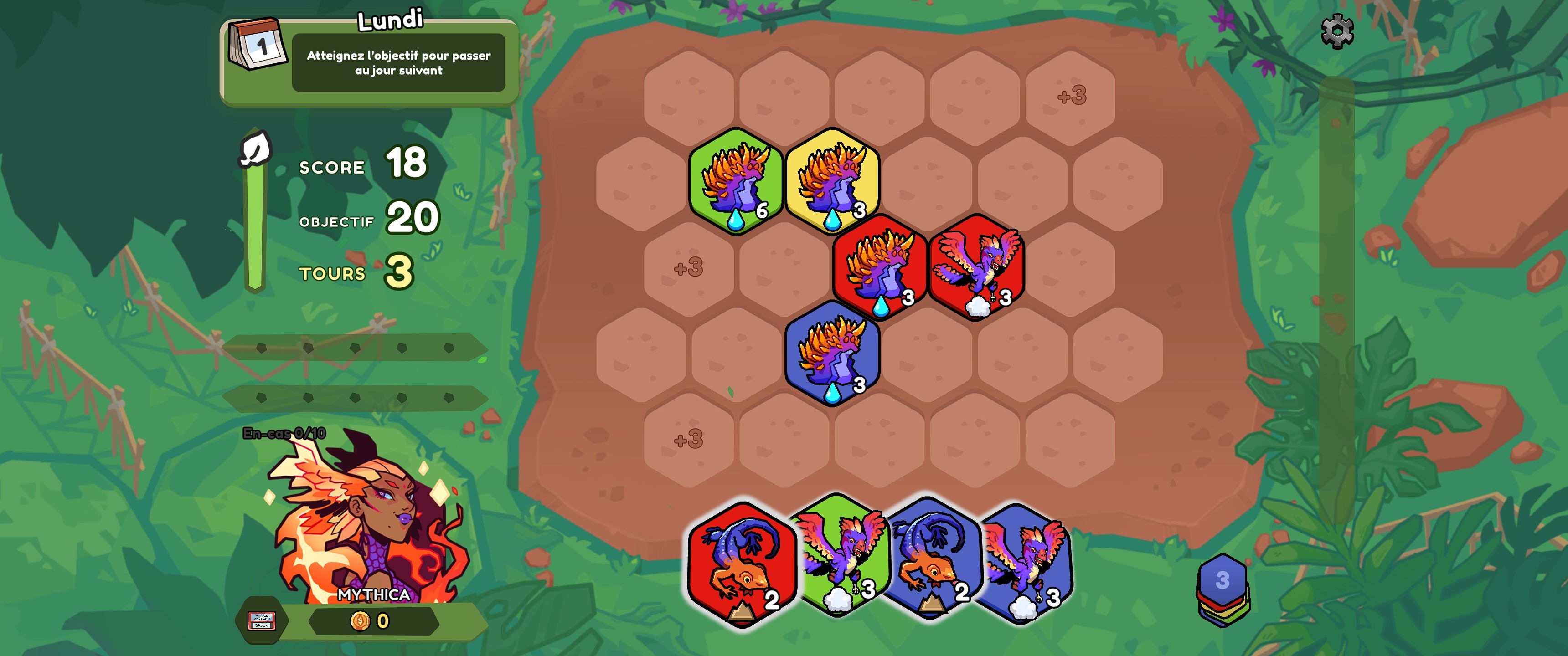
Each game requires us to build and upgrade a set of tiles representing different animals, then place them on a board to create the most profitable combinations possible. Much like a traditional deckbuilder, our deck gradually evolves, while the choices we make throughout the game determine the direction our strategy takes.
We quickly discover various elements. The different dominoes feature animals and have colors, an attribute (air, land, or water), and a whole host of abilities. [...] Much like in Balatro, you use your hand—in this case, filled with dominoes instead of cards—to achieve the highest possible score and complete the objective to move on to the next day. That said, another mechanic complicates matters: just like with dominoes, you can’t place a tile wherever you want—it must match either the color or the attribute.
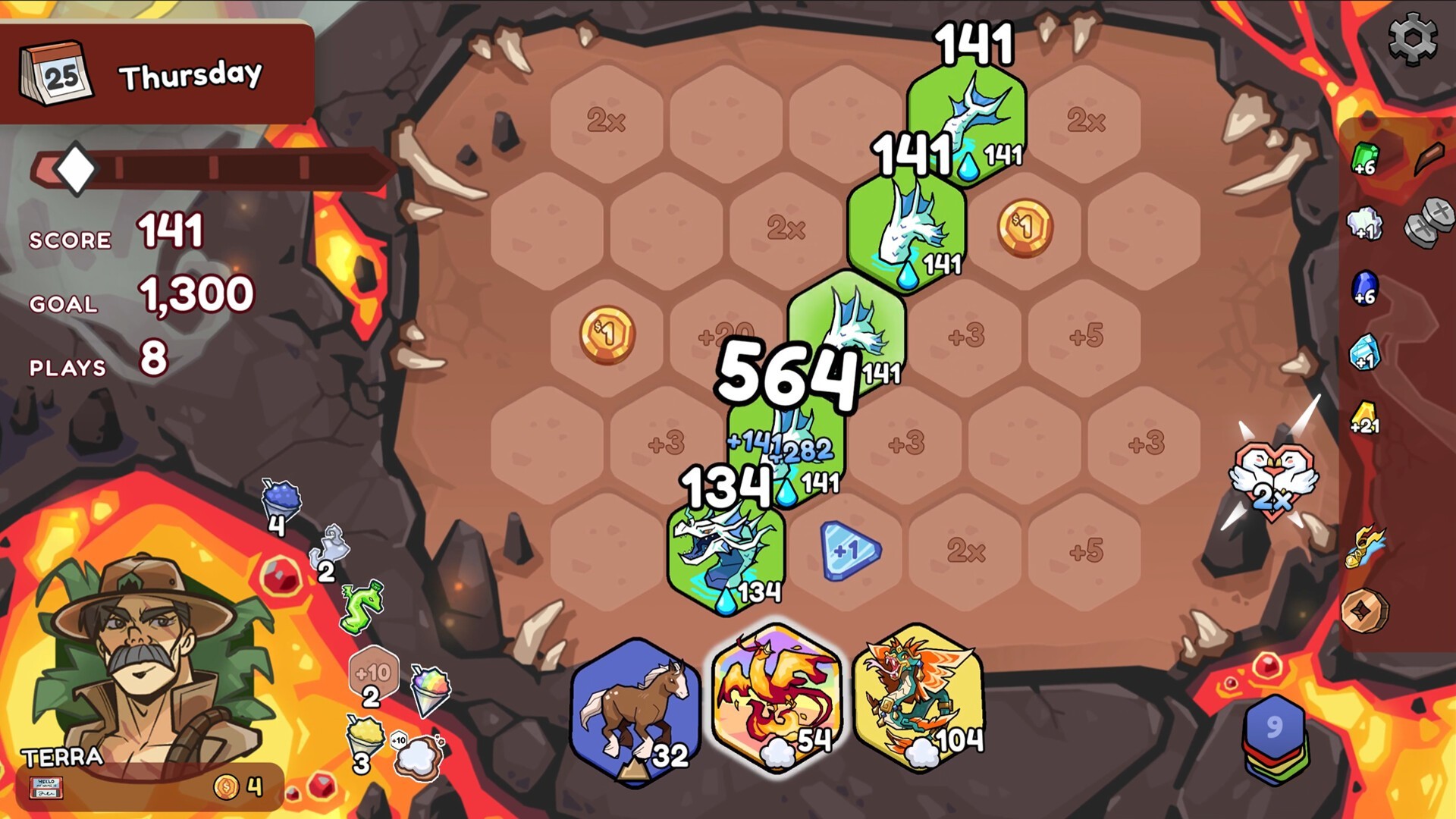
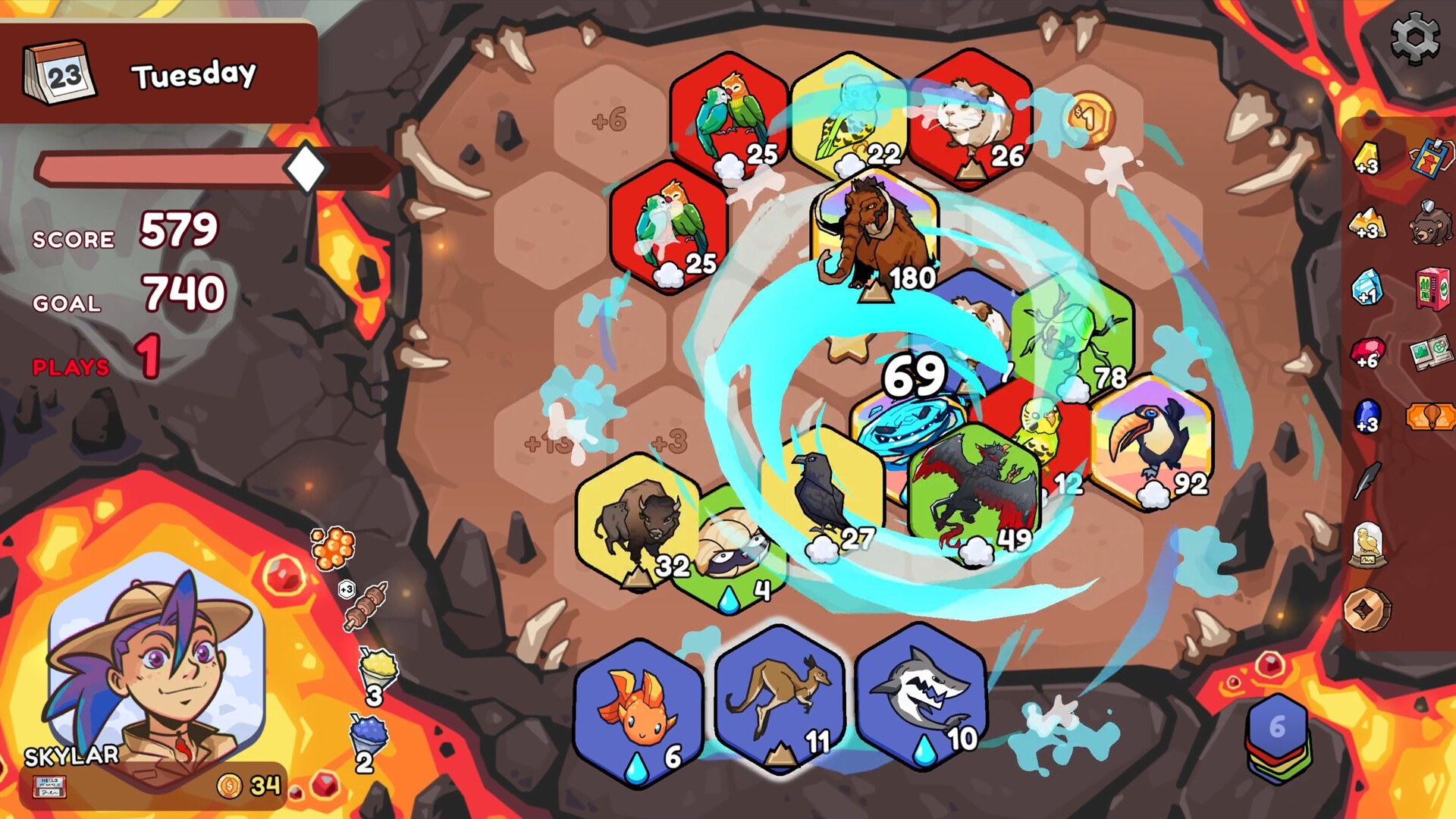
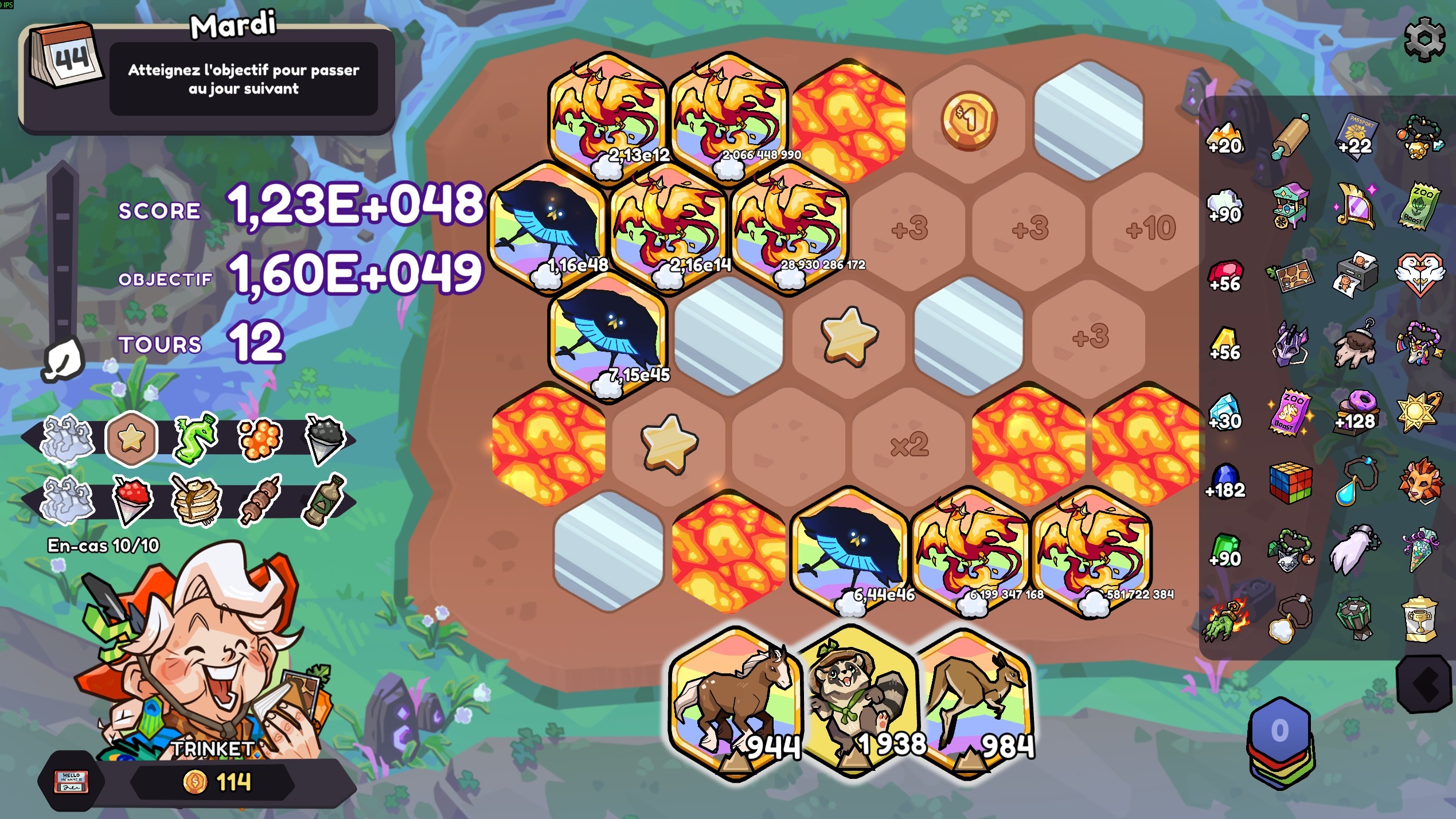
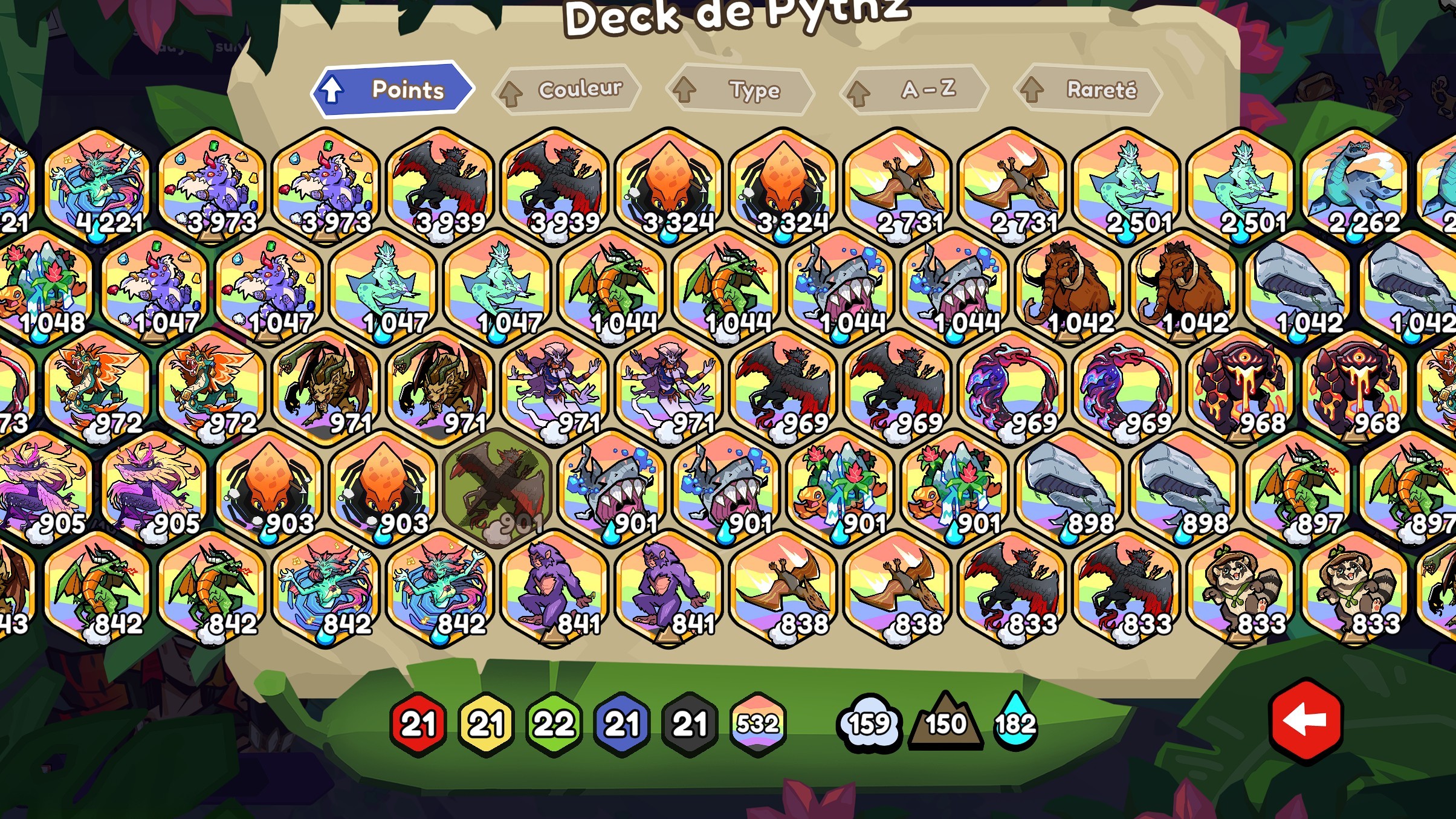
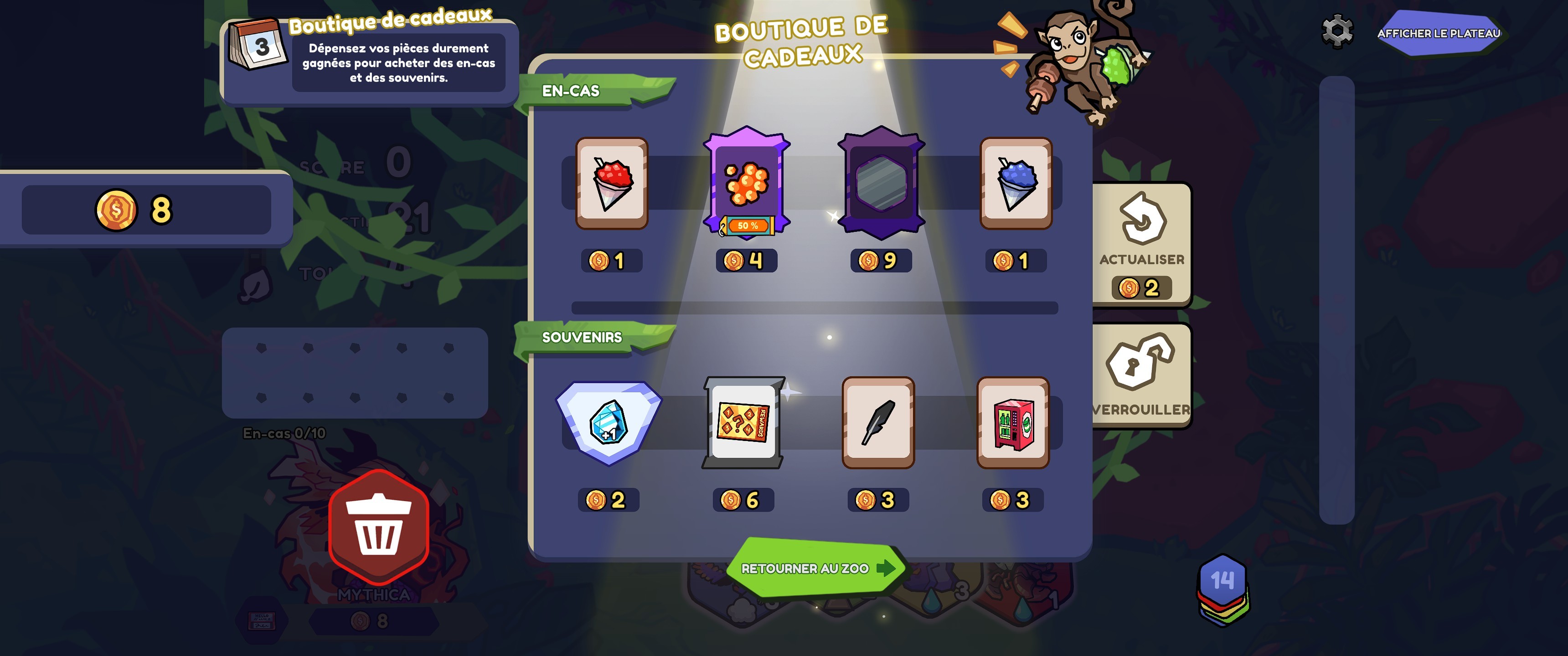
During each turn, you must not only meet these various criteria to play, but also account for the multitude of cumulative effects that can be triggered. As for the inventory—and as is often the case in games of this genre—it contains consumables with a wide range of effects, as well as relics, which provide a powerful bonus that lasts throughout the game. It’s also at this level—in addition to the domino deck—that you need to make smart choices. If you try to buy too many bonuses in one category, you might fall behind in another, and that could prove fatal.
The real driving force behind Zoominoes lies in its combos. At first, the scores seem relatively modest, but a few well-chosen upgrades are enough to make the numbers climb rapidly. This experience delivers that famous sense of power unique to the best roguelikes: a combination that seemed insignificant just a few minutes earlier suddenly becomes capable of generating impressive scores.
Substantial content
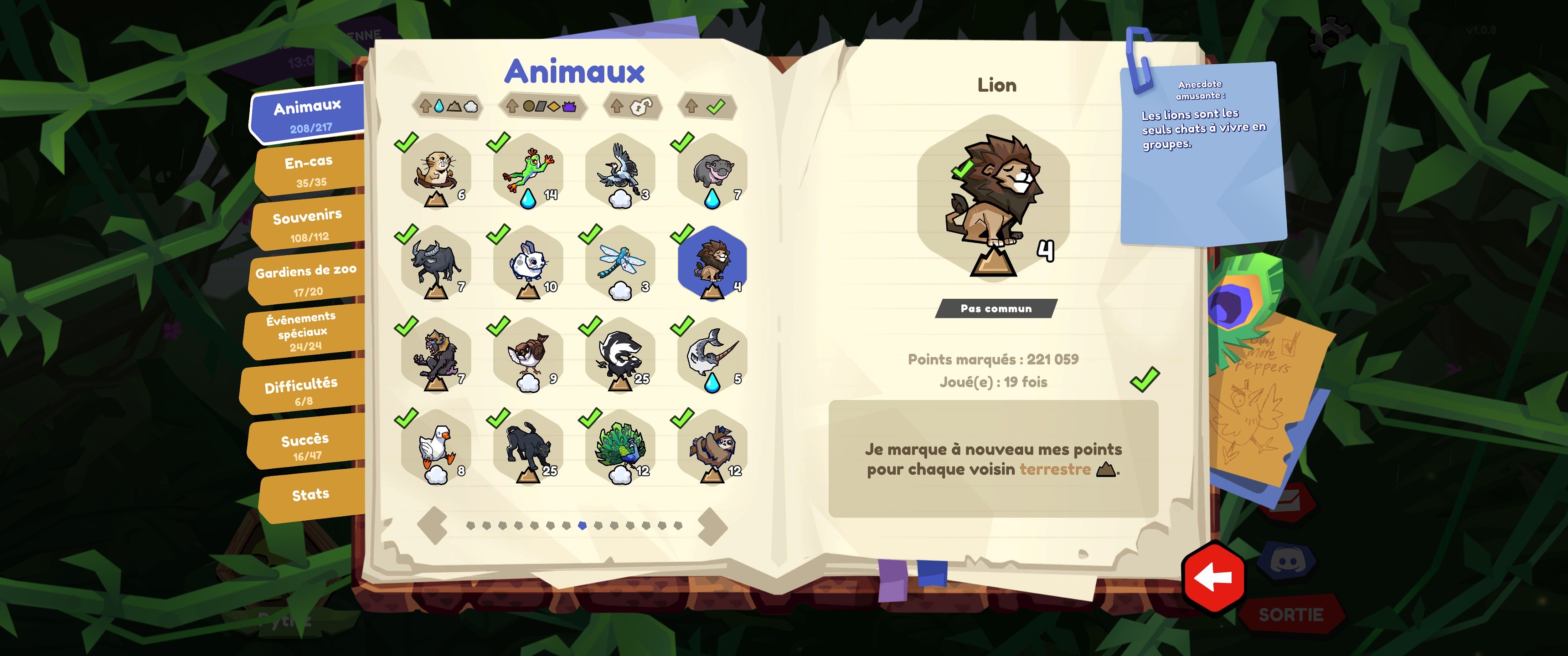
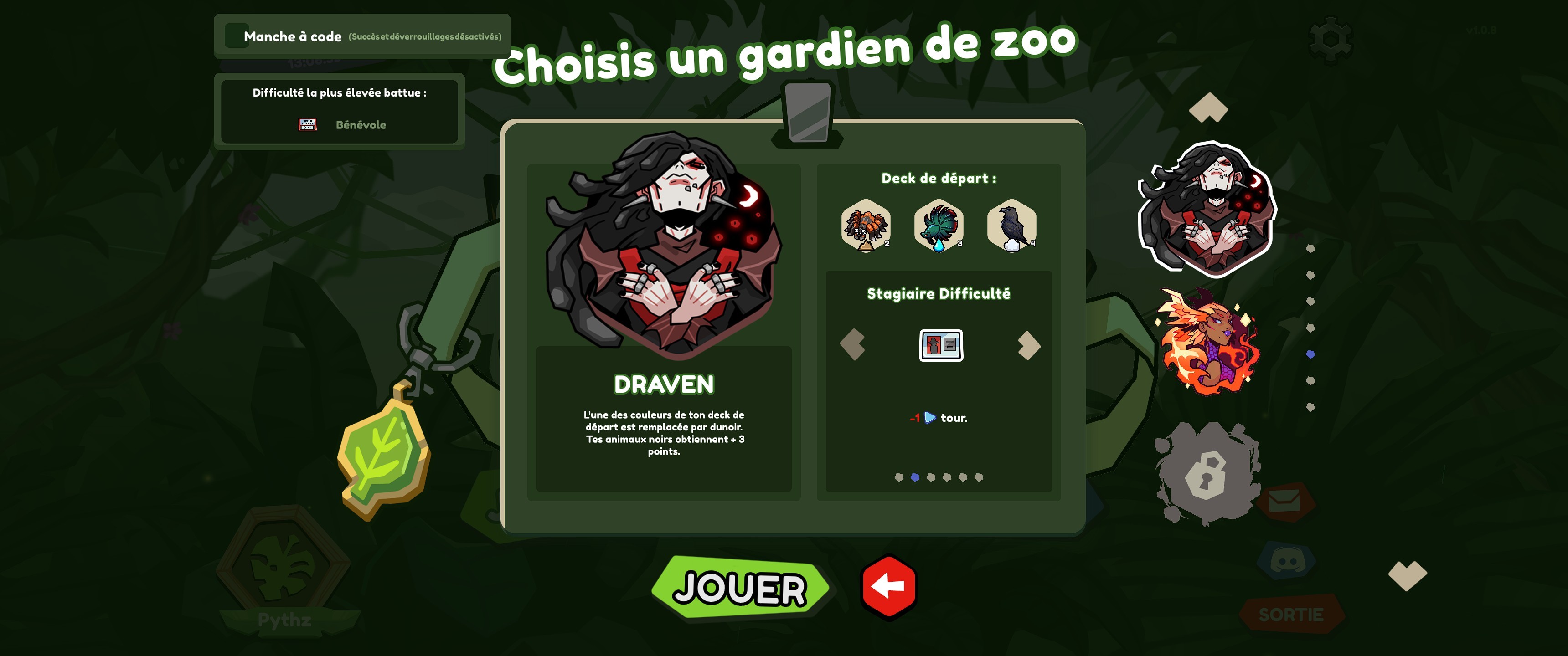
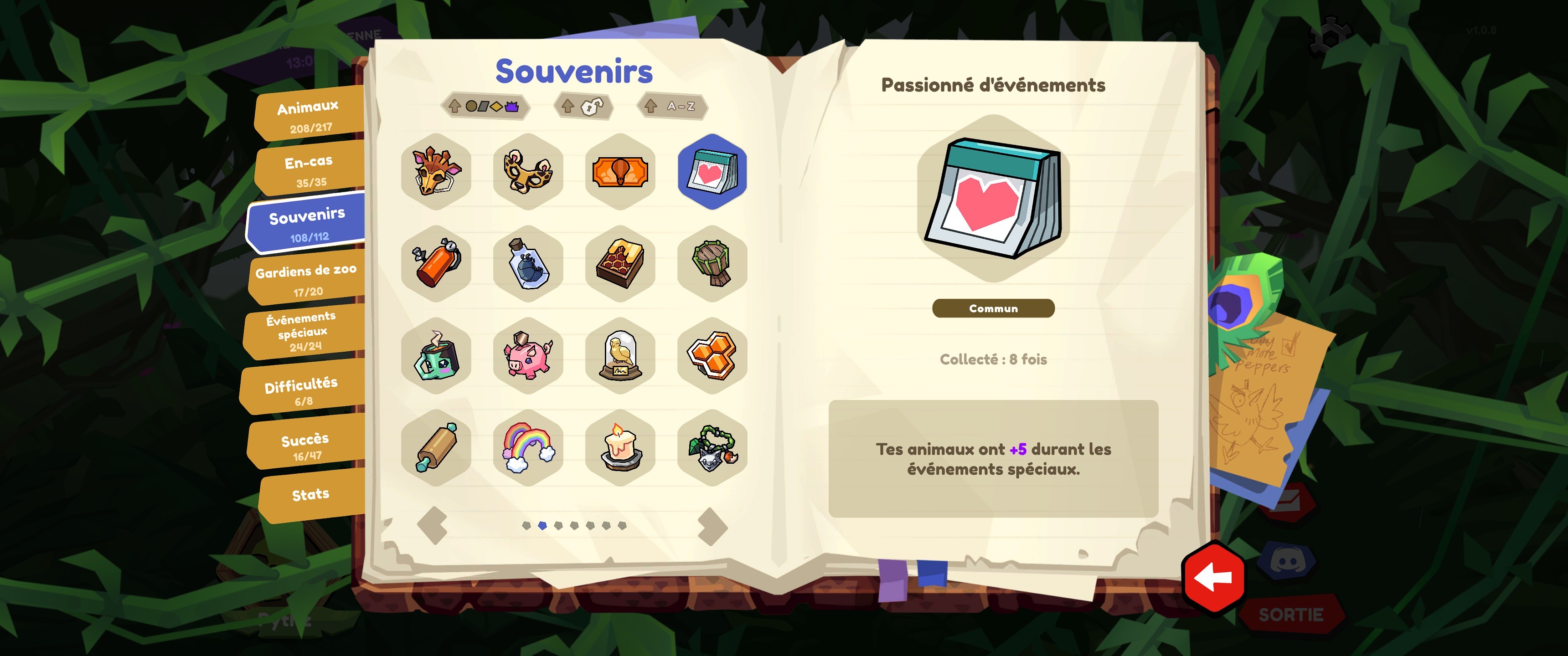
On paper, the game’s content delivers. Over 200 animals, dozens of consumables, about 100 souvenirs, and 20 zookeepers—each with their own unique traits, starting deck, or abilities. This variety significantly broadens the range of playstyles and is one of the game’s main selling points for long-term play.
Progression doesn’t stop after a single game, either. The game offers a month’s worth of gameplay through its runs, before letting you continue your journey in an endless mode. Special events regularly shake up the rules, while daily matches and runs with the same seed let you compare your performance to that of other players.
Fans of a challenge also have access to a dedicated challenge mode, featuring 24 additional trials, as well as numerous objectives designed to push the various mechanics to their absolute limits. This provides a real reason to come back once the initial discovery phase is over.

Areas for improvement
While the game is generally very well designed, a few flaws are worth noting. For example, it lacks some convenience features that would enhance the player’s experience. When choosing rewards from multiple tiers, it’s difficult to tell which items among those offered are “new”—that is, ones you haven’t yet discovered to complete your collection.
While this aspect may seem very minor, completing your collection of discoveries (animals, objects, effects, etc.) is actually necessary to complete challenges—which grant not just cosmetic items, but rewards that can be used directly in the game. During high-score runs, the interfaces sometimes overlap and obscure each other slightly; a different layout could have been implemented.
As for the gameplay formula, we might have appreciated a bit more depth. While the game does offer replayability—especially for those suffering from acute “collecting fever” or Steam achievement hunters—we wouldn’t have minded a few additional mechanics. Furthermore, the game might have shone even brighter if it had featured a solid roguelite element, allowing players to retain real advantages or clear progression (beyond just collecting) from one playthrough to the next.
Tested on PC. See our rating policy here.
8/10
With Zoominoes, Starlight Games has created a small but particularly effective roguelike that transforms the concept of dominoes into a genuinely engaging optimization game, while remaining accessible. Its combo system, deck-building mechanics, and interaction with the board form a gameplay loop that’s immediately understandable yet rich enough to encourage experimentation.
Its numerous animals, items, guardians, and various modes significantly extend its replay value, while its colorful aesthetic helps it stand out in an already crowded genre. So while it doesn’t revolutionize roguelike deckbuilding, it offers an original—and, above all, accessible—take on the genre. It’s the perfect game for fans of titles where « just one more quick game » dangerously turns into several hours spent searching for the ultimate combo.
- + Great visuals and theme
- + Top-notch soundtrack and sound design
- + Various game modes and decks available
- + Solid replay value for completionists
- - A few comfort options are missing
- - The gameplay could use a little more depth