Review of Darwin's Paradox: an incredible production?
, by Enzo
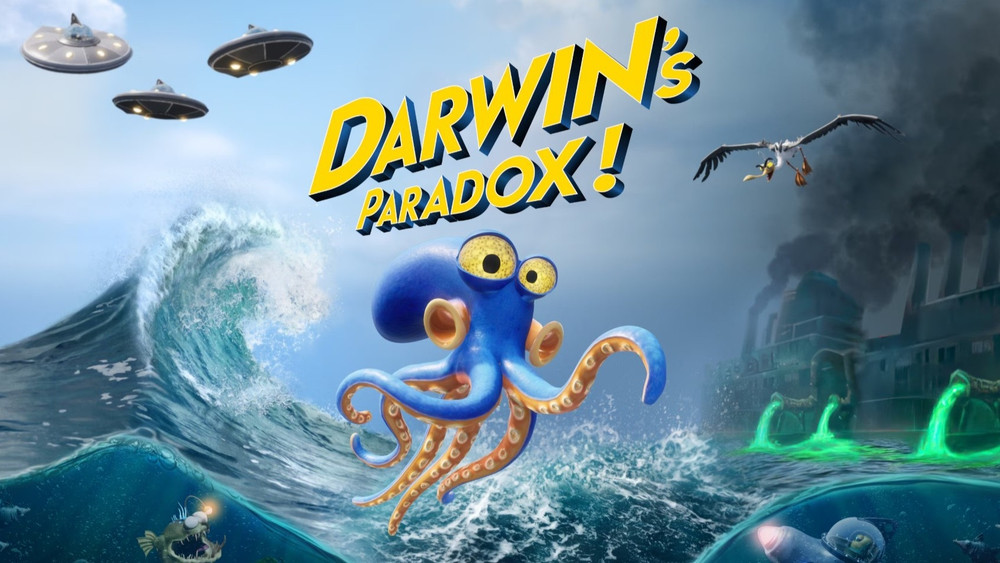
In a video game landscape saturated with sequels and tried-and-true formulas, Darwin's Paradox takes a more unique approach. Blending platforming, puzzle-solving, and an original universe, the game aims to immerse players in a constantly changing world where adaptation is the key to survival. It’s an enticing premise on paper, but one that deserves a closer look.
A remarkably effective artistic direction
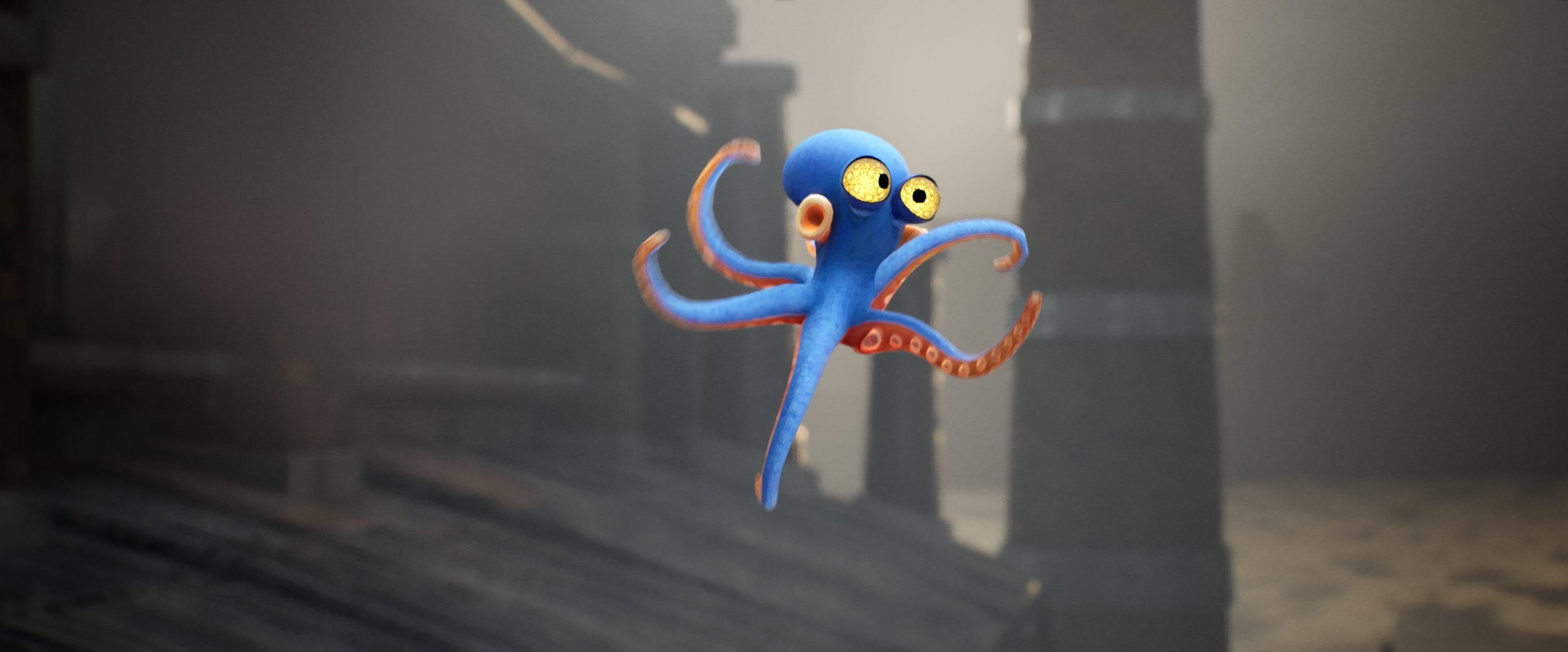
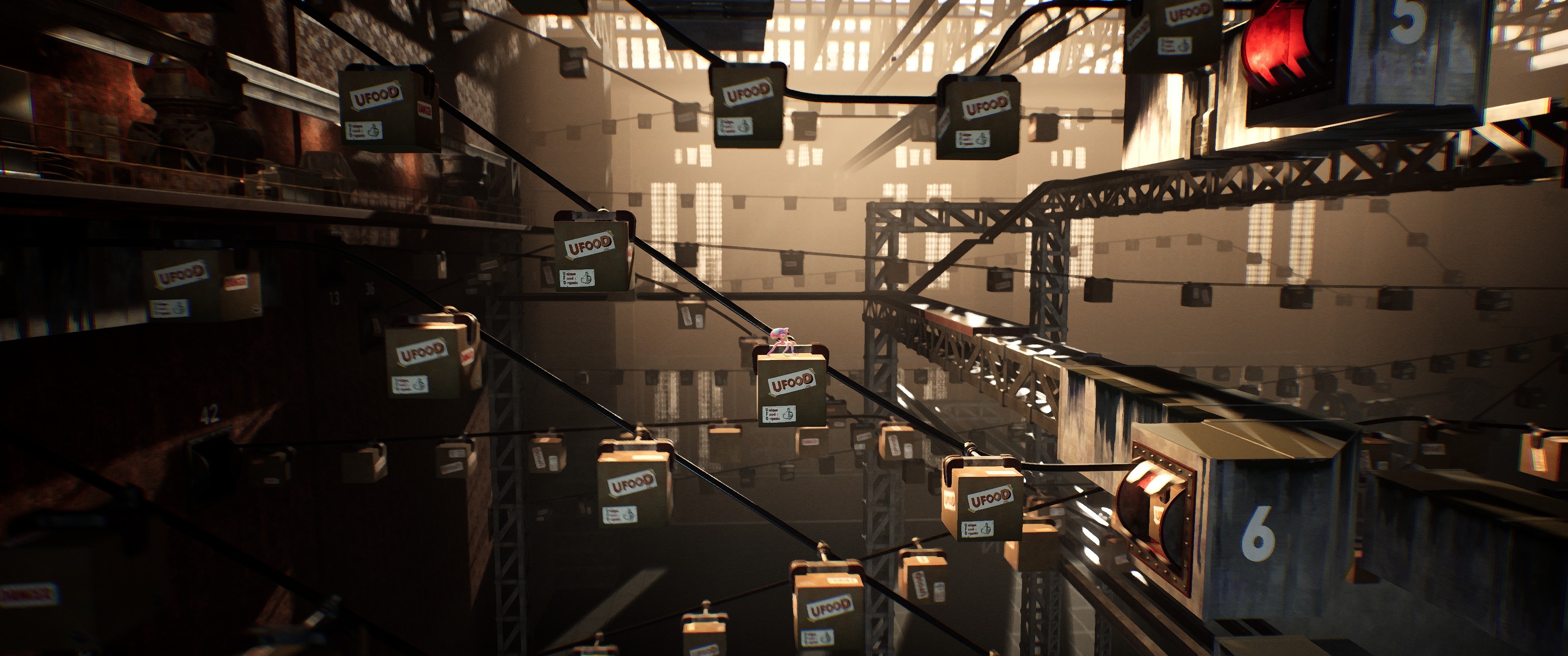
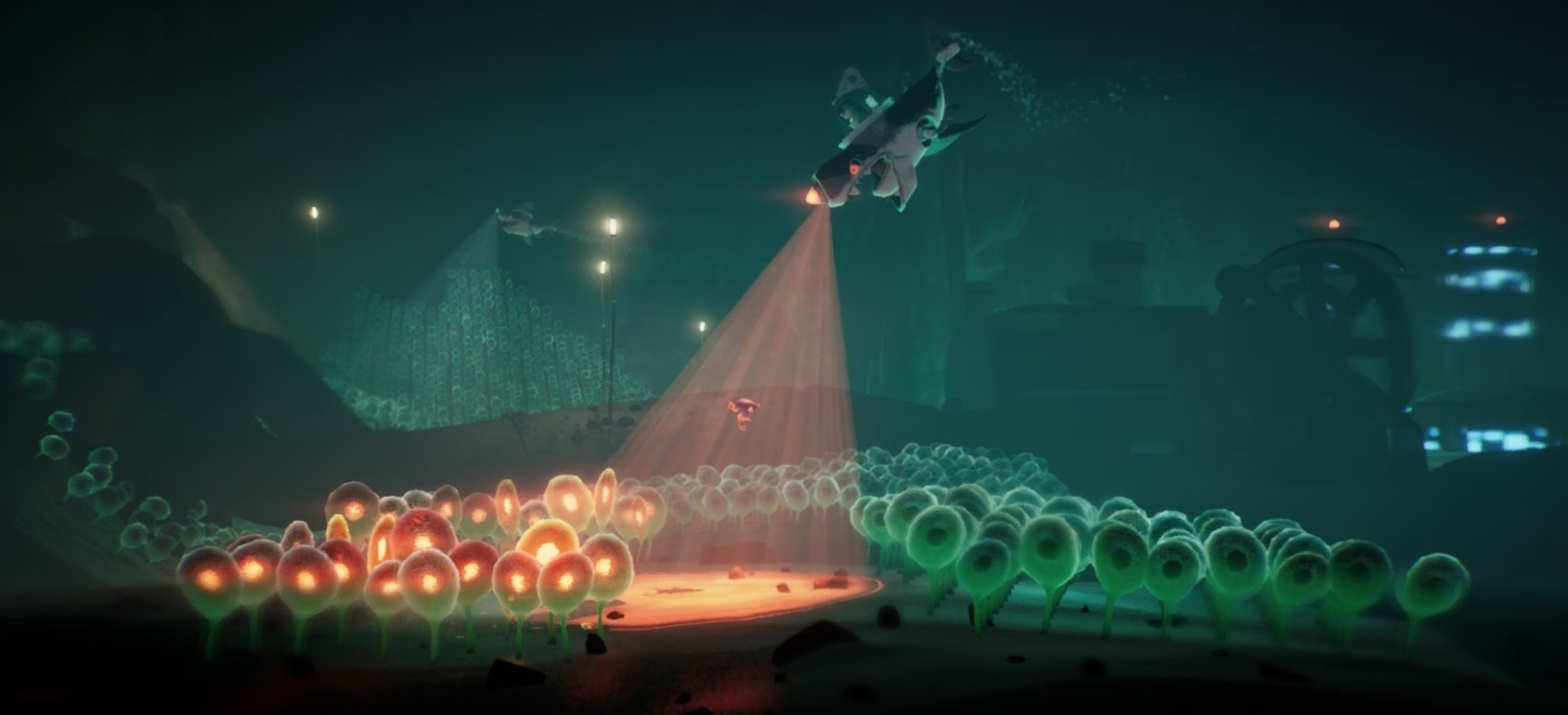
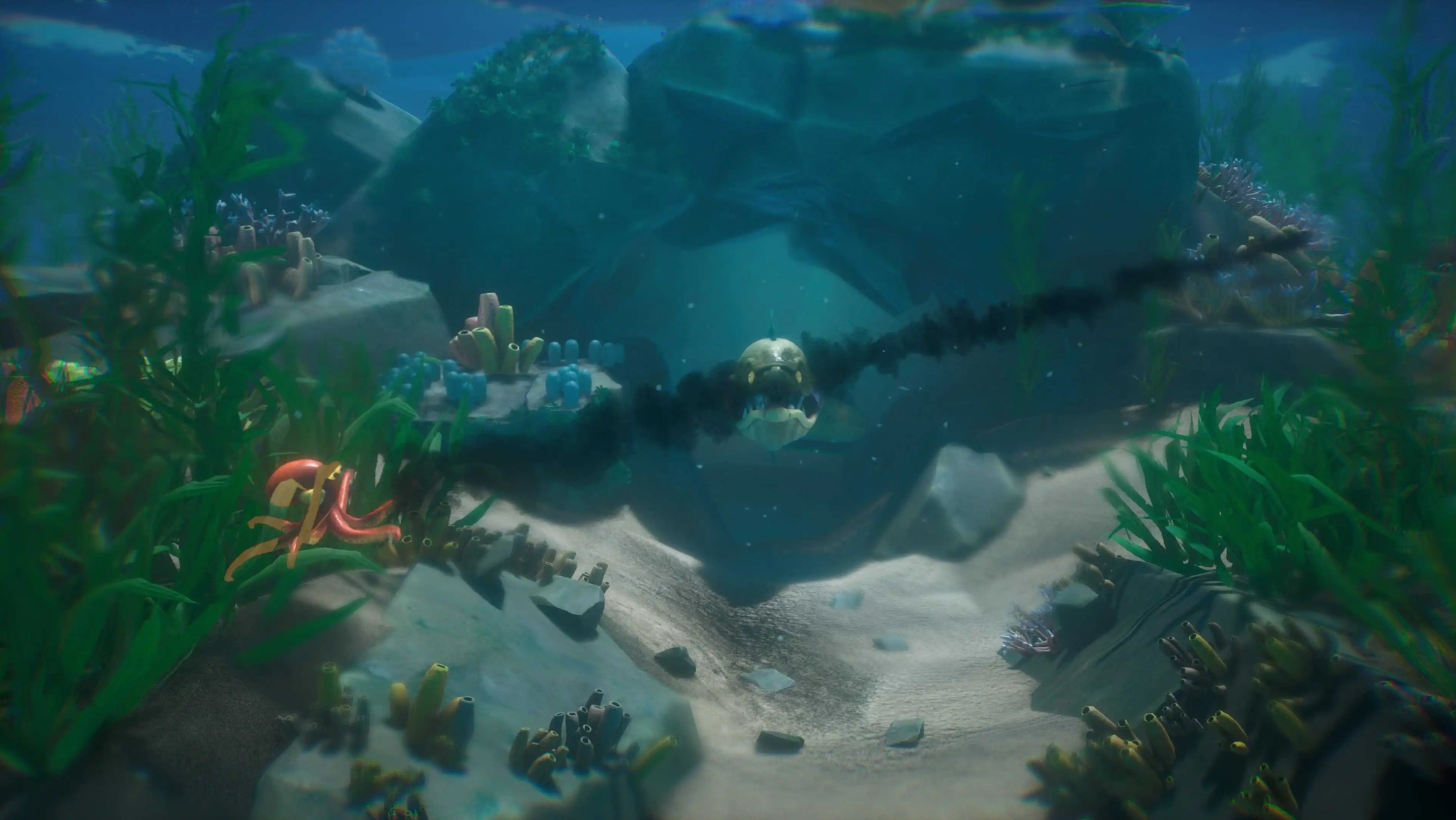
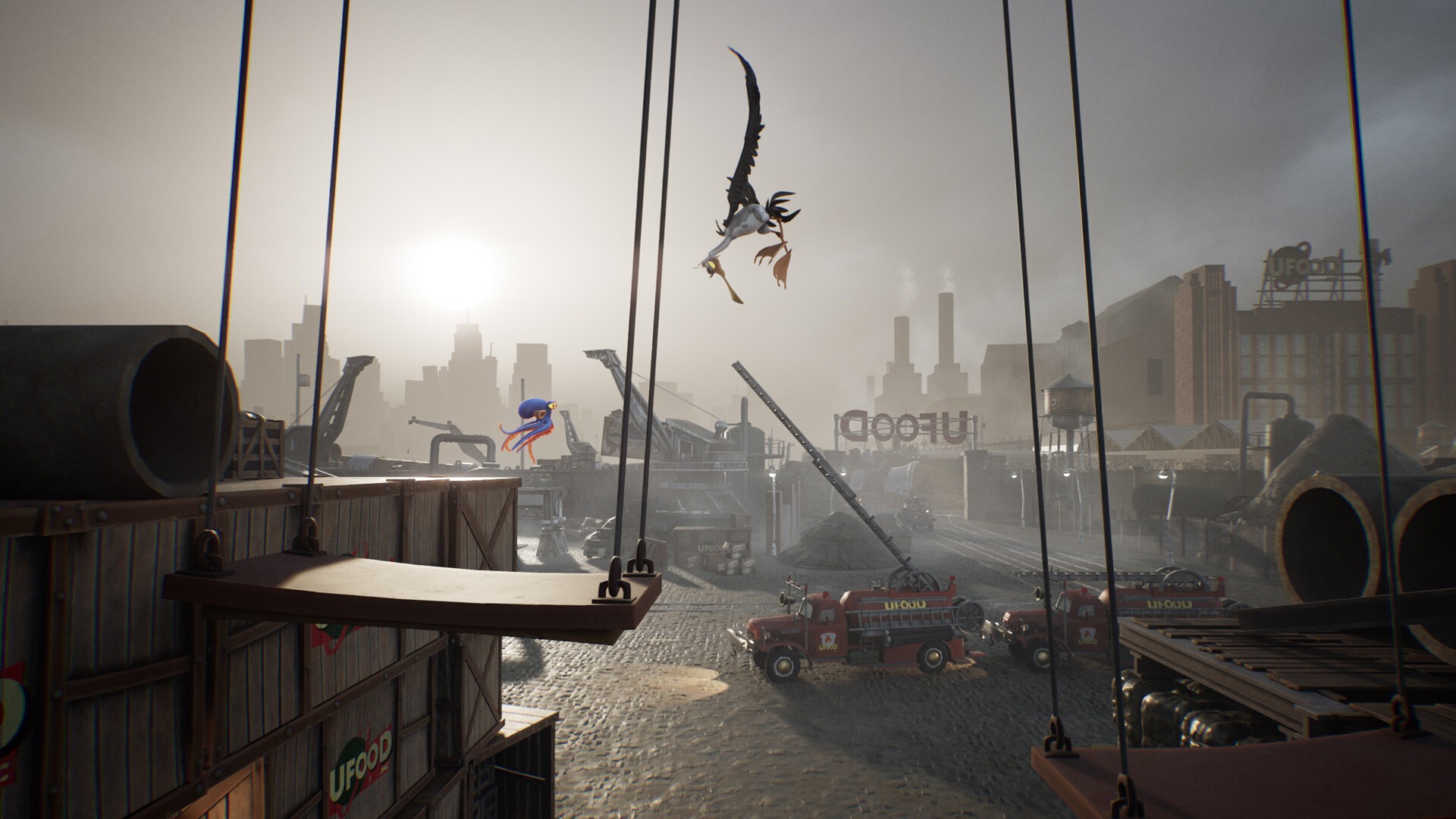
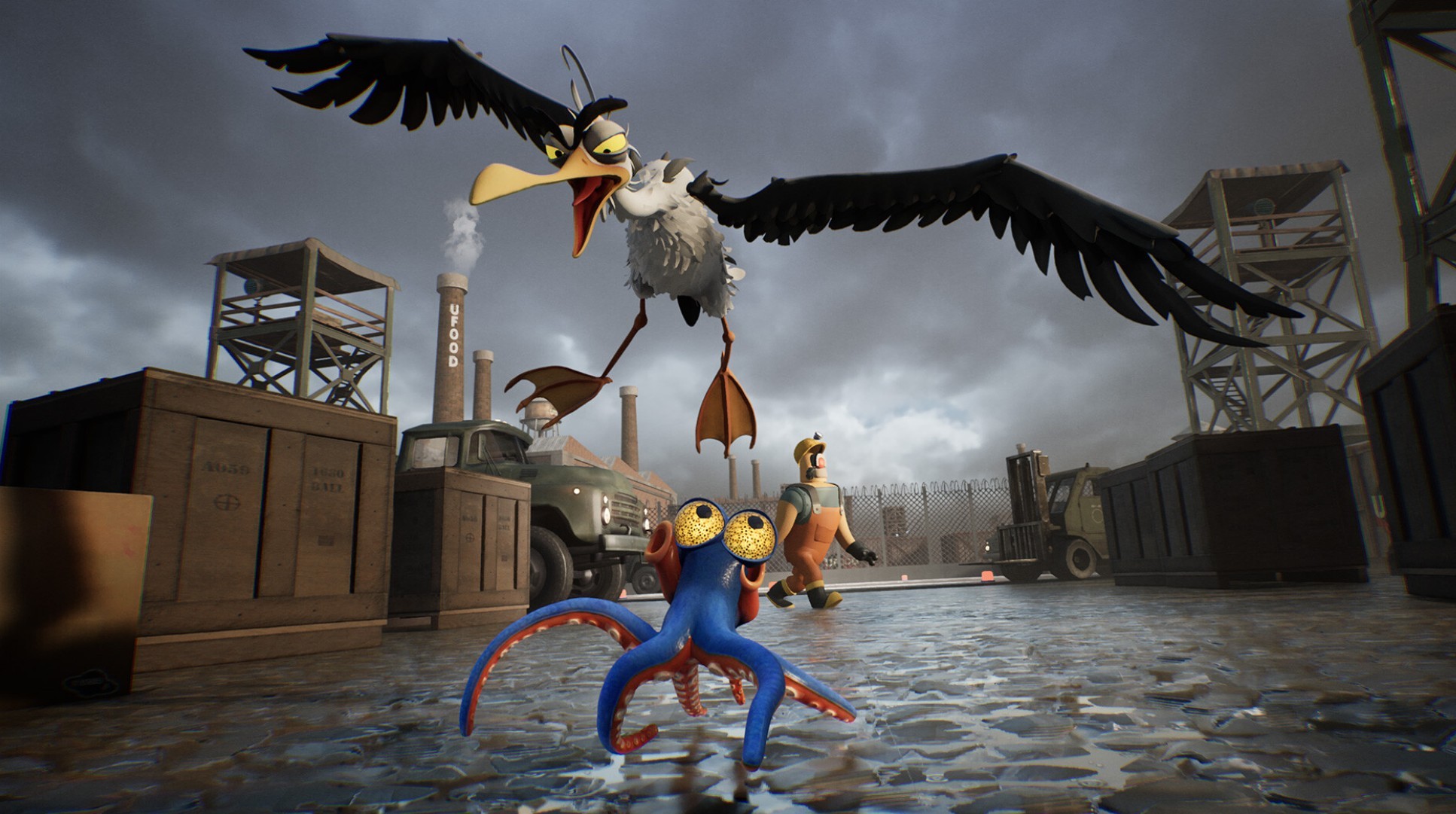
From the very first minutes, the game establishes an intriguing atmosphere. You navigate an organic world where every element seems to react to your presence. Visually, it’s quite unique: it appears to follow a path of detailed minimalism, in which your little six-armed octopus stands out clearly. The environments, meanwhile, are deeply varied and evoke both nature and human-made structures. The fluid and detailed animations reinforce this impression of a world in constant flux. While the introductory chapter features colors that are a bit dull at times and lacks contrast, this feeling dissipates as the game progresses.
On the audio front, it’s undeniably striking. The music is well-crafted and effectively complements each scene, while the game’s sound design is masterfully executed. A few drops of water here, something flowing there, or even a cracking sound—everything happens at just the right moment. The overall experience offers a truly engaging immersion; you almost feel like you’re becoming an octopus.
A well-executed eight-tentacle concept
Once again, we’re pleasantly surprised by how intuitive the controls are. The movements are fluid, responsive, and enjoyable—even during underwater sequences, which are often clunky in many other video games. You can tell a lot of work went into the physics without it ever feeling cumbersome or tedious. You’re almost always able to perform the actions you intend to, and your six-armed octopus reacts quickly. A real pleasure!
The heart of the game rests on a simple but effective idea: adapt or perish. Well, well—you could almost see this as a nod to Darwin… Here, each environment imposes its own rules, forcing the player to adjust their playstyle. The game’s tutorial lets you get familiar with the basic movements before introducing new elements. In fact, throughout the adventure, each chapter introduces a new mechanic, gradually equipping you with the full arsenal of an octopus: sticking to surfaces (even upside down), camouflage, and ink squirts.
With all of this, the gameplay is varied: you shift from a cautious, almost contemplative approach to more dynamic sequences where quick reflexes are essential. Stealth, speed challenges, anticipation, precise parkour, and many more things take turns throughout the game. Some scenes are devilishly fast-paced, while others are a lot of fun to discover (or even rediscover).

Production and technical aspects: a few missteps
This side is the most important aspect of the game. First and foremost, it’s worth noting that Darwin’s Paradox runs on Unreal Engine 5 and uses Lumen for lighting. So it looks nice, but the downside becomes apparent quickly: performance is very poor on our end, and this persists throughout the game. There are also a few frame rate drops at certain points in the game. Additionally, the game has a few bugs and struggles to maintain stability in 21:9 aspect ratio.
We also noticed a few inconsistencies in the production. While the introduction shows us all our future abilities, it takes a while for them to become available. Did our six-armed octopus forget them in the meantime? Some in-game cameras detect us immediately, but they no longer do so when a huge inflatable mattress gets stuck against them. Who’s monitoring the cameras? Are they designed exclusively to detect creatures with suction cups?
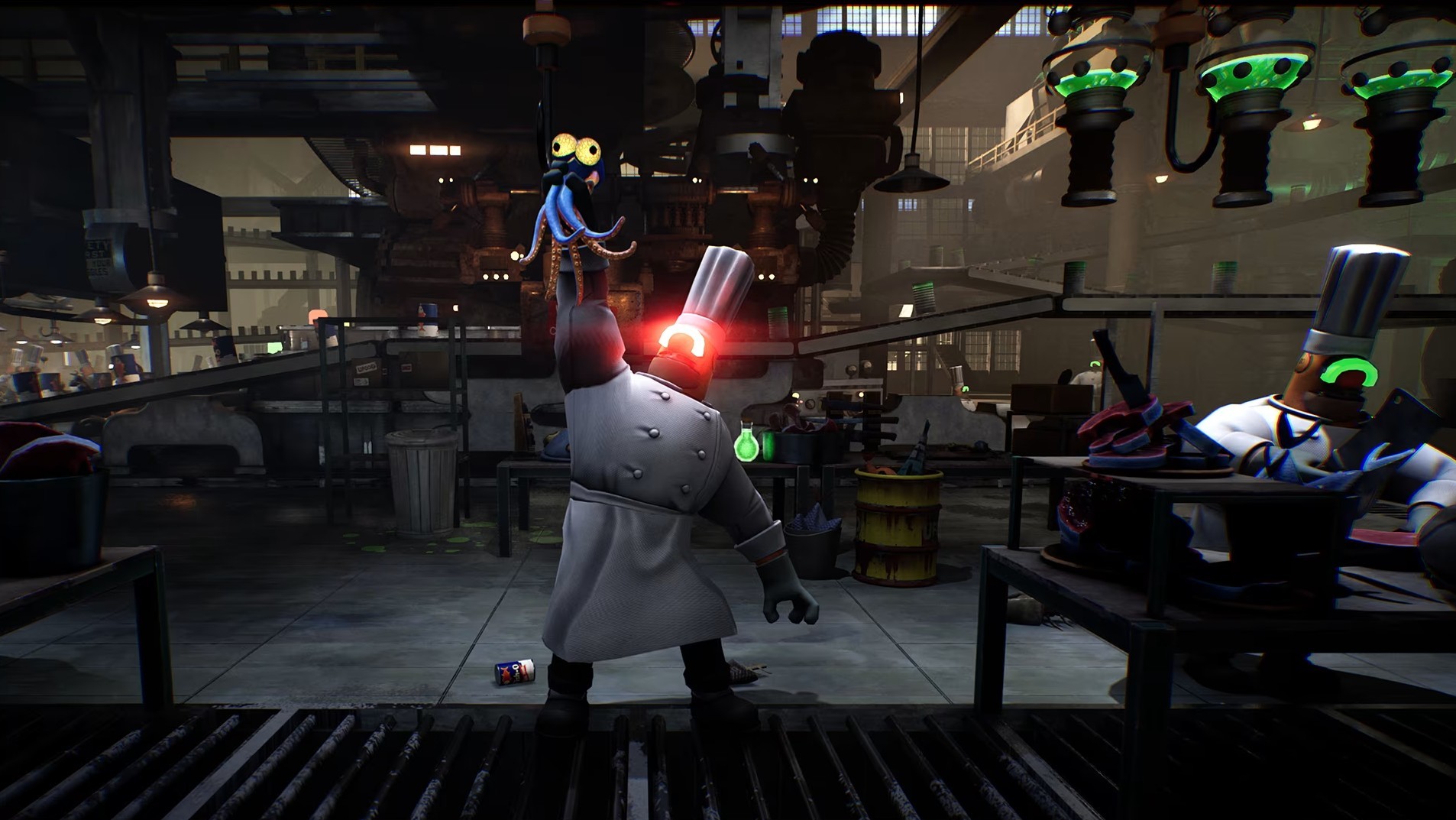
Tentacles we would have loved to see:
The premise is quite mysterious—if not entirely absent. Rather than delivering a linear story, Darwin’s Paradox drops a few clues here and there through exploration and observation, though this is very secondary. This bold narrative choice can be widely appreciated or, conversely, criticized: you can quickly get the impression that you’re mindlessly stringing together scenes and sequences without a real overarching theme.
While the gameplay is enjoyable, albeit classic, we would have appreciated more depth. Perhaps some unlockable passives, skill upgrades… Otherwise, certain gameplay phases literally require you to hammer the sprint button to get through them. If you don’t find the exit on the first try, or if you die, you end up hammering that button for several minutes.
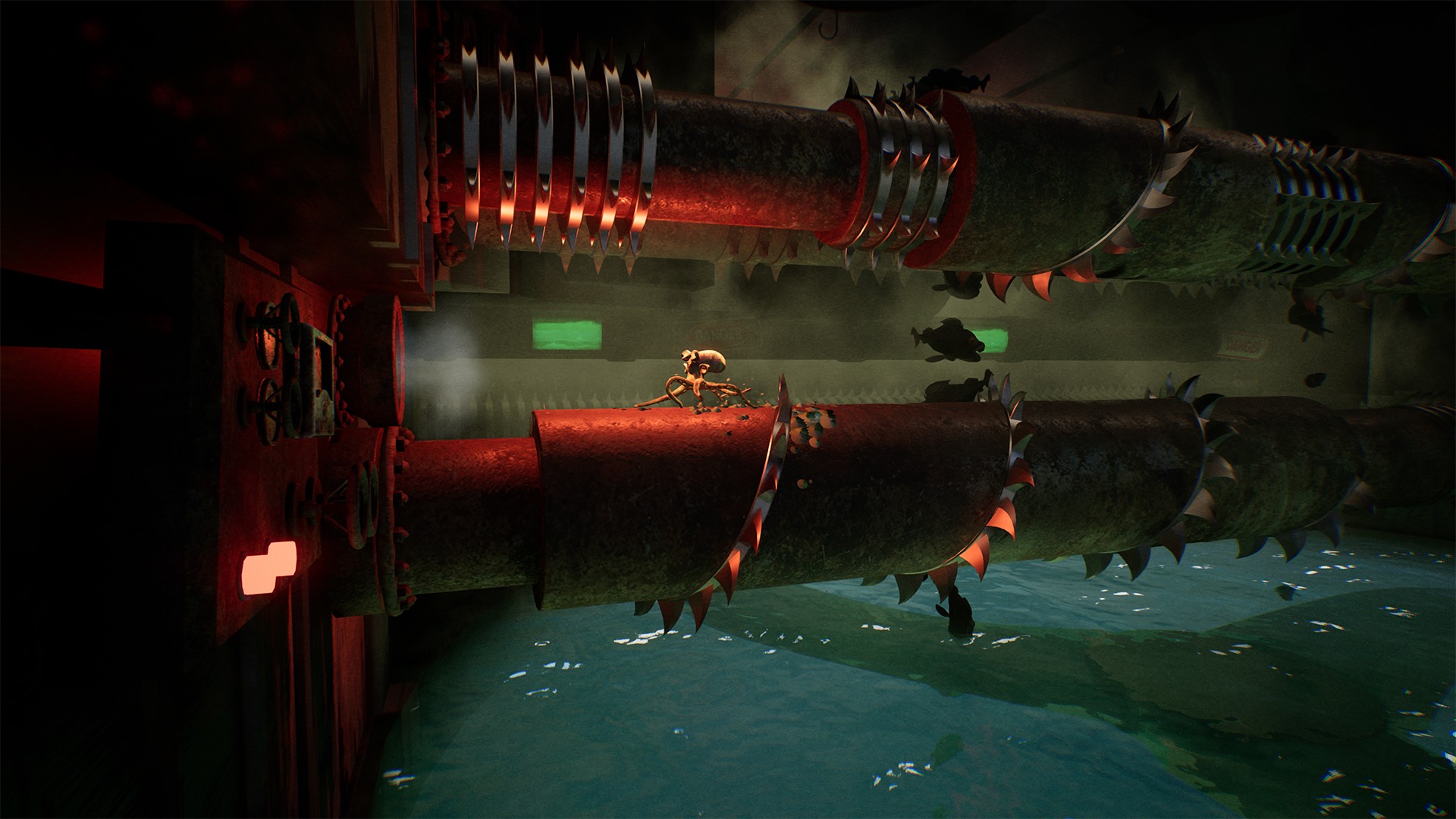
One of the moments when you feel most like a “lab octopus” is when you meet a teammate. Here, the goal is to advance phase by phase with each other, helping one another to reach our respective exits. A duality of gameplay and environment through a jumble of pipes… which comes far too late, at the very end. Finally, as is often the case, you’d expect the game’s ending to be the most colorful and memorable part. Here… you face a “boss” that couldn’t be simpler, requiring little thought and failing to make a lasting impression.
Tested on PC. See our rating policy here.
7.5/10
In short, Darwin’s Paradox is a game worth checking out for its boldness and strong identity. Despite some accessibility issues, technical flaws, and a runtime that’s too short, it manages to offer an interesting experience. It’s an imperfect work, but one that demonstrates a rich artistic vision and approach—through its levels and design—even with execution and technical aspects that are sometimes shaky. In a way, it serves as a reminder that video games can still surprise us when they dare to venture off the beaten path.
- + Easy to pick up right away
- + Captivating artistic style
- + Original and well-executed concept
- + Immersive gameplay and well-crafted sound design
- - Complete lack of a storyline or narrative elements
- - Very poor optimization
- - A few technical bugs
- - A bit too short