Minecraft Dungeons II Review: Lots of blocks, but few good ideas
, by Enzo
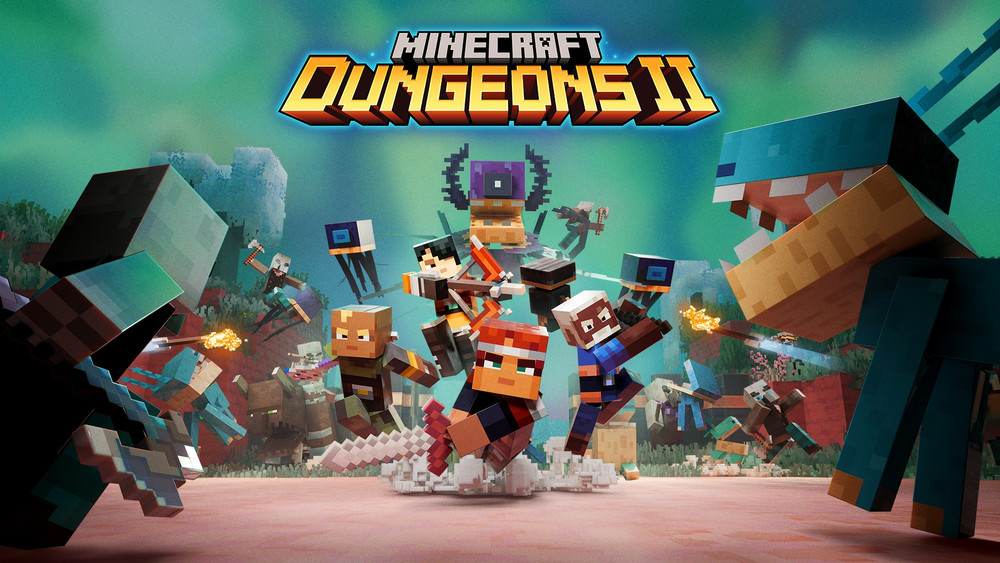
After winning over millions of players with its instantly recognizable blocky world and virtually limitless building possibilities, Minecraft has continued to expand its universe with increasingly varied experiences. With Minecraft Dungeons (2021), Mojang successfully ventured into the dungeon-crawler genre, combining accessible combat with hordes of enemies, mountains of loot, and plenty of dungeons to explore. It was a formula that found its audience, even if it was deliberately more approachable than the genre's heavy hitters.
Now, Minecraft Dungeons II is looking to take that formula a step further. The ambition is considerably greater this time around: an open map, verticality, expanded gameplay options, and even an entirely new dimension. Unfortunately, the end result struggles to live up to those ambitions. So don't fasten your seatbelts just yet, we're not going particularly high, and there may be a few blocks to fall along the way… Go get a water bucket.
Art direction and immersion
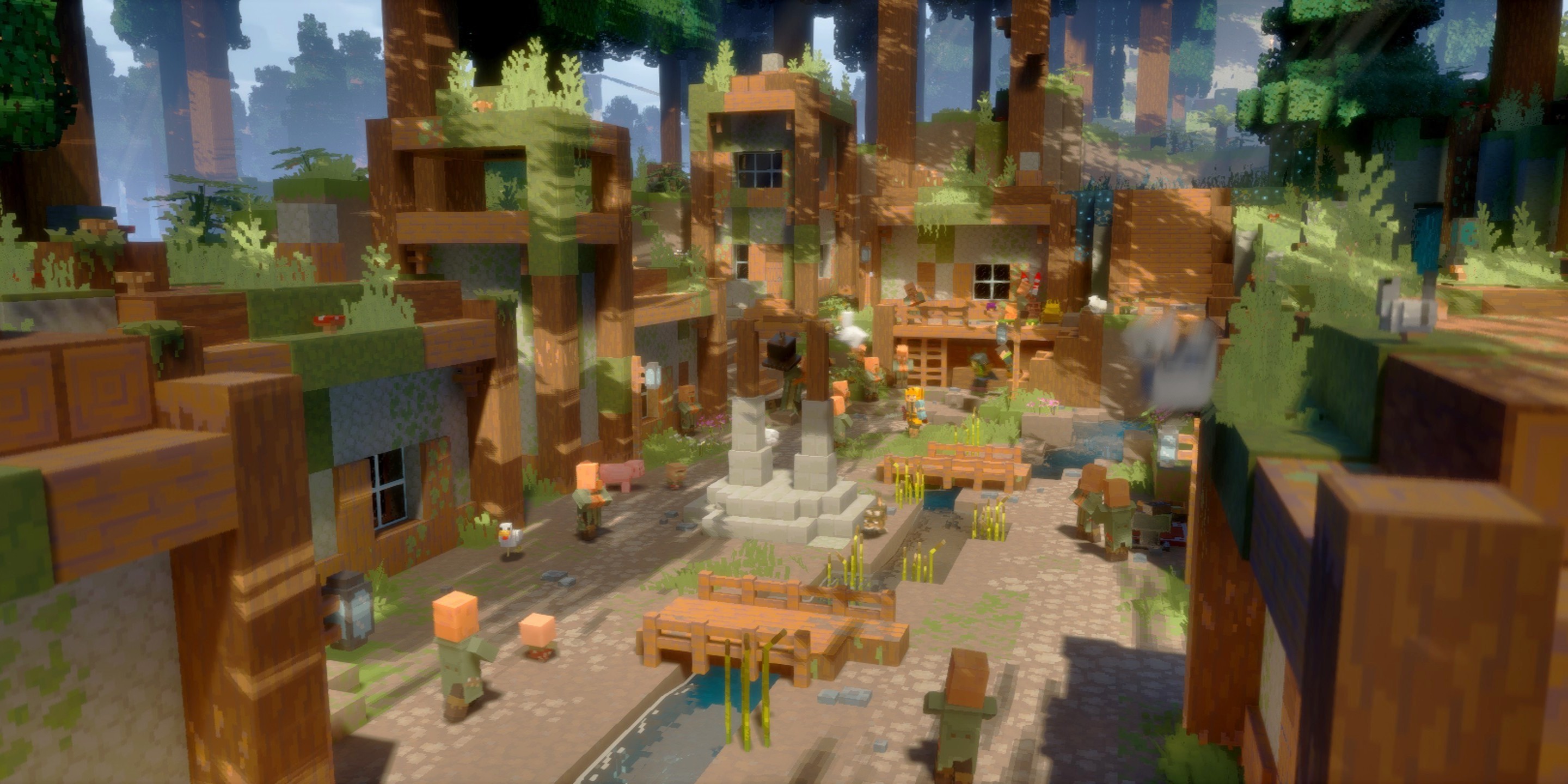
Minecraft must be one of the most recognizable licenses there is. Its blocky aesthetic is iconic, and its visual identity remains one of the most distinctive in gaming. Minecraft Dungeons II stays remarkably faithful to it, delivering a world that feels unmistakably Minecraft, from its familiar environments to its villagers and their iconic noises.
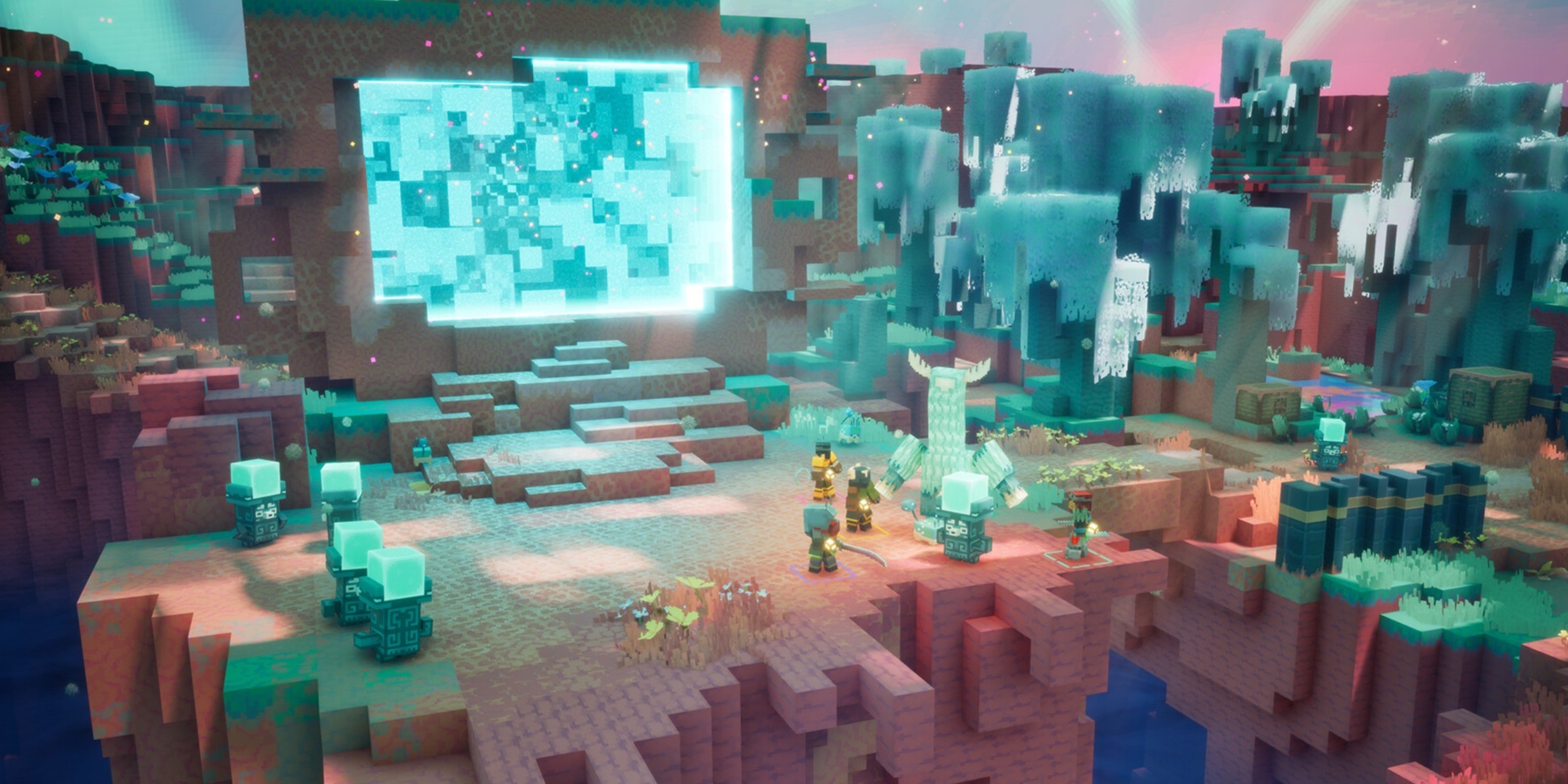
Beyond the signature blocks and instantly recognizable materials, the game also introduces a wide range of new creatures. Alongside a new frozen zombie variant, players will encounter plenty of other new mobs, both friendly and hostile, particularly within the new Sift dimension and its surprisingly varied bestiary.
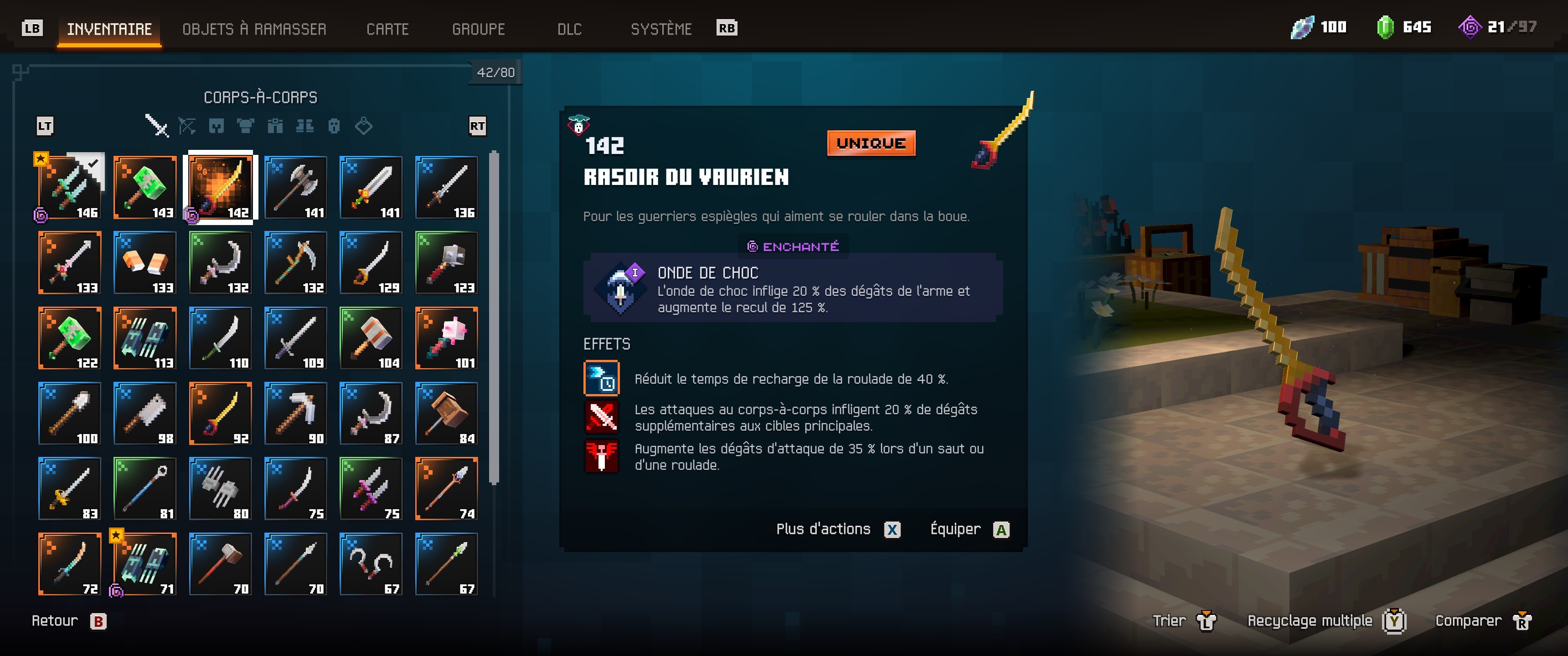
The interface and menus have also got some welcome attention. Everything feels cleaner and easier to navigate, and the visual presentation of it all is considerably more polished. Item menus even display 3D models of the equipment you're inspecting, making it easier to get a sense of what you're actually looking at.
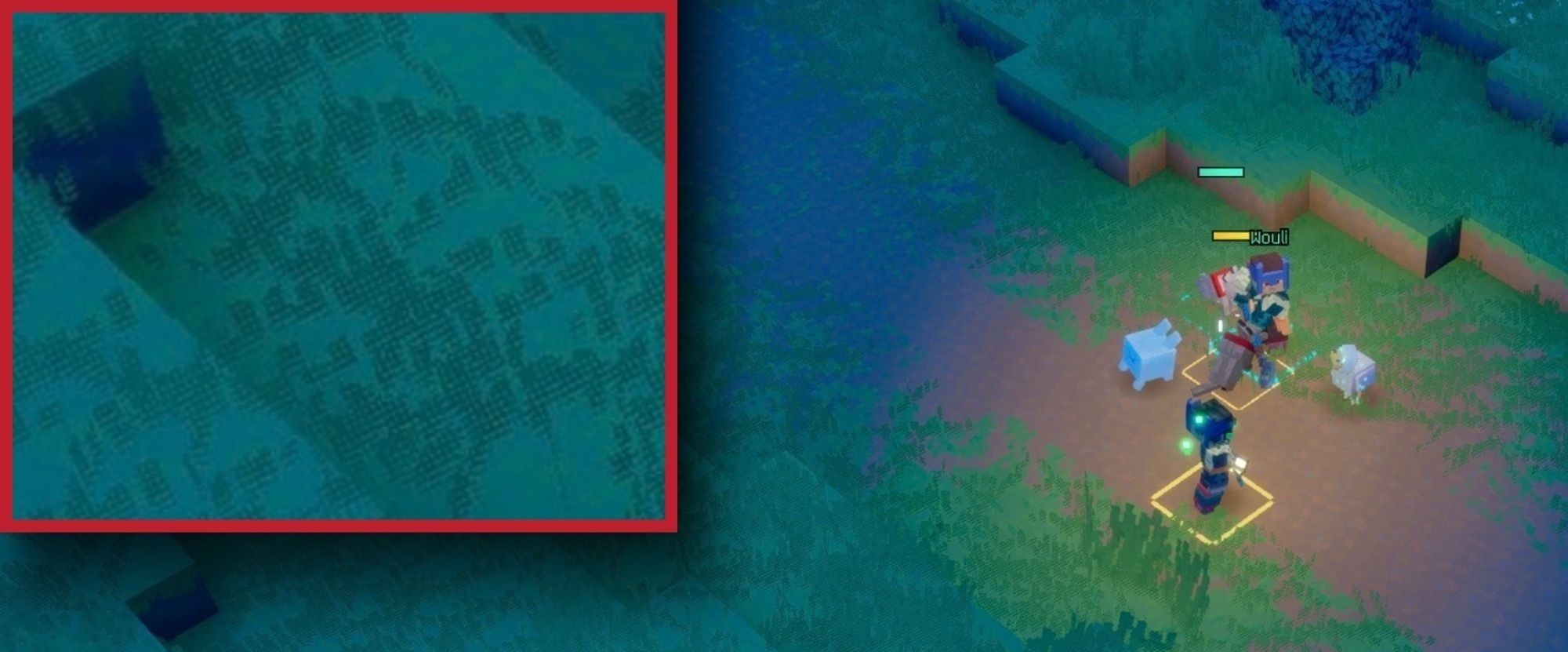
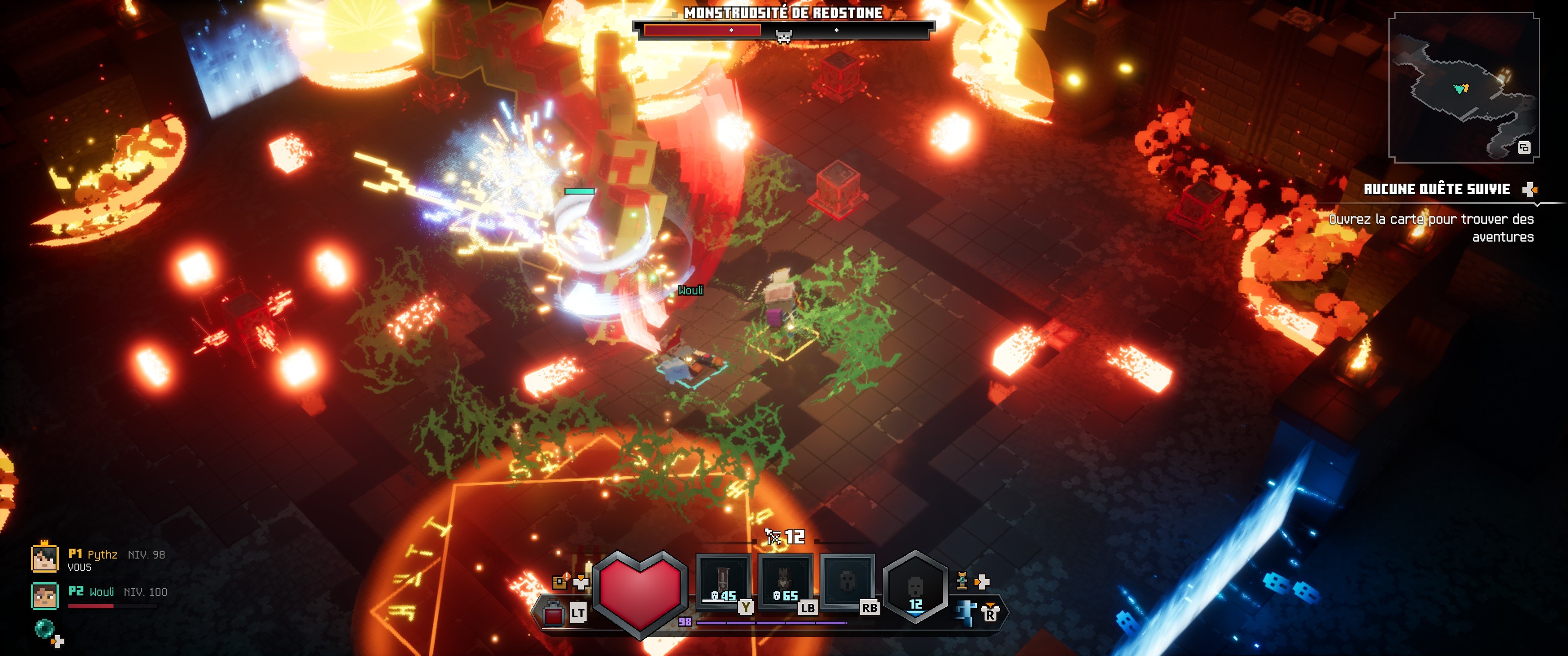
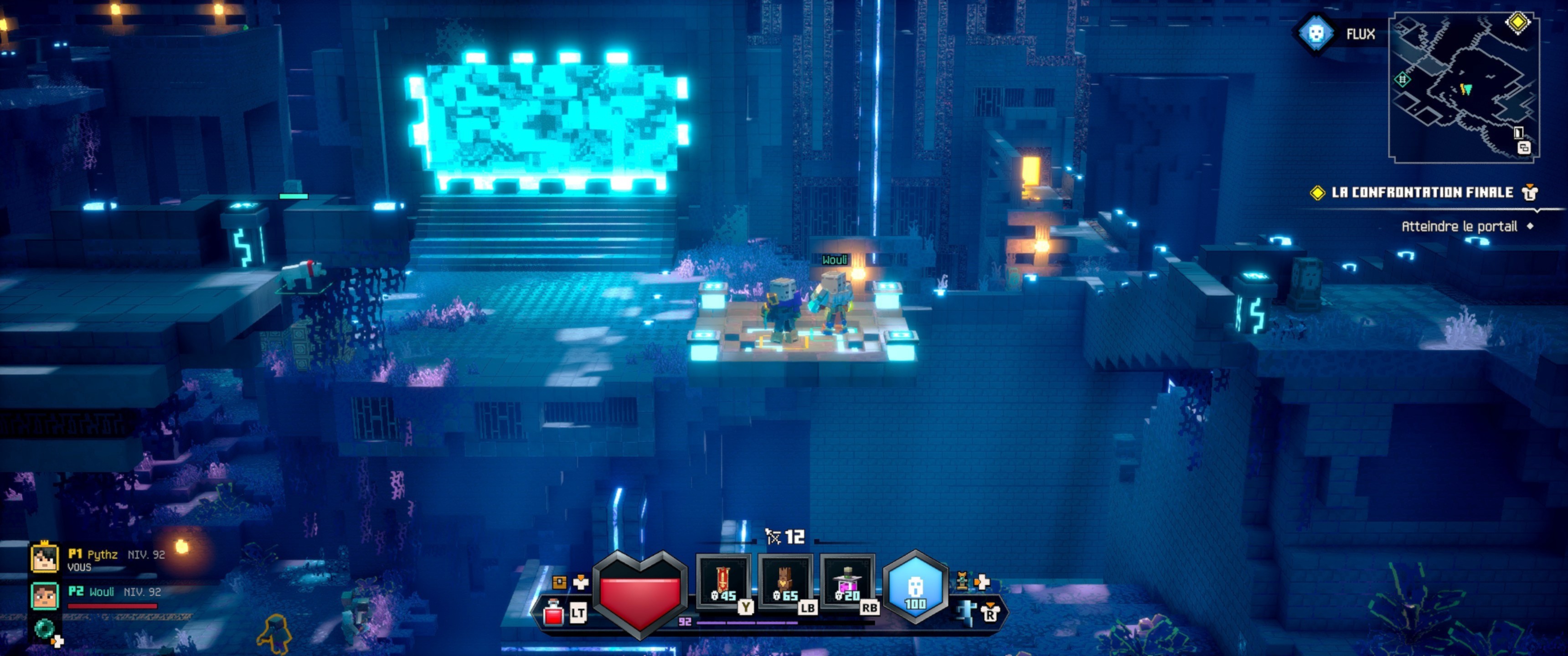
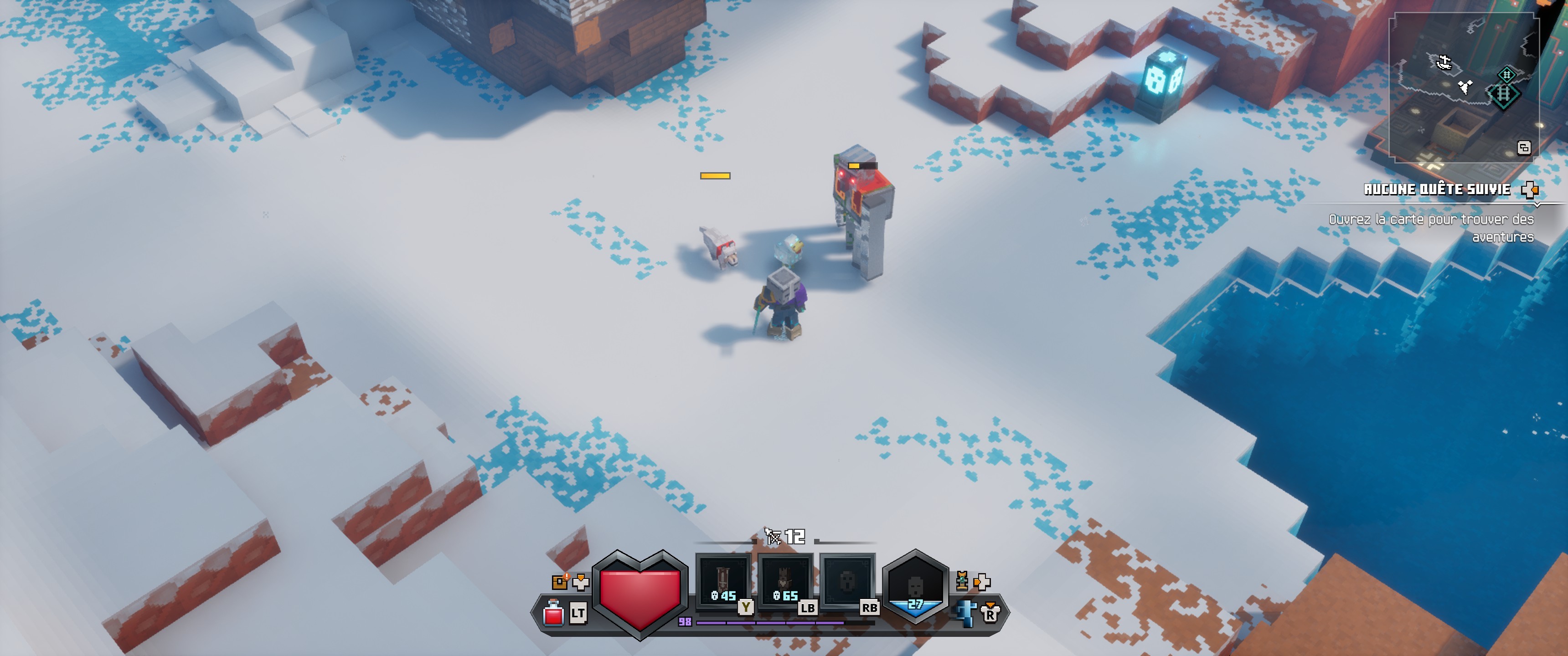
Unfortunately, the same level of polish doesn't extend to the environments. While the areas are generally well modeled and feature some genuinely atmospheric locations, the muted color palette, weak contrast, lack of lighting, and limited sense of depth hold them back. The grass is particularly unpleasant to look at, becoming even more distracting when playing at higher resolutions.
Gameplay: one block forward, two blocks back
There are some genuine improvements here, but far too many serious problems. On the positive side, Minecraft Dungeons II remains extremely easy to pick up and play. The respawn-and-teleport system lets you get back into the action almost immediately, which is a welcome change that takes much of the frustration out of dying. Arrows now regenerate over time, so you no longer have to rummage through every chest hoping to find more. There's even a fun little nod to Mario: chaining three jumps together triggers a playful spin.
Inventory management has also been streamlined. Increased capacity and the removal of the traditional storage chest make things much easier to manage, while armor is now divided into four separate slots: helmet, chestplate, leggings, and boots. In theory, this opens up considerably more room for customization. In practice, however, it leaves a lot to be desired, but there’s no rush, we'll get into later.
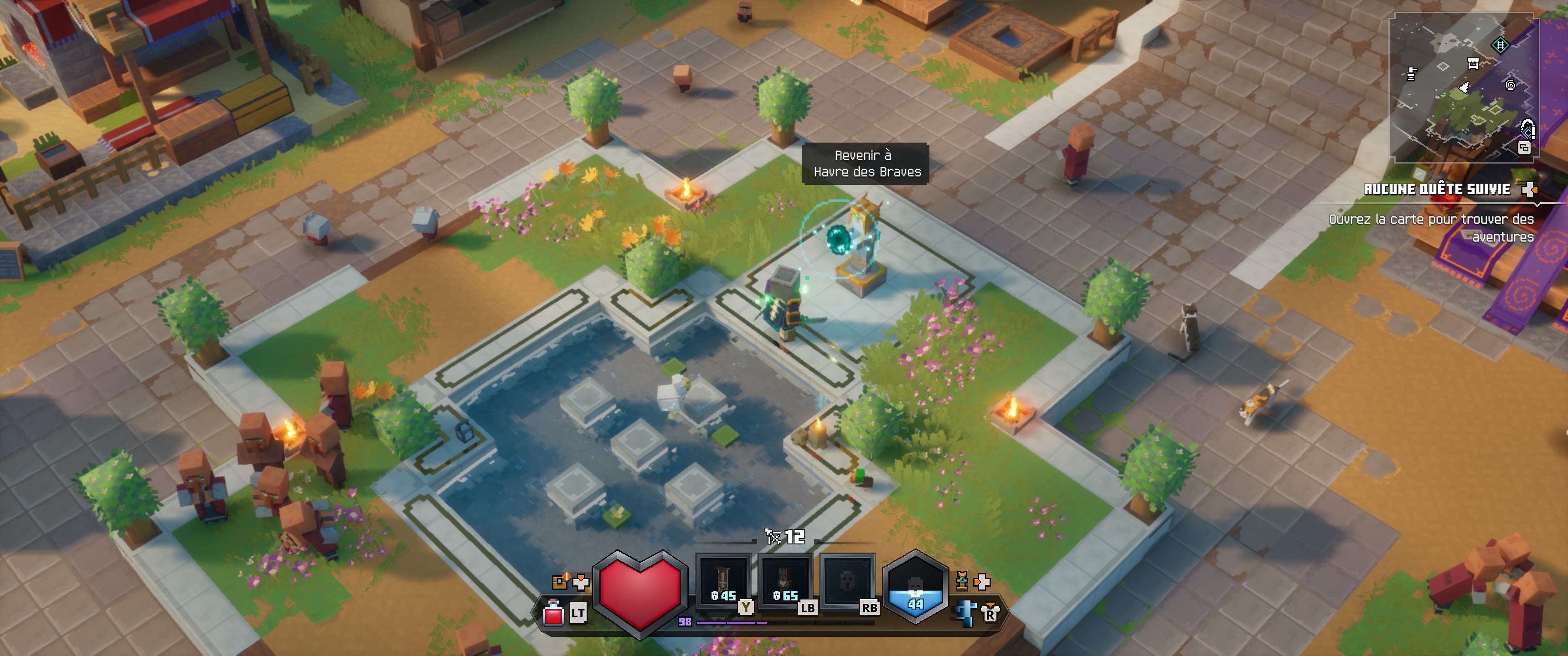
Unfortunately, the shortcomings are much harder to overlook. Most notably, there's virtually no meaningful endgame content after you finish the campaign. Combat is also still remarkably shallow. For the most part, you're simply spamming the attack button and occasionally firing an arrow. Light and heavy attacks, proper combos, or even a few mechanics designed to break up the constant button mashing would have gone a long way here.
The addition of jumping and verticality, meanwhile, is supposed to introduce a degree of platforming to the dungeons. Instead, it adds almost nothing beyond the ability to perform a jumping attack. In other words, we've gone from two meaningful actions to three: attack, shoot, and jump-attack. That's technically a 50% increase in options, I suppose…
Enemy design suffers from a similar lack of depth. Most enemies have a health bar, and that's about it. There are no stamina systems, stagger mechanics, armor, shields, elemental weaknesses, or resistances to different damage types. Just a number that goes down when you hit it. That makes the game's elemental effects particularly difficult to understand. What's the point of having things like fire and poison if the game doesn't clearly communicate how effective they are or when you should actually use them?
A dungeon crawler… without too much crawling
The biggest departure from the original Minecraft Dungeons is undoubtedly the new structure. This time, Mojang has attempted to build a more open experience around a larger map. It's an interesting idea on paper, but the execution leaves a lot to be desired.
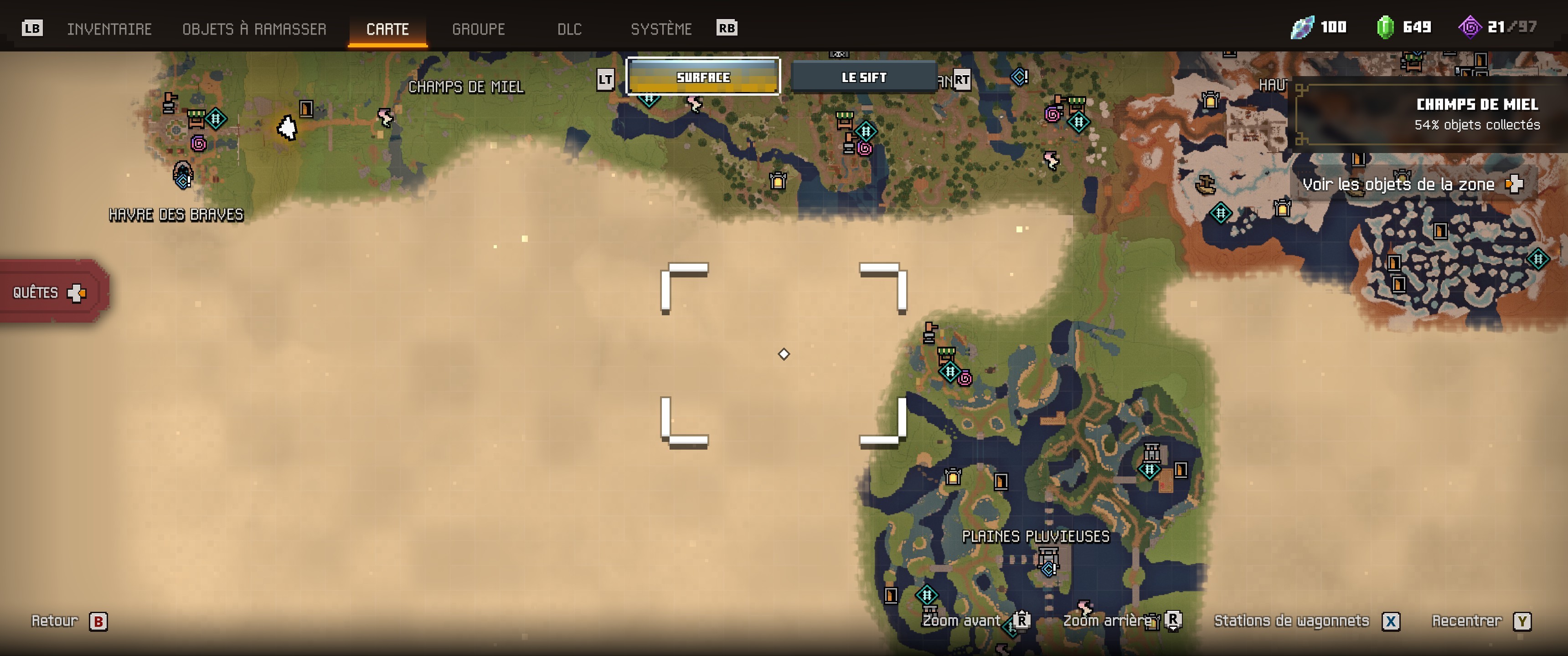
The world map is presented from a top-down perspective, which makes sense for an open-world game, but it comes with two major problems. First, it gives you little sense of the actual elevation changes present in the world, an especially noticeable issue when the game itself is presented in an isometric 3D perspective. Second, this isn't really one large open world. Instead, it's a collection of corridors and disconnected areas separated by impassable walls. Thus, the map that can actually be surprisingly difficult to navigate.
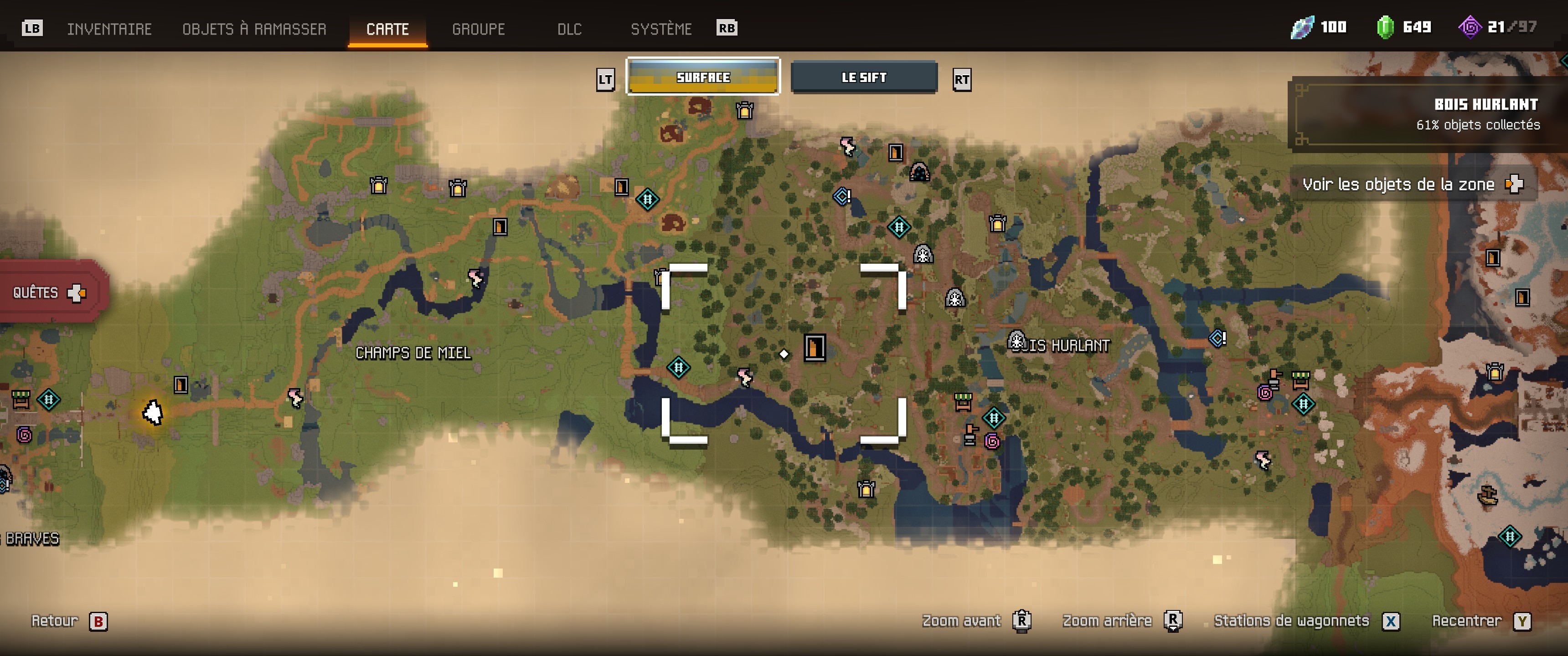
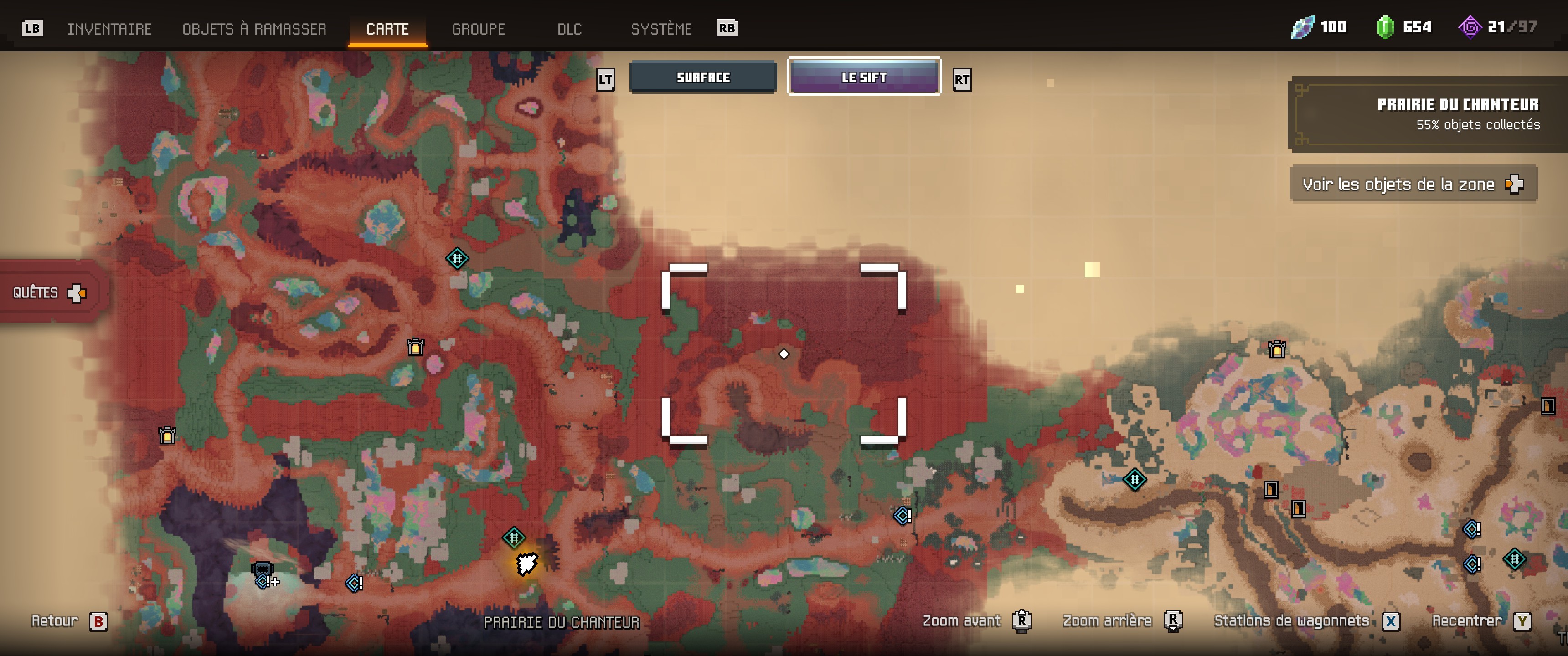
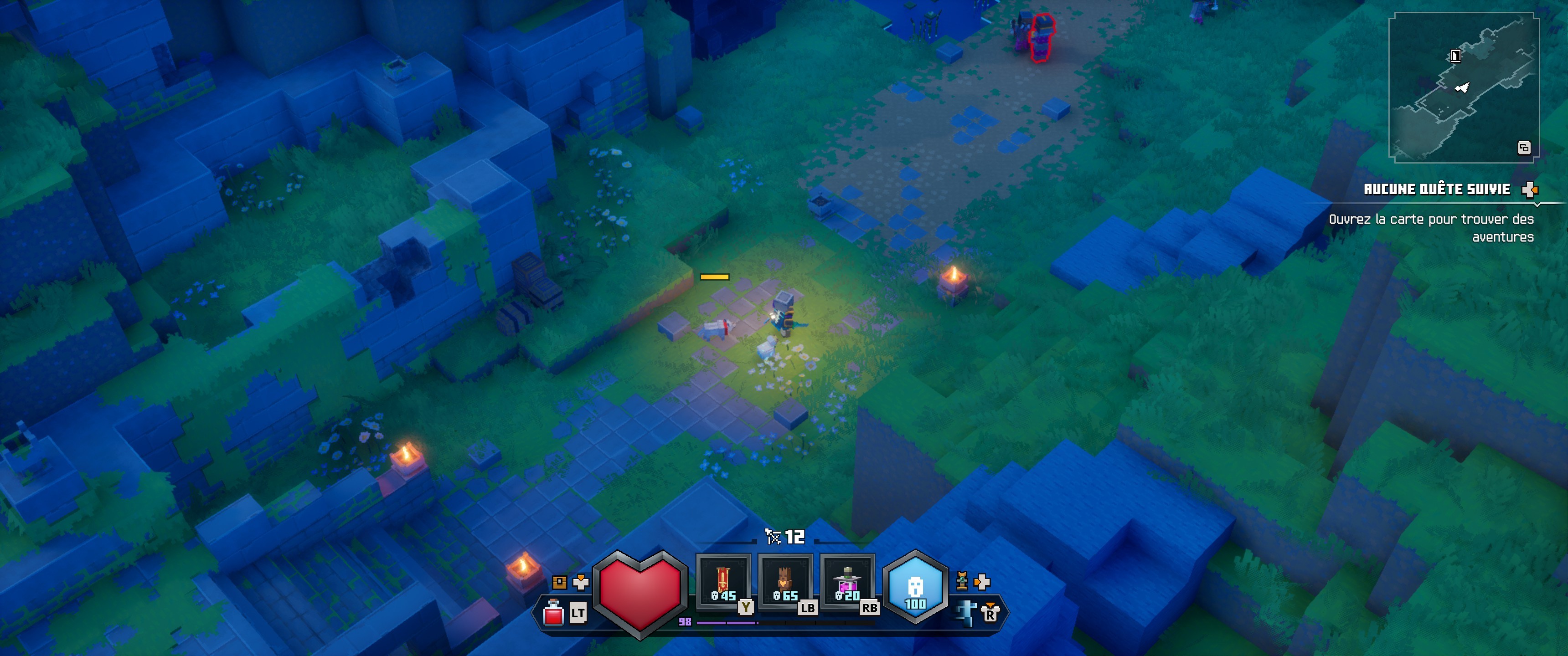
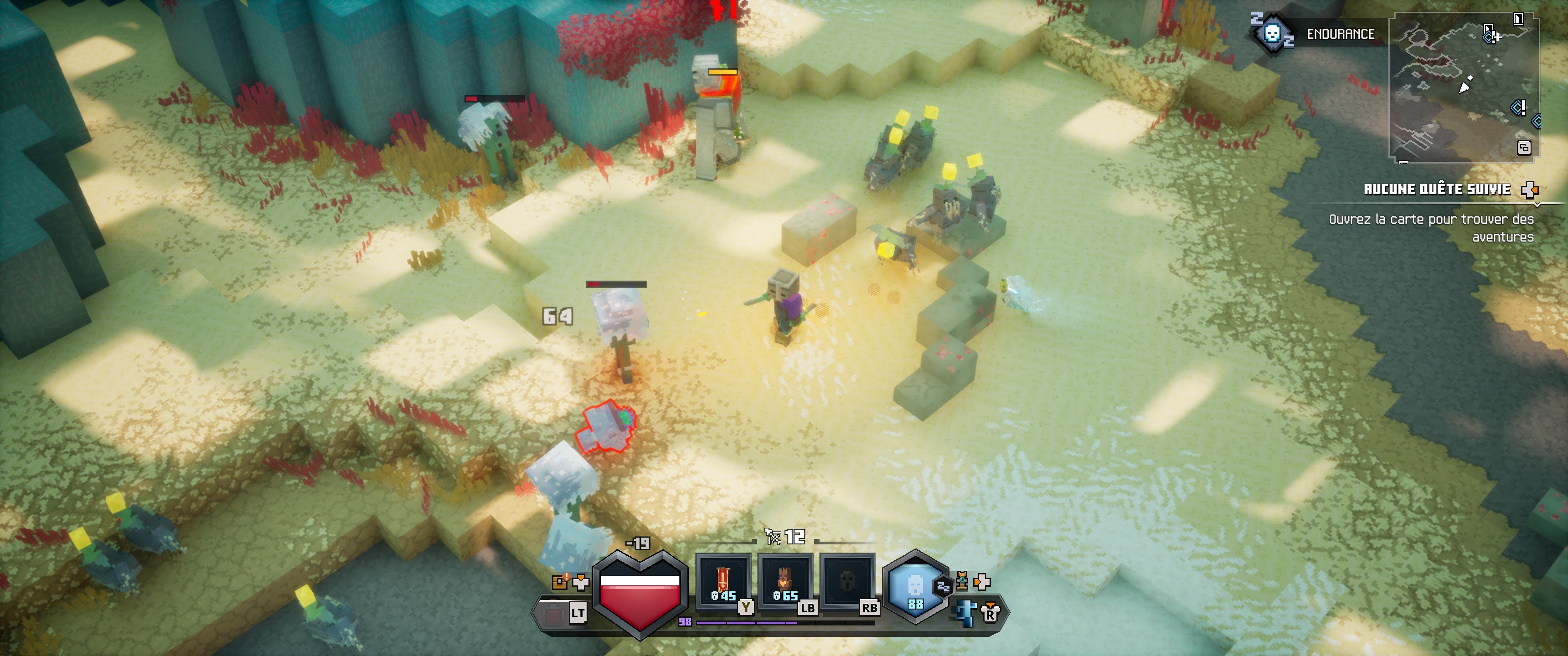
Let’s talk about the dungeon structure, which has also been dramatically changed. The first entry offered a straightforward progression through successive dungeons and biomes, much like a Mario game organized around worlds and levels, with a central hub connecting everything together. Minecraft Dungeons II takes a different approach. There are two major regions: the Surface, which represents the familiar Minecraft world, complete with villages and quests, and Sift, a bizarre open world of corridors of sorts that never quite manages to feel truly open.
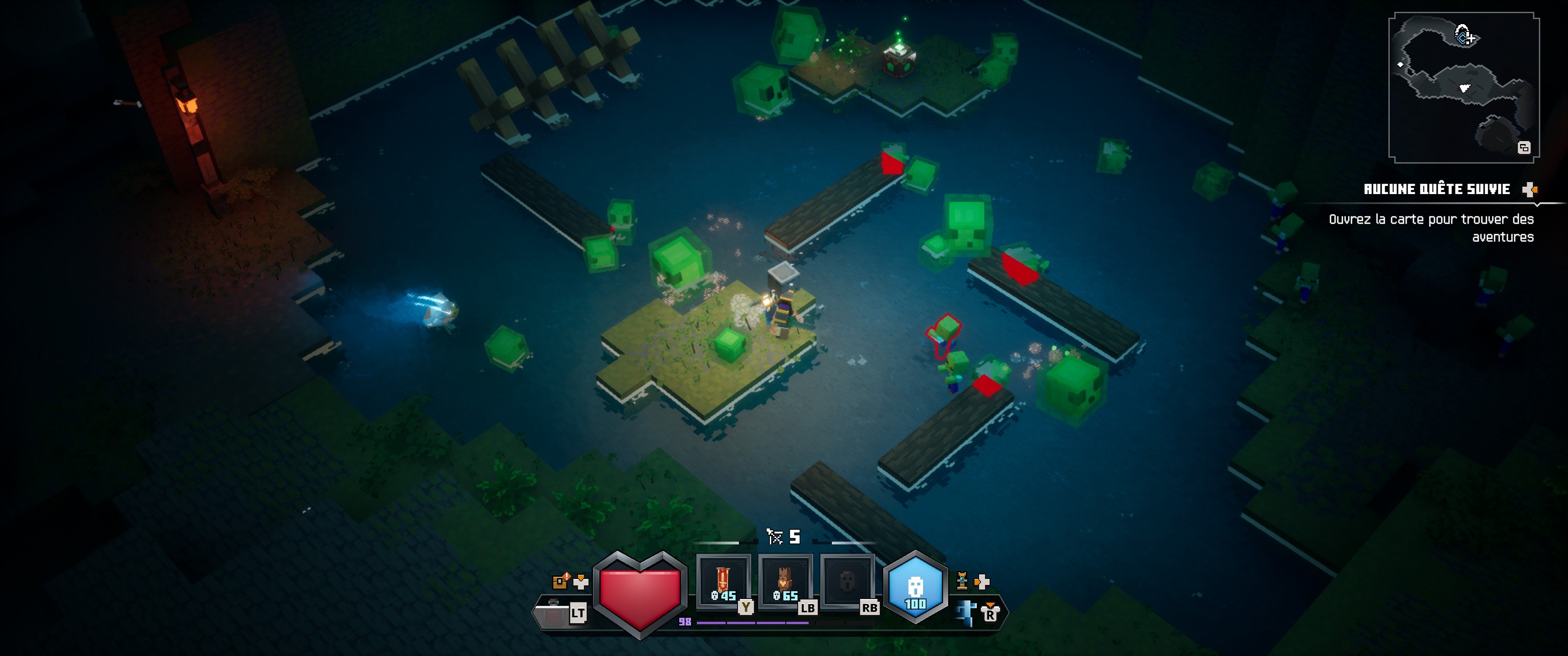
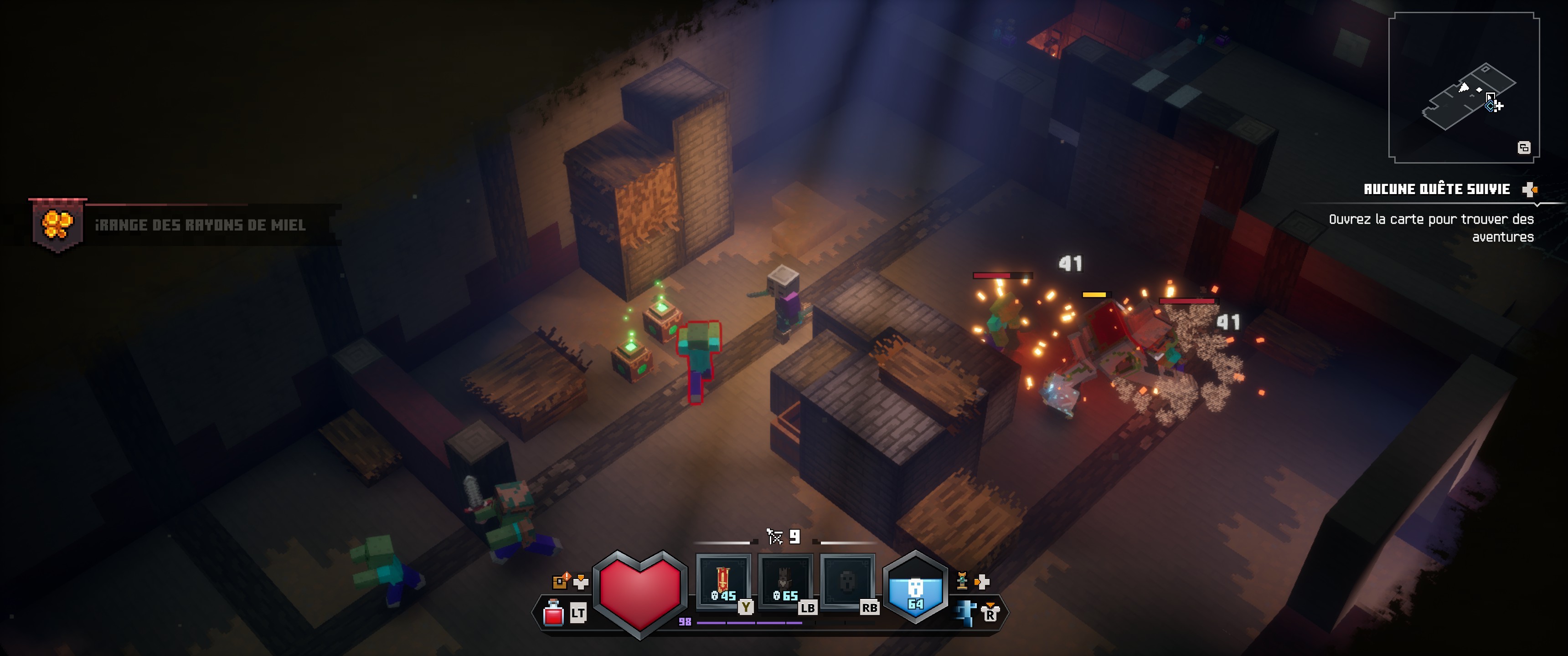
Both regions contain scattered dungeons, but most are short and rarely pose much of a challenge. As a result, the majority of the game takes place in the two main regions, with the dungeons reduced to brief, almost optional diversions once you've collected the relevant items: books, echoes, and so on. That significantly undermines one of the original game's greatest strengths: the feeling of actually exploring dungeons and adapting your equipment between them. The more I played, the more I found myself wondering whether the original Minecraft Dungeons formula wasn't simply better done and thought-out.
Gear progression: essential, yet strangely pointless
The addition of enchantment books and the decision to split armor into four individual slots are both excellent ideas. They're intuitive, fit perfectly within the Minecraft universe, and should, in theory, make gear customization considerably more interesting. Unfortunately, the broader progression system is a mess.
Basic stats and numbers are almost completely absent. You can pick up an amazing rare sword and still have no idea how much damage it actually deals, what type of damage it inflicts, or how quickly it swings. Instead, you're left experimenting and judging everything by feel. Some artifacts come with descriptions such as ”increases damage for a certain amount of time,” but even then, the game refuses to tell you by how much or for how long. Once again, you're left experimenting.
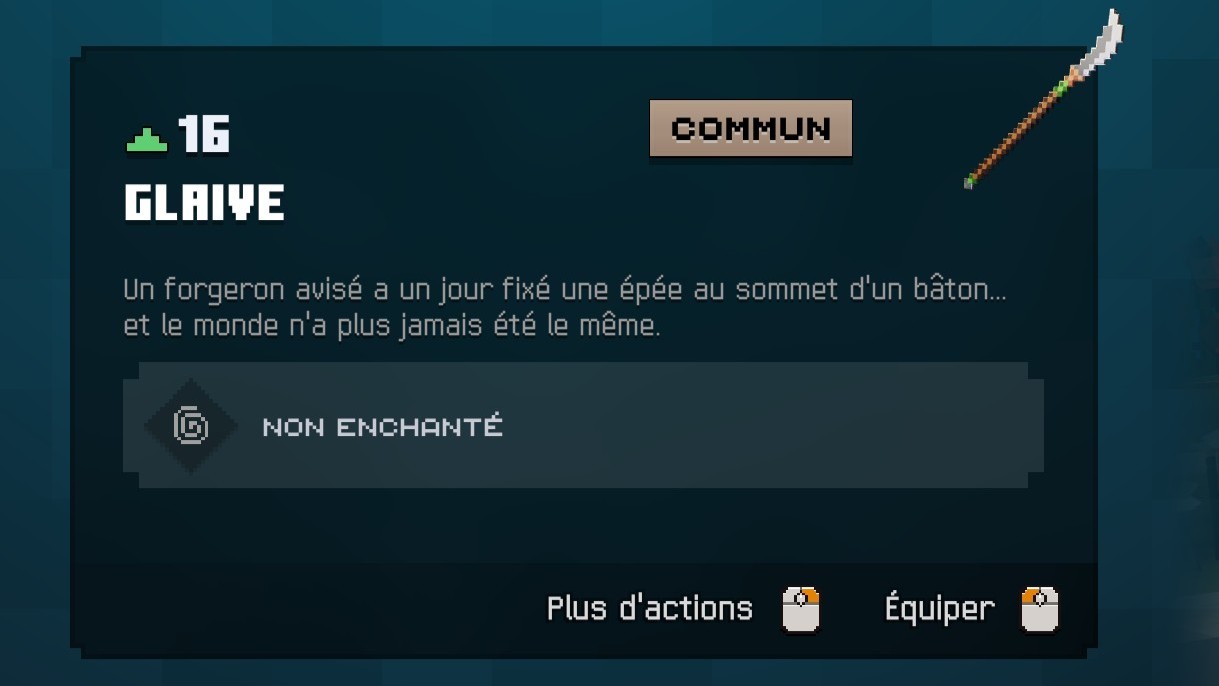
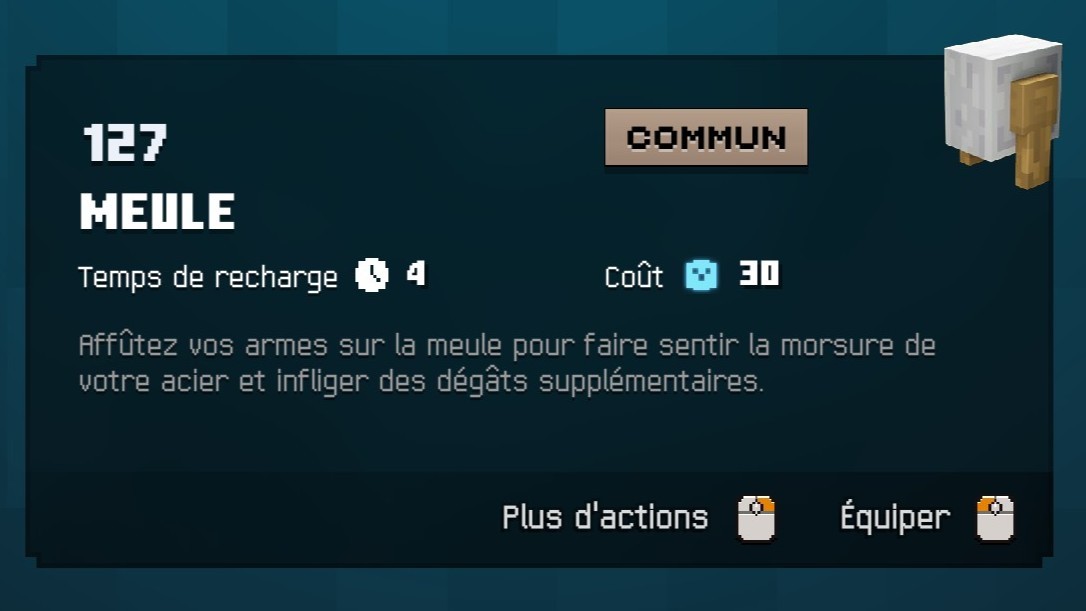
Different item rarities provide between zero and two passive slots. These passives are randomly generated when you acquire an item and can be rerolled at the blacksmith in exchange for resources. That sounds perfectly reasonable… Until you realize just how limited the actual pool is. You can reroll an item endlessly and still seem to cycle through the same handful of effects. The selection changes from weapon to weapon, even when you're dealing with two otherwise identical items. The armor system takes this problem even further. In the original game, each armor piece had its own fixed, unique passive. Here, individual pieces from the same armor set can instead roll different fixed effects at random. That completely undermines the idea of building and collecting a specific armor set for optimization or a potential full-set bonus. Your legendary chest piece might offer ranged-damage reduction, while the Warden's leggings provide reduced dodge-roll cooldown.
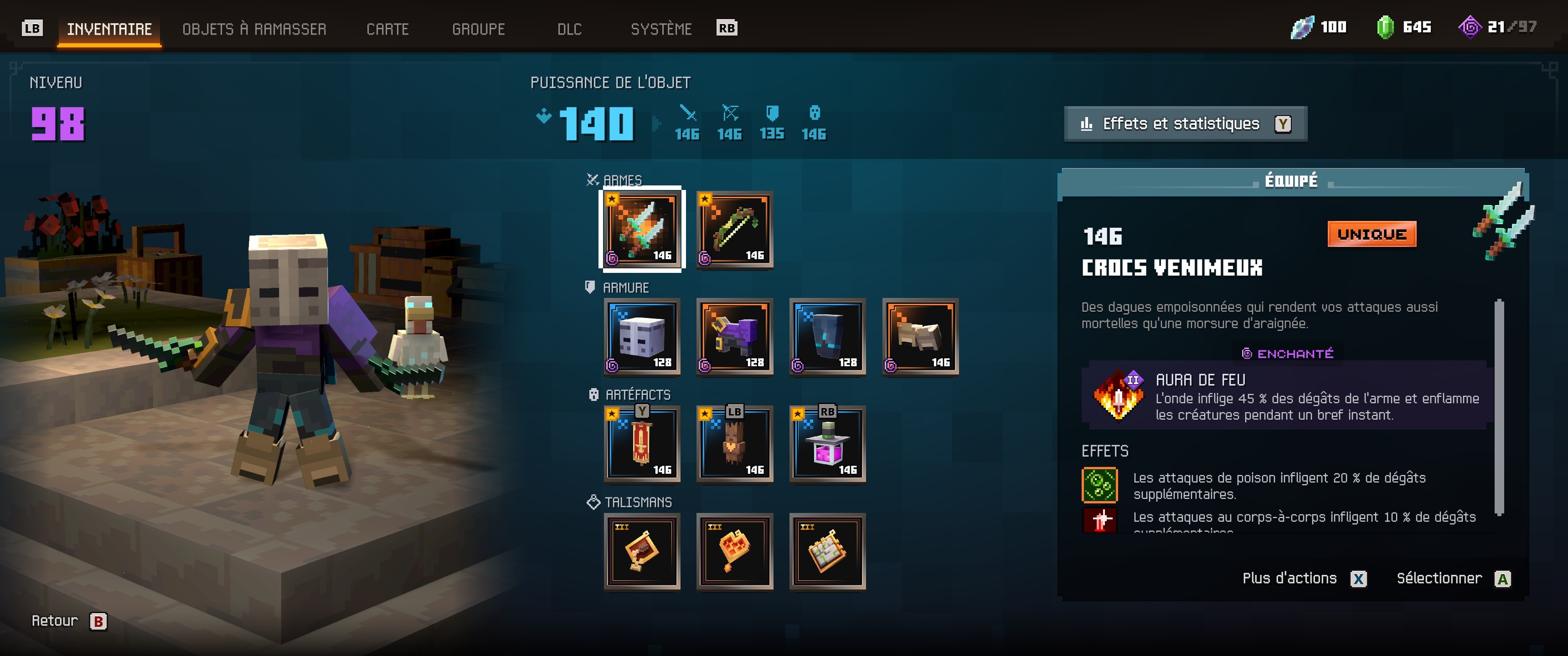
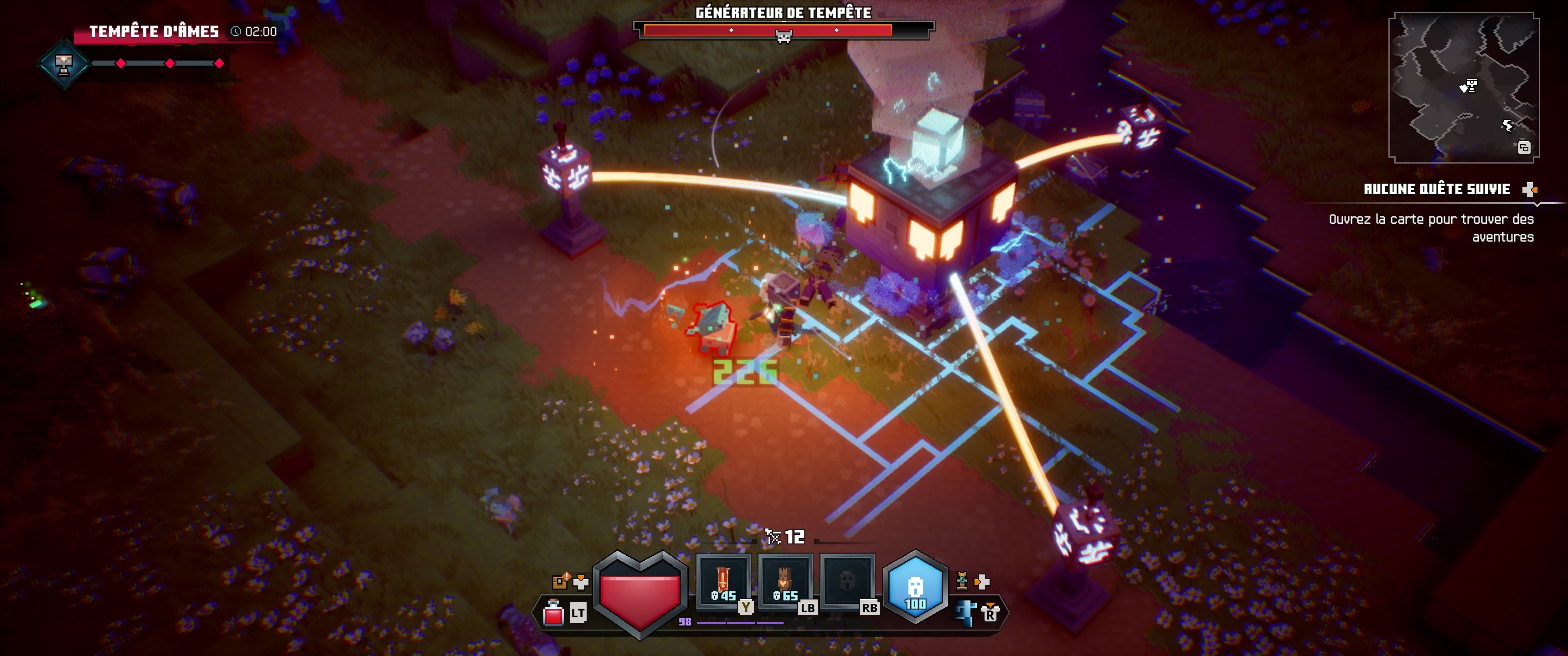
There's little reason to chase a specific combination when so much of the system is determined by randomness. Eventually, you simply hit a wall. The lack of information and the randomness of passive effects make meaningful optimization frustratingly difficult. The post-game doesn't help. The only real endgame activity is a temporary event where you fight waves of enemies for loot featuring three passive slots instead of two. The idea sounds promising, but the event itself has a real time cooldown, and by the time you've finished the story, there's little left that actually demands better equipment. The game lets you optimize your build without giving you anything worth optimizing it for.
Storytelling & Sift: a missed opportunity
The game's uneven pacing and rushed storytelling also do considerable damage to Sift, the new dimension introduced in Minecraft Dungeons II.
The opening is fairly straightforward, teaching you the basic mechanics while introducing the essential NPCs: the merchant, blacksmith, and enchanter. Then the pacing falls apart. We get considerable freedom surprisingly early on, and the Sift is introduced almost immediately. You're told that rifts have opened and that the villagers are taking advantage of them, but that's about it. This should have been a major plot point, I guess. Instead, the Sift feels like a side activity that happens to exist in the world. The debut of the next new dimension in the** Minecraft** IP deserved far more attention and care put into it.
One of the first sensible things to do is gather as many enchantment books and echoes as possible from Sift's rifts, since both resources are useful for improving your equipment. Unfortunately, books become easy to come by almost immediately, while echoes quickly pile up. Just like that, the incentive to explore the rifts is gone. Even more strangely, after completing the adventure, we discovered that we hadn't even explored half of the two maps. Some large sections appear to be permanently inaccessible, blocked by terrain and impassable walls.
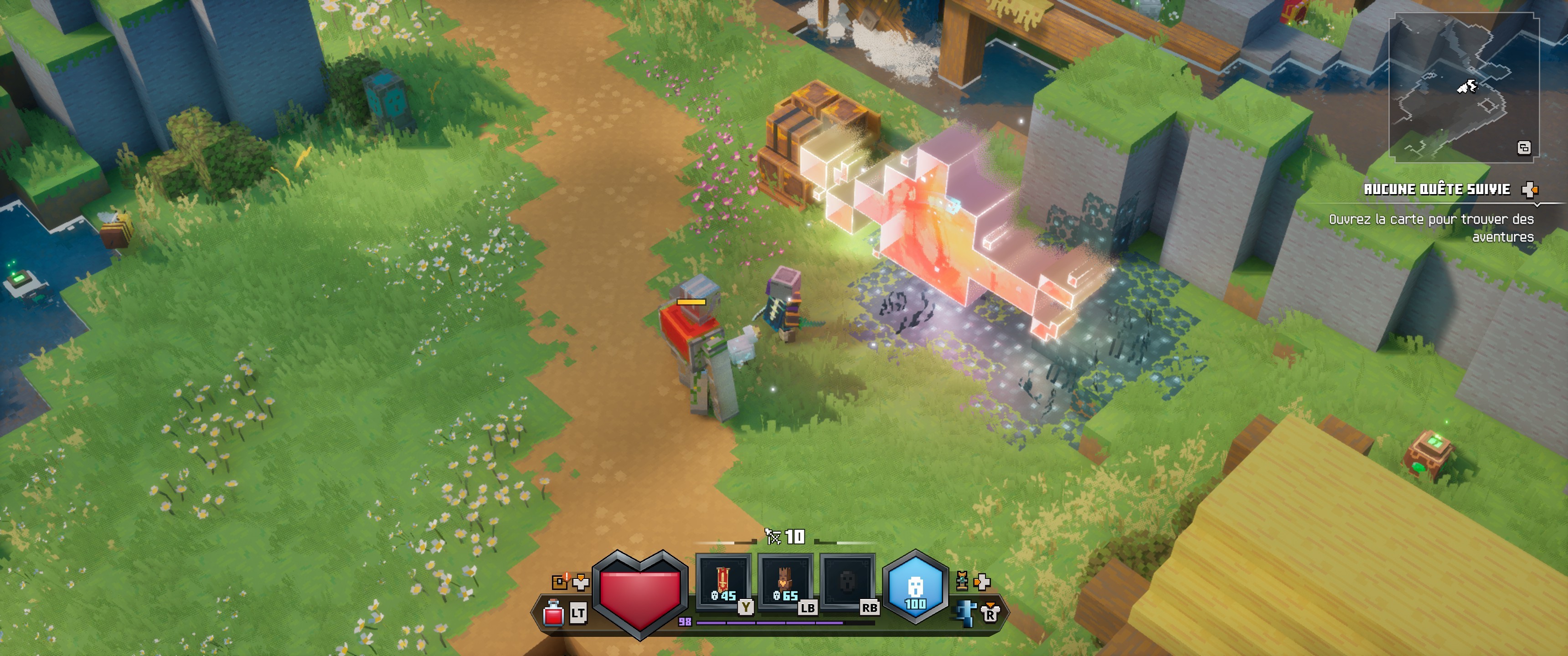
The storytelling itself feels underbaked too. From beginning to end, the quests largely boil down to finding a lost villager or retrieving an item stolen by some evildoers. After six hours, we were still working through the main quest to recover two blocks and return them to a little golem who simply wanted to go home…
Then the story suddenly ends. There is no meaningful twist, no satisfying payoff, and barely any indication that you're approaching the finale. The ending pops out of nowhere, and is as abrupt as a power outage. To put some salt in the wound, the final boss is one of the easiest encounters in the whole game. For a moment, we genuinely wondered whether we'd accidentally finished a very long introduction and were about to unlock the real meat of gamethe . Sadly, this wasn’t the case...
Technical performance that fails to shine
And here's our excuse for the lighting pun: the game also suffers from some rather noticeable lighting issues. Even putting aside the washed-out colors and lack of contrast, the technical presentation does manage to undermine Minecraft Dungeons II luster. The game's launch was plagued by technical problems that feel particularly difficult to excuse from a title backed by a giant like XBOX.
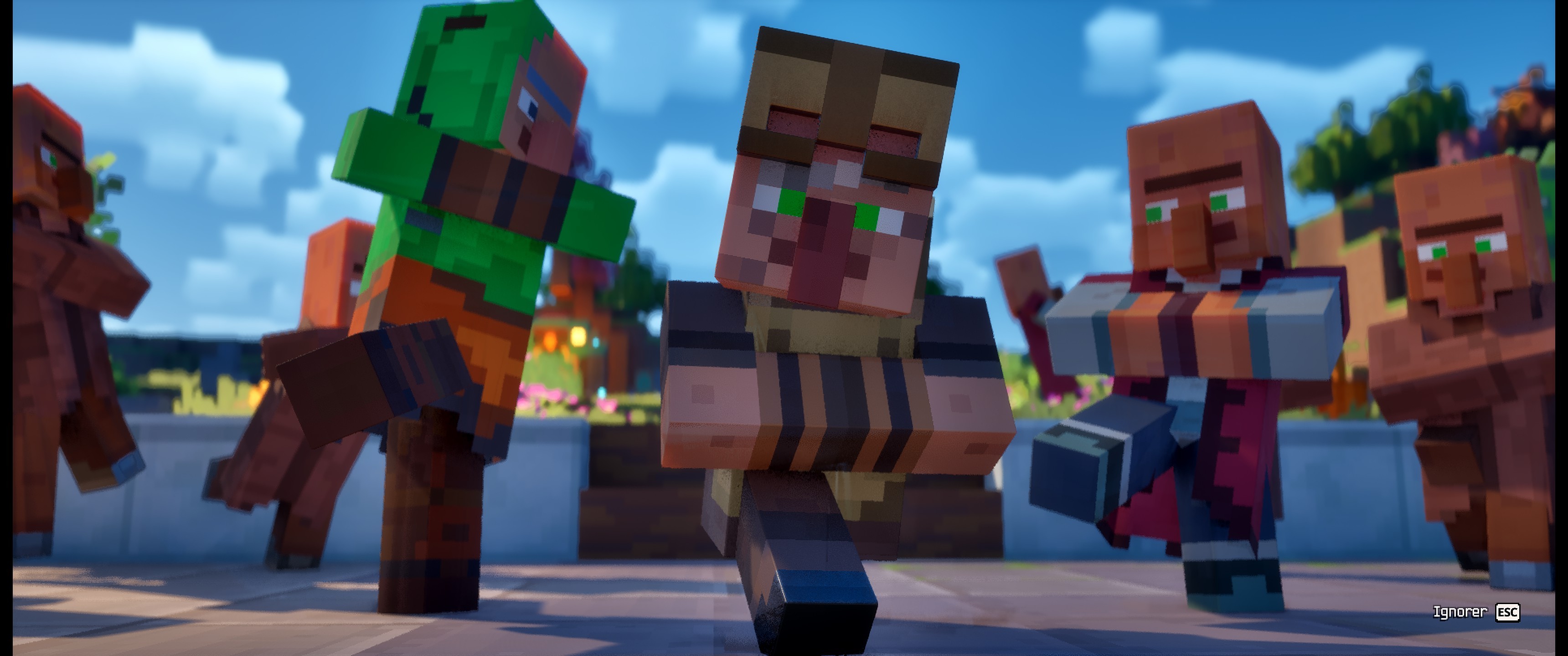
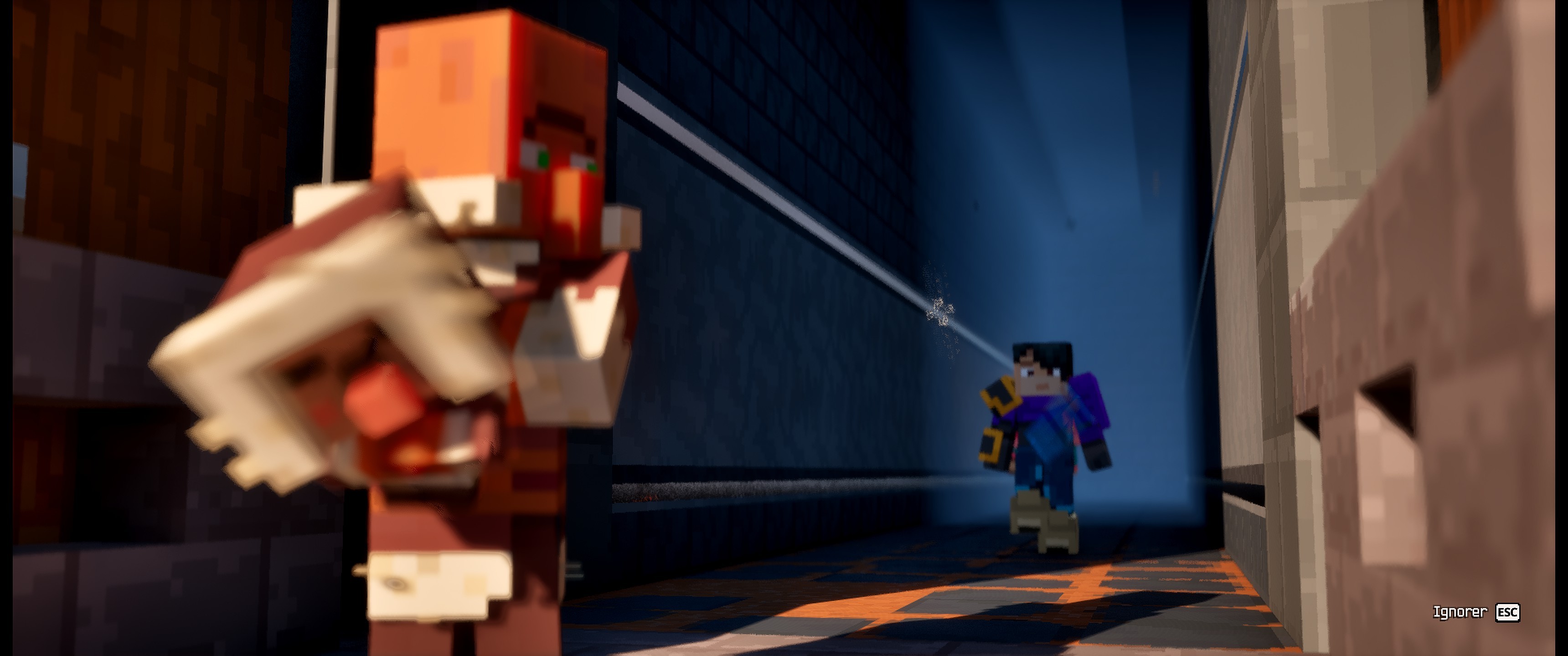
The cutscenes are particularly terrible. Some are passable, but many are blurry and stutter badly, with a maximum frame rate of just 24 FPS! There are also some poorly displayed quests, enemies getting stuck in terrain, AI struggling to find its way around to you, and enemies occasionally standing completely still instead of attacking.
Another questionable design decision is the use of a single button for multiple interactions: talking to NPCs, picking up loot, jumping, and reviving teammates. The result is predictable. You want to jump and accidentally start reviving your teammate. You want to pick up that shiny piece of loot and instead trigger an NPC conversation. In co-op, these little frustrations become even more noticeable.
The camera could also use some work, with more dynamic movement and occasional changes in perspective to make the world feel considerably more alive. Those effects do exist, but they only occur twice during the entire adventure. Then there's the always-online requirement. Even when playing completely alone, the game insists on keeping you connected. It's an increasingly difficult design choice to justify. Likewise, forcing players to maintain separate characters depending on whether they are intended for online co-op or offline play feels like an outdated limitation that doesn’t belong in modern games.
Plenty of issues
Beyond everything we've already discussed, there are several other problems worth mentioning. For starters, the difficulty gap between solo and cooperative play can be surprisingly large. The same is true from one boss to another. Even more frustratingly, if you encounter a boss that's too difficult and return later with better gear, the boss also scales up with your level.That makes the whole process of painstakingly optimizing your equipment feel rather pointless.
As with the original Minecraft Dungeons, there's also no way to trade or give equipment to another player. If you have three copies of a legendary item while a friend has never managed to find one, there's no way to simply hand it over. Pets, an important part of the previous game, are almost nowhere to be seen. You get one at the beginning of the adventure and another after completing the main story. That's it. Considering just how many useful and varied companions were available in the previous installment, it's a particularly disappointing omission.
Tested on PC. See our rating policy here.
5/10
As you can see, this is a major disappointment for us, and there’s no shortage of reasons why. Despite the most glaring issues, the gameplay experience isn’t bad for a casual player who just wants to spend a few evenings mindlessly fighting waves of mobs. However, the game’s few additions and improvements fail to serve its purpose and leave us with a fleeting impression of the Minecraft universe.
Between the uninteresting new features, the technical flaws, the inability to truly optimize your gear, and the nonexistent endgame… The end result feels unpolished, and the first look at the Sift could have been handhled infinitely better. It remains to be seen what the two announced DLCs will bring. Minecraft Dungeons II has, however, made us want to revisit the original Minecraft Dungeons, which we find to be better executed and superior in every way.
- + True to the Minecraft IP
- + The respawn system is quick and relatively frustration-free
- + Gameplay is both simple and accesible
- + Better verticality in comparison to the first game
- - The equipment mechanics are flawed at its core
- - You can't remap certain actions
- - The stats aren't clear
- - The story is terrible
- - The Sift's role is a disappointment
- - All in all, the game is worse than its predecessor in every respect