Let Them Trade Review
, by Enzo
Let Them Trade: rock, paper, scissors
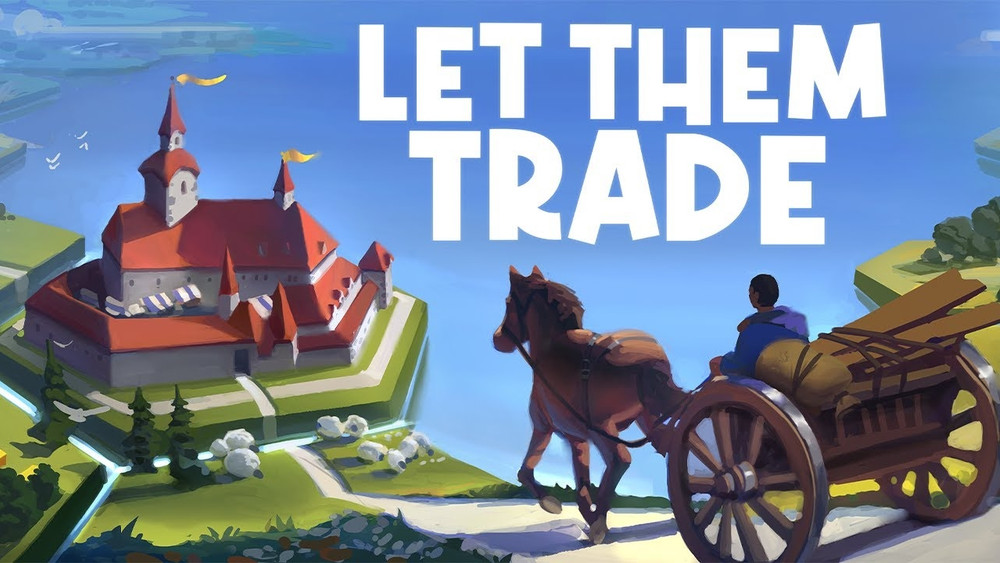
With Let Them Trade, fans of management and strategy may have just found their next obsession. This stylized economic city-builder takes a simple but unusual approach: leaving trade in the hands of autonomous systems and making a profit by taxing them. While the genre increasingly focuses on detailed construction and customization, Let Them Trade takes a different path. But are its eye-catching art direction and unique approach to management enough to deliver something truly special?
Concept: a city-builder focused on commerce
As we mentioned before, Let Them Trade is built around a simple yet ambitious premise: creating an economic simulation where the core of the experience isn't constant micromanagement, but our ability to design efficient urban and trade networks. Here, we build small cities across a kingdom that must complement one another, while collecting taxes from every transaction that takes place.
We start each game with a small group of settlers, a handful of resources, and a map waiting to be explored. It doesn't take long before we're faced with the questions that will shape our entire settlement: Where should we establish our first city? Which areas are best suited to each type of production? And, most importantly, how can we connect isolated cities to a larger trading network?
Art direction and sound design
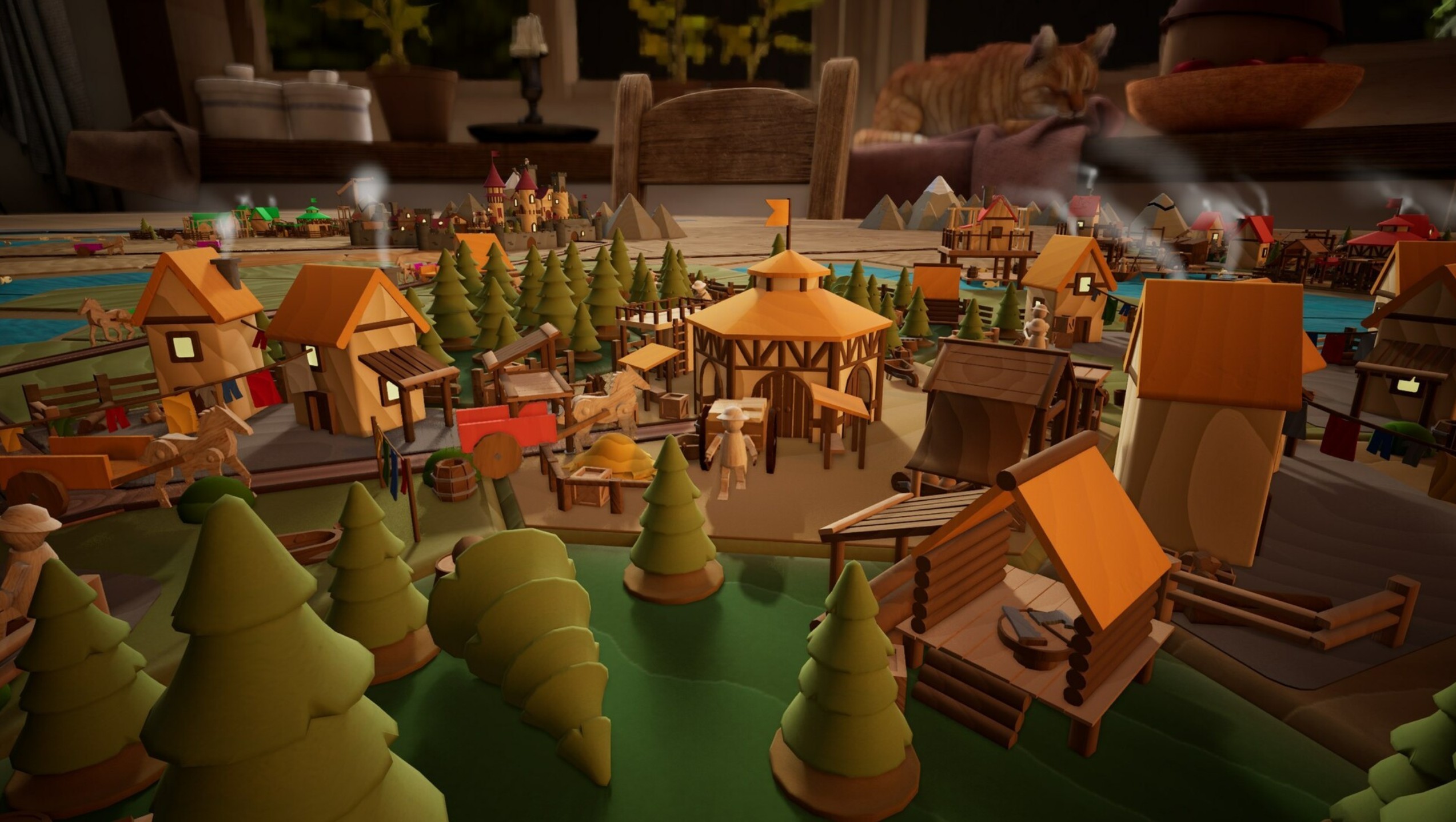
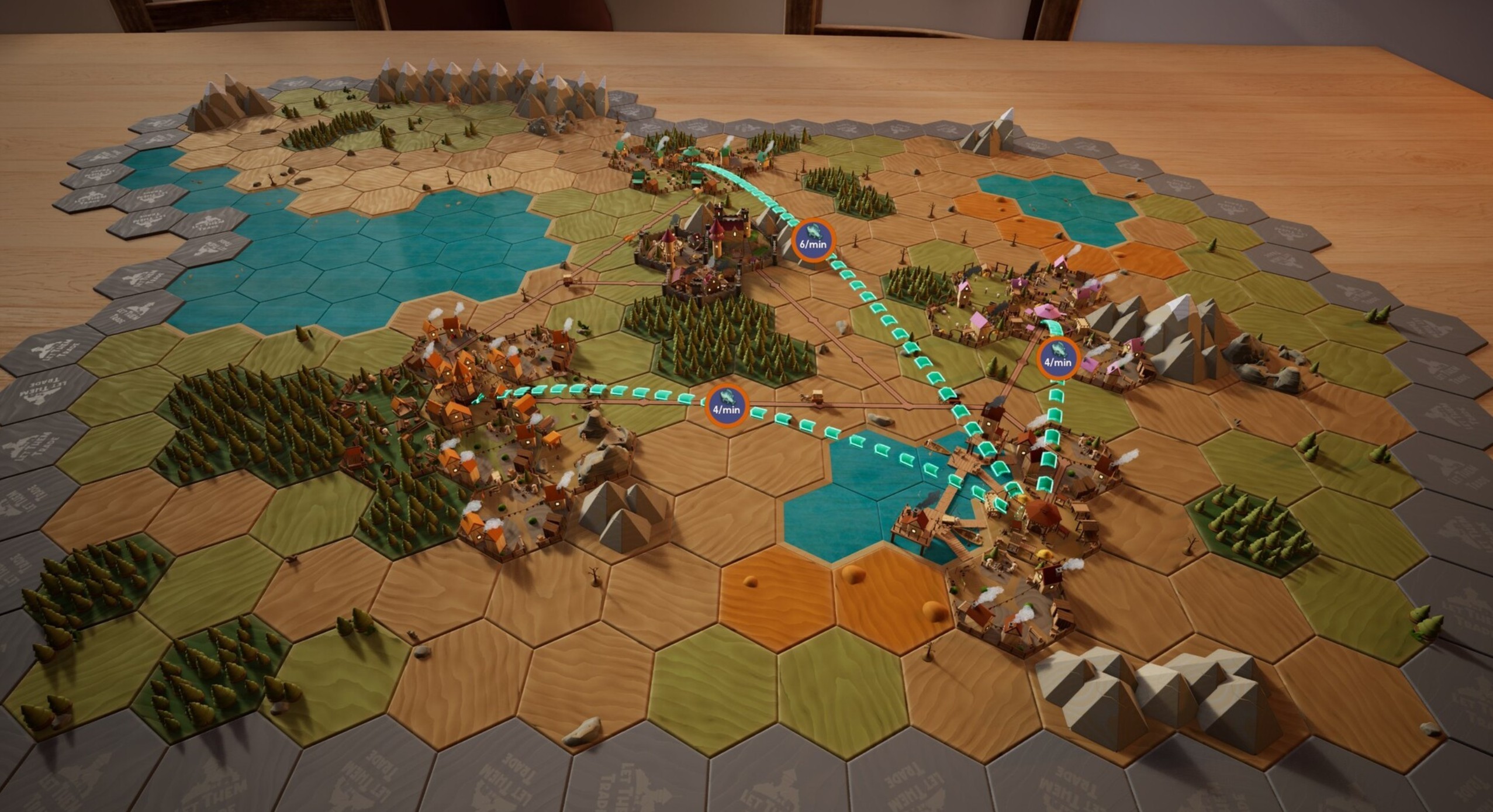
Visually speaking, Let Them Trade opts for a colorful, welcoming style that inevitably brings modern board games to mind. And that's no coincidence: we're literally playing on a board sitting on a table in the middle of a carefully decorated living room. We were even surprised to spot a cat going about its business on one of the pieces of furniture.
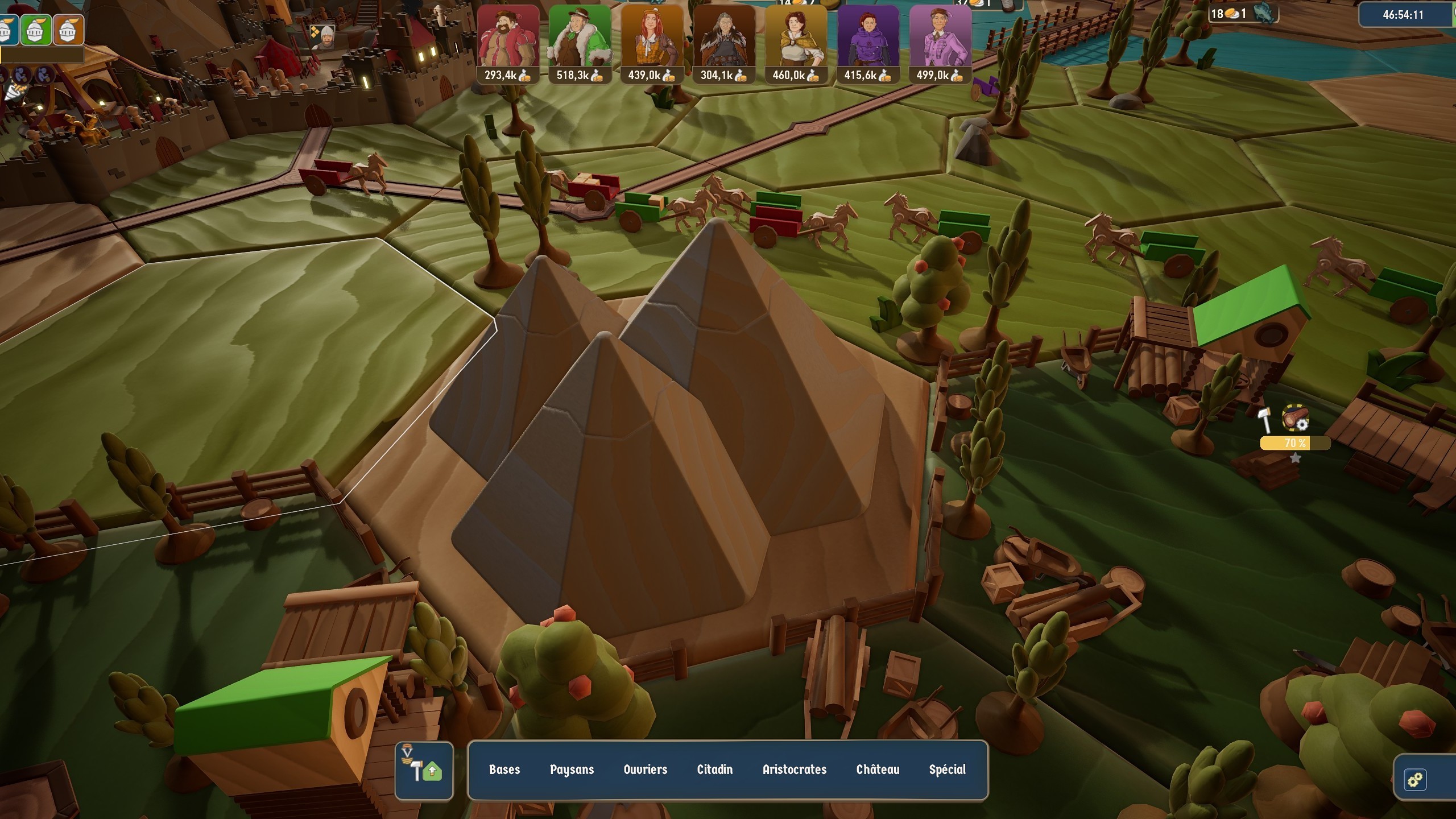
Everything feels remarkably cohesive. The different social classes, their needs, and their respective production chains all fit together nicely, while the stylized 3D cities are genuinely charming to look at. The whole world has the feel of a living and breathing miniature that constantly encourages you to zoom in and take a closer look at the little details.
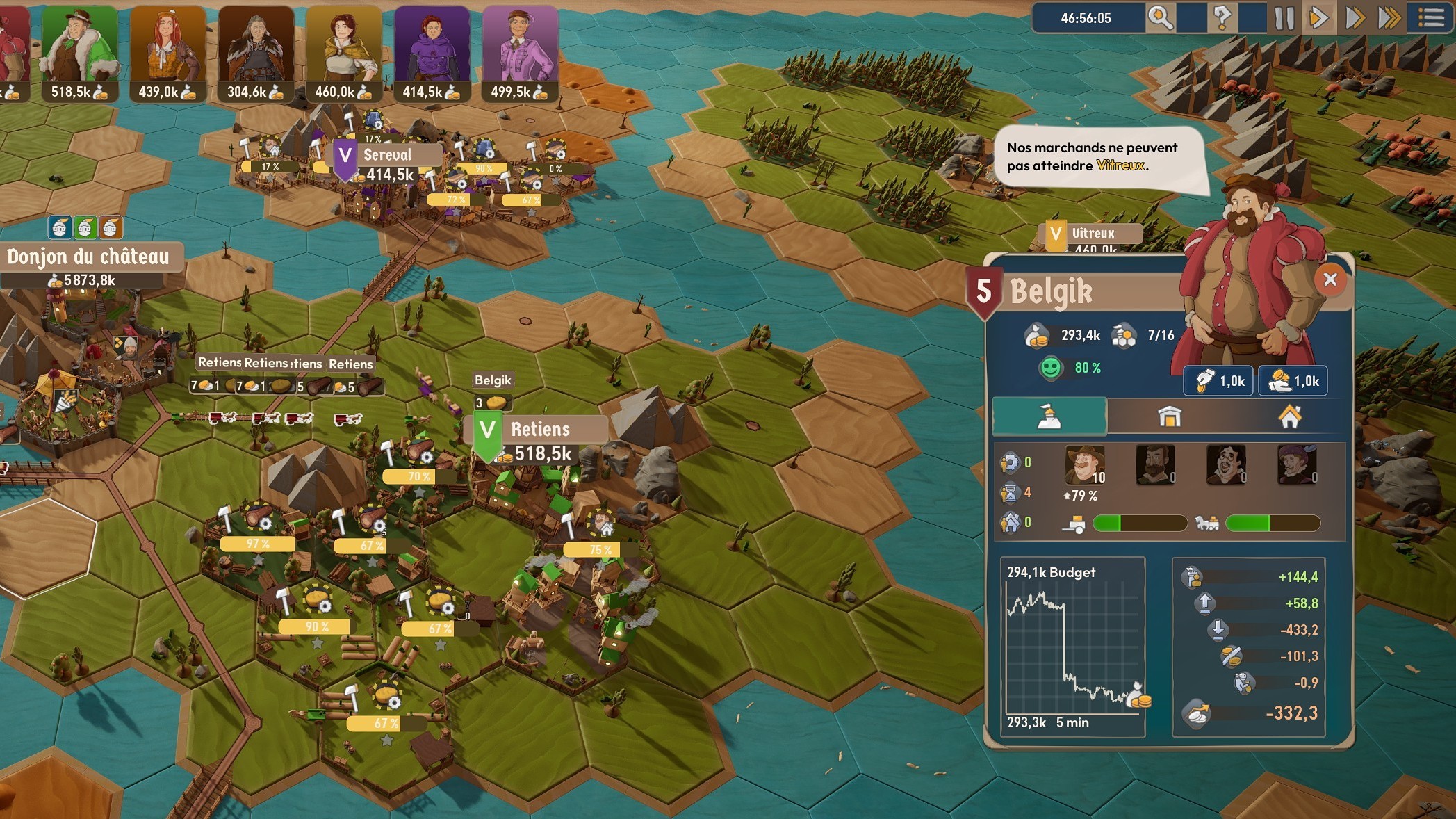
The audio design plays an important role here, too. The soundtrack features light, almost pastoral medieval melodies that enhance the atmosphere without ever demanding too much attention. Small environmental details, such as merchants' footsteps or the crackling of forges, also help bring the world to life. The interface follows the same philosophy: simple, functional, and relatively clean. The icons are easy to understand, the menus are responsive, and information is well organized without overwhelming the screen, although things become somewhat busier during the later stages of a game. Overall, it's clear that accessibility has been a major concern.
Maps, building and optimization
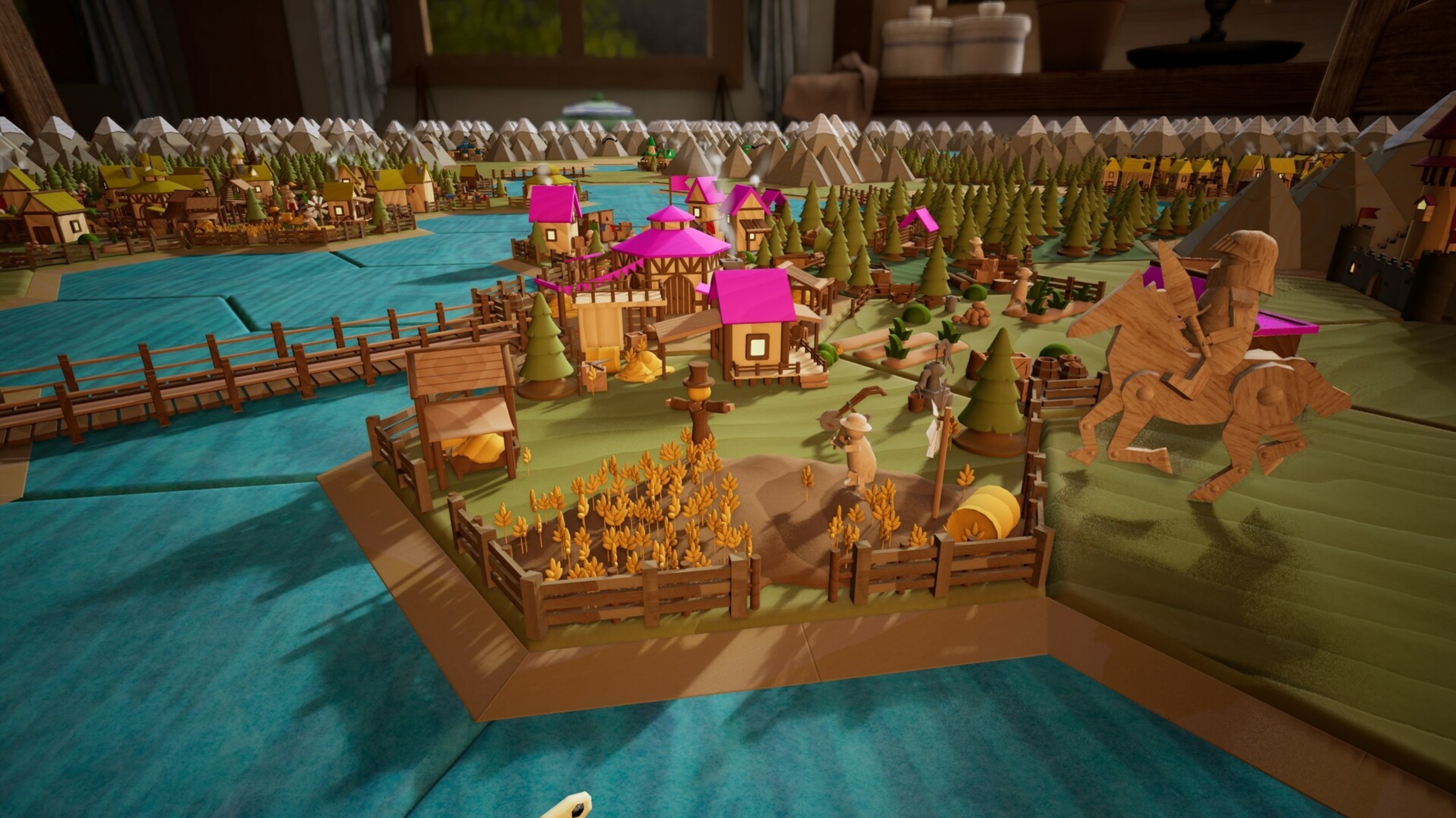
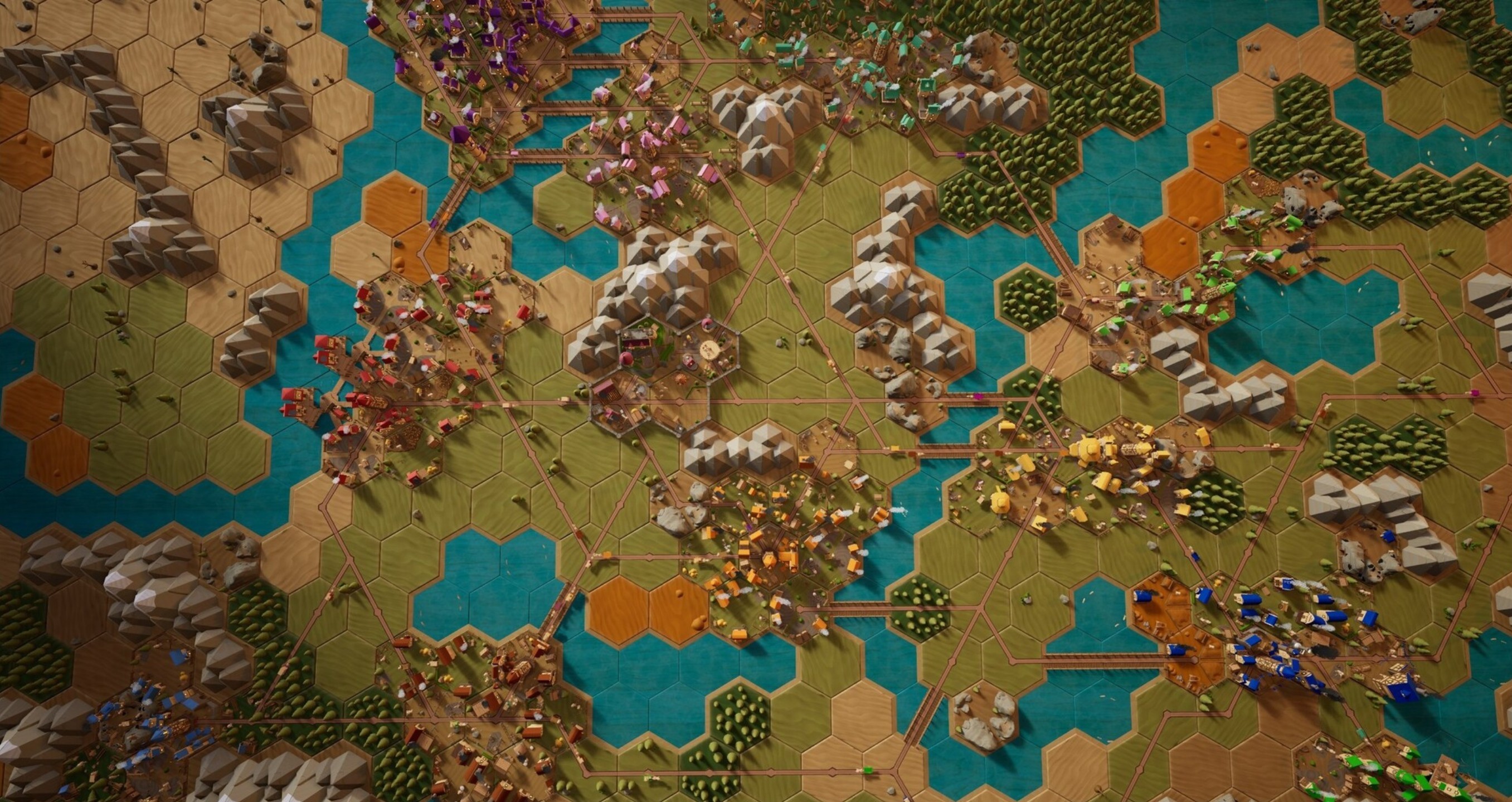
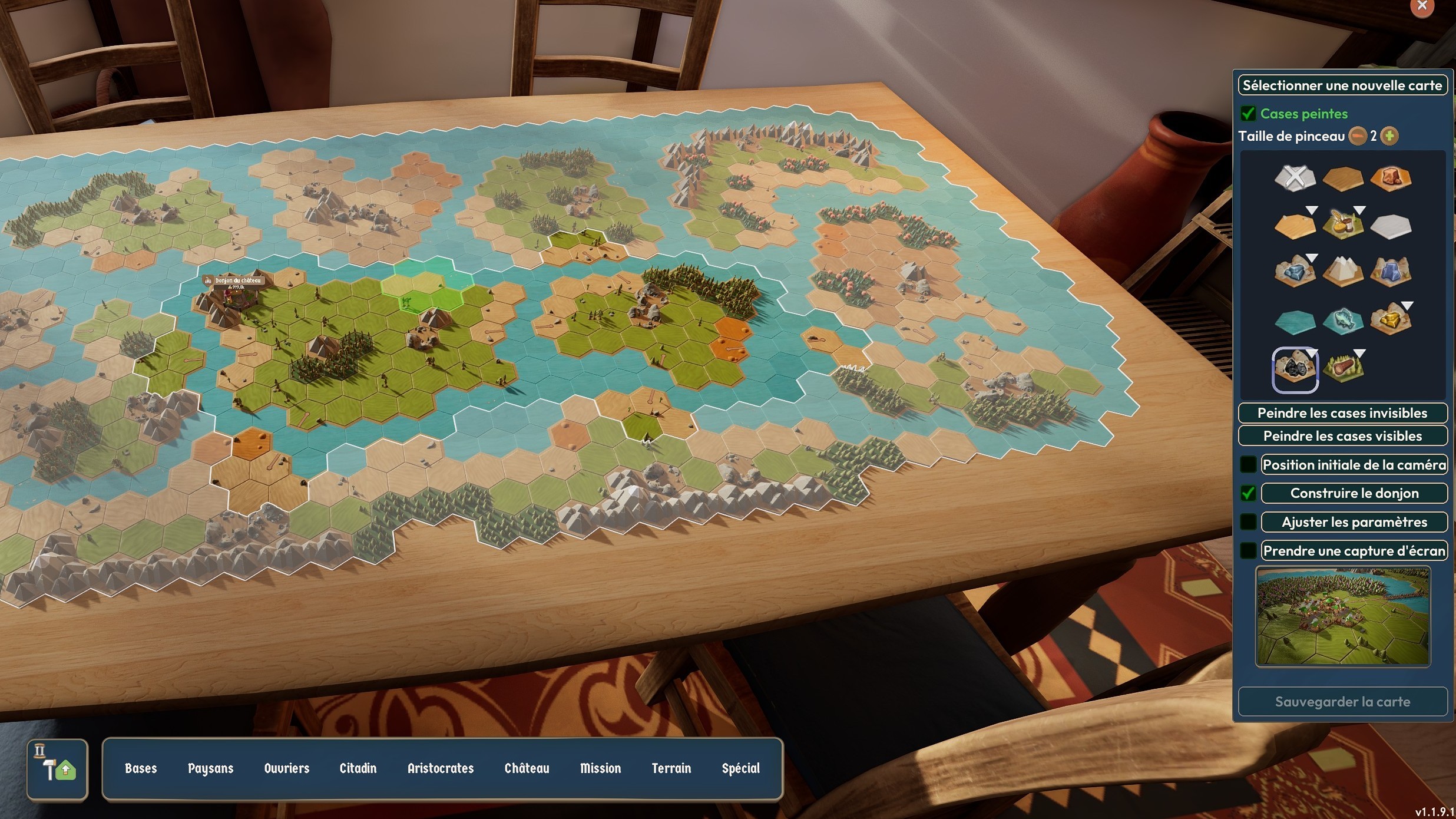
One of the first things that stands out in Let Them Trade is the feeling that you're building a world that continues to live and evolve on its own. The map gradually reveals itself as we explore, and we can also modify it before starting a game to suit our preferences. Its hex-based structure makes placing buildings particularly satisfying. Little by little, the small tiles begin to fill with life as we establish our first cities and connect them with roads and bridges. What initially looks like a handful of isolated settlements gradually becomes a genuine trading network.
Trade routes come alive, merchants repeatedly travel the roads we've built, and transporters are constantly moving around the cities. Distance also matters. Longer routes require more time and resources, so we're constantly looking for a balance between proximity to raw materials, access to markets, and road safety. Because yes, bandits are there to make things more complicated. The good news is that systems such as workforce, production cycles, and resource requirements are integrated in a fairly natural way. There's no particularly demanding micromanagement, which prevents the game from becoming an endless succession of menus and statistics.
Market autonomy: innovation or too big a risk?
The real meat of Let Them Trade is its self-regulating trading system. Once our cities are connected by trade routes, they automatically exchange resources based on their needs and surpluses. There are no prices to set and no merchants to negotiate with: everything depends on the relationship between production, demand, and distance.
The system works very well when it comes to keeping the experience accessible and creating the sense of a living world the game is aiming for. However, it can also be frustrating for players who want greater control over the economy. We can't set prices or tell a specific city to stop importing or exporting a particular resource. Nor can we establish import or export limits for a specific city or for the castle. It's a fluid system, but it's also fairly rigid.
Interestingly, it's over the long term that this mechanic begins to show its full potential. A simple change in demand for a resource in a city on the western edge of the map can trigger a chain reaction, forcing us to rethink our entire trading network. This is where Let Them Trade really starts to shine: every new city or resource can upset the balance of the whole system and create new problems to solve.
Replayability and progression
The game’s progression curve is interesting on its own right. The first few hours are spent learning the basics: building your first city, connecting two or three roads, and observing the initial trade. You quickly get the hang of it, and it becomes addictive, probably more so than most management games. As the territory expands and needs become more complex, you’re faced with broader challenges: optimizing the network as a whole, adjusting production, securing your settlements against bandits, and managing scarce resources.
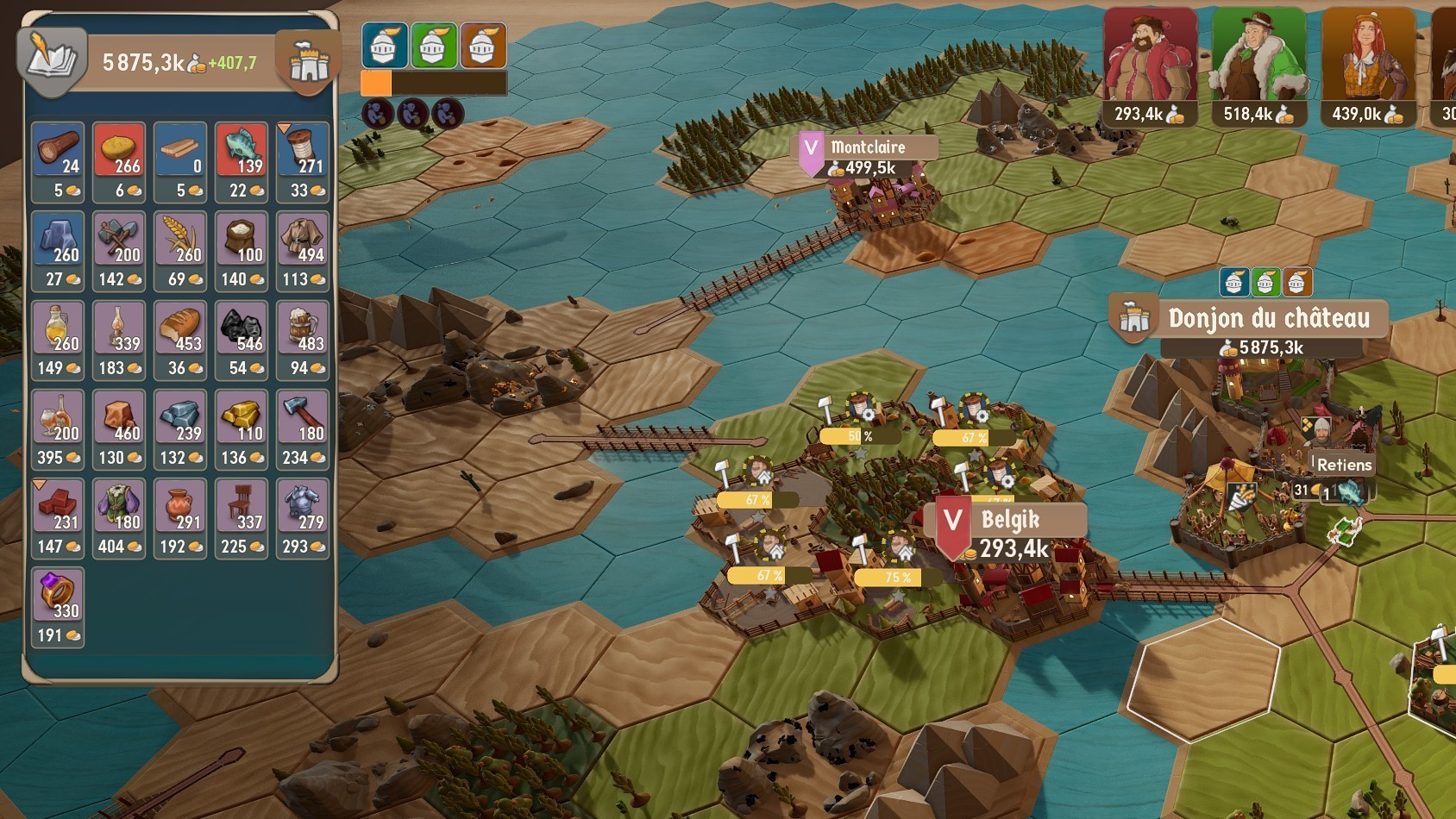
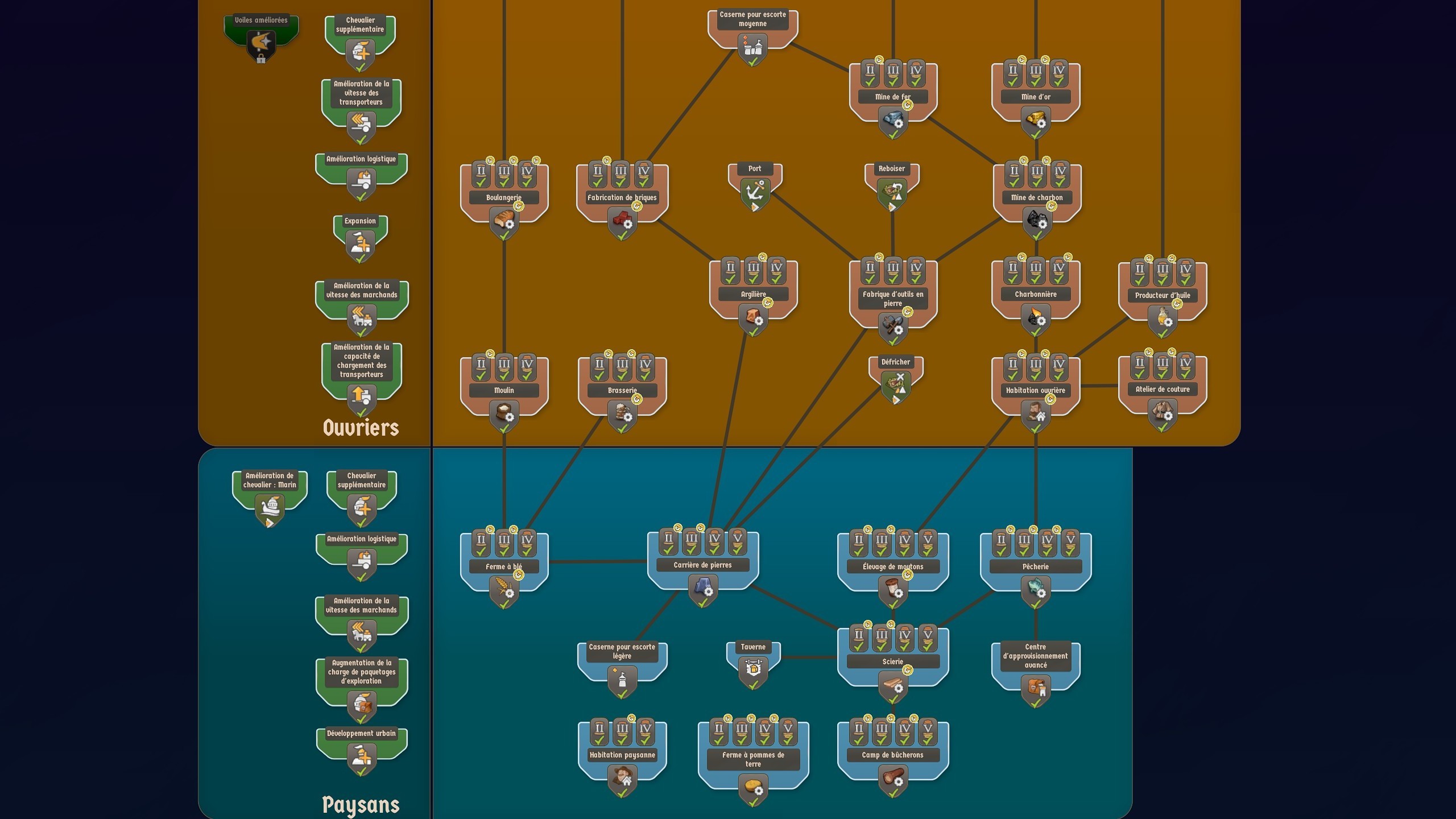
Overall, and even though the game’s tutorial doesn’t really highlight it, you should rely on the summary panel at the top of the screen to optimize all production, which directly impacts trade between your cities and, therefore, your overall progress. All game elements are unlocked through an intuitive system, which also includes numerous passive upgrades to boost various in-game stats.
The game also offers good replay value. It taking around 12 to 15 hours to complete all objectives allows you to replay the experience quite a few times. Additionally, you can play on numerous maps, but you can also design your own using a system for customizing the game board tiles. Each game tells a different story, although a sense of repetition can set in fairly quickly.
Weak points
It wouldn't be fair to say that Let Them Trade is a perfect game either. Leaving aside some optimization issues, several of its mechanics feel somewhat undercooked and could have benefited from greater depth. The bandits are probably the best example. On paper, they should pose a threat to our trade routes, but in practice their impact is fairly limited. We can essentially ignore them without it causing any major problems.
The difficulty balance also needs some work. It can't be changed during a game and, after establishing our first cities, something that happens within two or three hours at most, we reach a point where we can almost leave the game running by itself. Player intervention becomes considerably less important, and some mechanics, such as taxes or the 1,000-coin donation, quickly lose much of their relevance.
When it comes to quality-of-life features, we also found ourselves wishing for a few additional options that would make management more convenient. Different filters to better distinguish our resources and production chains would have been useful, as would a cleaner presentation of icons or the ability to move buildings without having to destroy them first. We can also check our cities' budget history, but it only displays the last five minutes, making it of limited use when trying to analyze long-term economic trends.
And then there's probably the game's biggest issue: the lack of control over its self-regulating markets. Automation is one of the game's defining features, but it would have been interesting to give players at least some room to intervene. Being able to specify which resources we don't want to import or export, set quantity limits, or decide which goods should be prioritized would have added a compelling strategic layer without turning the game into a micromanagement-heavy experience

Tested on PC. See our rating policy here.
7/10
Let Them Trade is an interesting, cozy experience that offers a satisfying sense of immersion. It doesn’t revolutionize the city-builder genre, but it enriches it in an original way by emphasizing self-regulating economic systems, albeit sometimes to a fault, which some may appreciate, while others may not. Accessible to both novices and seasoned strategists, it provides hours of thoughtful gameplay and a rare sense of satisfaction when a complex trade network finally finds its balance. Despite a few technical limitations and some oversimplified mechanics, the game still stands out as a solid alternative to other titles in the genre, which are sometimes overloaded with information and micromanagement.
- + Original art direction
- + Great soundtrack
- + Addictive and fairly intuitive
- + Reasonable price
- - Both difficulty and balance are still rough around the edges
- - You end up going into automatic mode
- - There's a lack of micromanagement to streamline the experience